Category Archives: Literary Destinations

Oh Canada! You’ll Wish You Could Join This Canadian Book Club On Their Travels

IMG_3549
Boating and Books–a summer cabin in Canada is just one place where this book club meets.

Susan Jessop, a lit lover and travel enthusiast from Ottawa, Canada, contacted me to share her book club’s literary travel experiences.  Little did I know that I’d want to hop in the car and join them for their next outing. She had so much information, I’m going to share it in two posts, starting with their ideas for inviting authors to attend their meetings, and taking short “lit trips” close to home (from cottages to a penitentiary!).  You’ll find their “field trips” inspiring and you’ll want to check out the books she mentions, a nice list of Canadian authors. It’s always interesting to me how people in different regions are reading fantastic books you’ve never heard of. This is how to spread the word about your favorite authors. My next post will feature their really big book club travel tales.

Please tell me a little about your book group.

We are a group of women based in Ottawa, Ontario, Canada, our nation’s capital city. The group was established in 1996 and still has 3 founding members.The women come from many different professional backgrounds: urban planners, lawyers, museologists, a token engineer (!) and not unexpectedly, a few public servants… We share a love of literature, good food, wine and laughter! The group has always consisted of approximately 10 women, an optimal number to ensure manageable conversation. We think 10 is the ideal number.

What kinds of local trips or outings has your group enjoyed?  

The group has done a number of local expeditions that related to books we were reading. The first was to Aylmer, Quebec, just across the river from Ottawa to where the book Leaning, Leaning Over Water was set.  This book, a “novel in stories” marked the transition from short story writer to novelist for the author, Frances Itani, who went on to international recognition with her later novel Deafening.  We drove to several sites along the Ottawa River, our best guesses of the locations in the book.  We ended up at a local pub with an astounding international selection of beer, and some locals who it turned out were from the same neighbourhood as two of the book club women who had grown up in Aylmer.

One of our book club participants works at the national Museum of Civilization, and we’ve had a couple of fascinating excursions there.   The first was an evening devoted to the famous Klondike poet Robert W. Service, and featured readings of his poetry in a replica of the “Wildcat Cafe” from his adopted home town of Yellowknife, Northwest Territories.  Tracey Riley, a singer and waitress from that café, performed for us, and we were served authentic grub.  The museum later featured a fabulous exhibit on “The Bog People.” As part of its lecture series, the museum featured Kathy Reichs, (who is both a working forensic anthropologist and a crime writer) so we read her novel du jour Deja Dead and went off to hear her lecture and visit the exhibit.

For the past 9 years or so, we end our season with a weekend of merriment at one member’s cottage, about an hour and a half out of Ottawa.  It’s a great sign off to the book season (we take a summer hiatus).  Our host arranged to have a local author, Merilyn Simonds, attend our meeting to discuss her novel The Holding as well as her earlier non-fiction book The Convict Lover, which some of us also read.  Since the latter book was set in and around the Kingston Penitentiary, we took a field trip from the cottage and had a fascinating visit at Kingston’s Penitentiary Museum. We met with Merilyn a second time a few years later and visited her garden which was the subject of her book A New Leaf, a collection of anecdotes and meditations focused on that very garden.

Do you ever invite authors to attend your meetings?

We have looked for opportunities to invite local authors that we know (or through  a friend of a friend of a friend) or that someone decided to “cold call.” Surprisingly, most authors are flattered and pleased to attend. They sell a few extra books and get direct feedback. We’re always careful to get together a half hour or so before the author arrives to speak frankly about the book (and to make sure we didn’t all hate it!), and that we have a reasonable set of questions to ask. Happily, we have, for the most part, enjoyed those books. We have also welcomed authors: mystery writer R.J. Harlick (whose sister is one of the members) with The River Runs Orange, Terence Rundle West (twice)–Ripe for the Picking and Not In My Father’s Footsteps;  David Sacks, author of a history of the alphabet (!) that was issued under three different titles: Language Visible, Letter Perfect, and the less imaginative The Alphabet.   We will be hosting a new author this May, Missy Marston and her book The Love Monster and next fall, Ruth E. Walker whose book is Living Underground.

And, on many occasions, we’ve taken our “excursions” by way of the silver screen, pairing books with their filmed versions, usually on video but sometimes in theatres.  One member has a sister who’s a film-maker, so we’ve been lucky enough to view some of her films. I should mention too that we have an annual Christmas party (last year accompanied by a karaoke outing after dinner), with a secret Santa gift exchange.

Why take trips? Why not just meet in your homes and keep it at that?

The local trips or discussion with authors brought added context to the discussions and, frankly, were a lot of fun. Didn’t we all enjoy our school field trips a lot more than just the classroom discussion?! The same principle applies here, I think.
 

A Flea Grows in Brooklyn (Sorry, I Couldn’t Help Myself): Fashion, Food, and Reading Among the Hipsters

SONY DSCFrannie Nolan, the heroine of Betty Smith classic A Tree Grows in Brooklyn, just wouldn’t recognize the place. The book opens in 1912 and is set in the (then) tenement-filled Brooklyn neighborhood of Williamsburg. It was a place to get away from.

Now Brooklyn is “IT.”  People flock to Brooklyn for its trendy shops, restaurants, and entertainment. They may make fun of Brooklyn’s hipster aesthetic, but can’t resist those skinny jeans, ironic glasses, scarves and all the other accoutrements of Brooklyn hipsterdom. The style conscious from places such as Stockholm, London, and Paris look to Brooklyn for inspiration. And, if that weren’t enough, Girls, the hit HBO show based on the lives of four post-college friends trying to make it in the big city, sort of a poor girl’s “Sex in the City,” has begun to prompt the show’s fans to go on Girls tours of Brooklyn locations featured in the show.

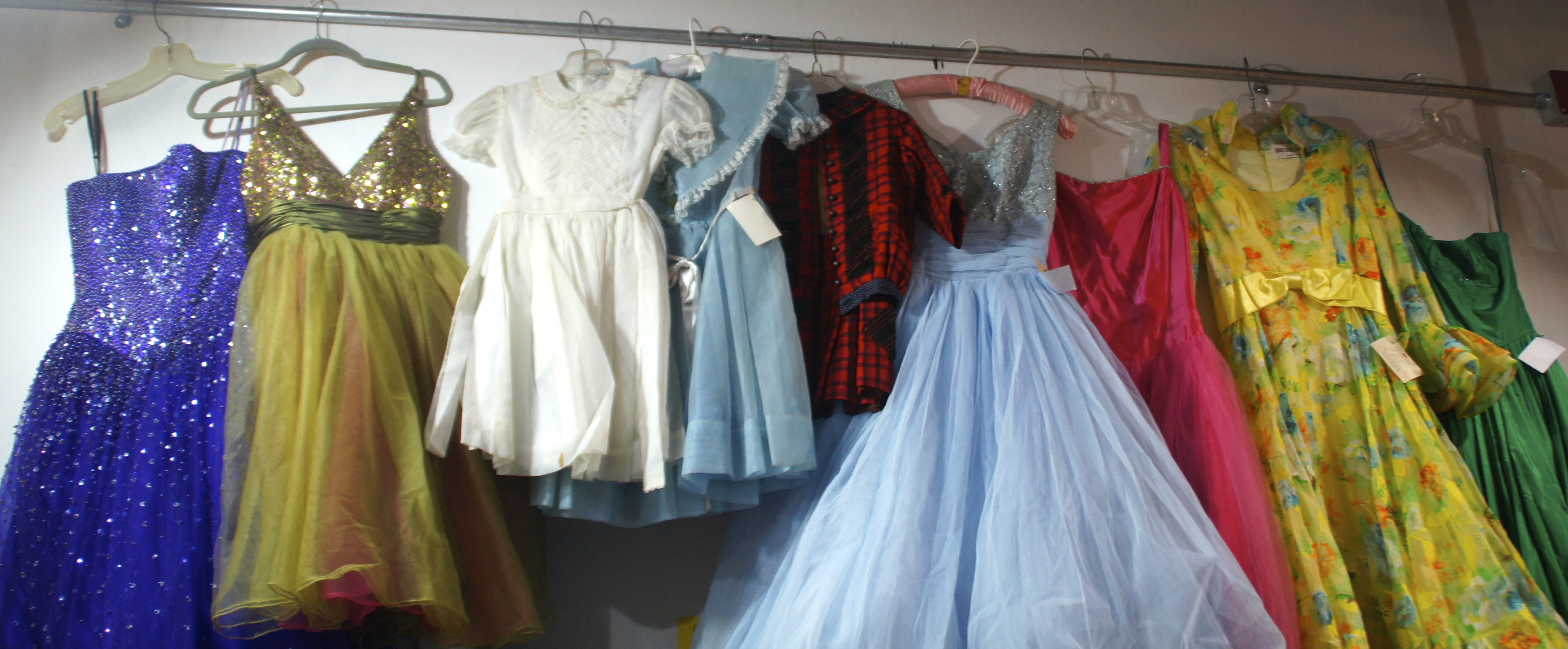
You don’t have to be a hipster or a Girls fan to have fun in Brooklyn, but when you SONY DSCwalk around places like Brooklyn Flea, you may be inspired to join in the fun.  At the very least, you’ll feel compelled to scrounge through your parents’ old clothes (think Mad Men era) or retrieve a few old dresses or flannel shirts from that box you were getting ready to send to Goodwill. This is no ordinary flea market.  The merchandise is mostly vintage or DIY and displayed in a way that makes it look as classy, and much more interesting, than Fifth Avenue fare.   You’ll find cool jewelry made of repurposed zippers or typewriter keys, dresses that would make Betty Draper envious, and re-claimed-repurposed-recycled furniture. In winter the flea takes place in the former Williamsburg Savings Bank at One Hanson Place, where vendors sell their wares from teller’s windows and the zodiac mosaics on the ceiling make it worth the trip, even if you’re not a shopper.  But during warm weather (April through Thanksgiving,), the market takes place outdoors: on Saturdays in Fort Greene and on Sundays in Williamsburg.

When you’re shopped out, I suggest wandering the Williamsburg neighborhood where you’ll find great restaurants (the Vietnamese restaurant An Nhau works well for a group and has a great patio in back), outrageous chocolate and incomparable people-watching. A walk across the Brooklyn Bridge into Manhattan offers views of the skyline, the Statue of Liberty, and a sense of walking through the city’s history. If you’re looking for a more formal tour, Big Onion tours offers several walking tours of Brooklyn neighborhoods.

Can’t make it to Brooklyn any time soon? The borough has a literary heritage that’s as distinctive as the rest of its culture so there are plenty of books that will make you feel like you know the place before you even leave the L Train. But break out some eccentric-looking clothes–maybe a spangly dress, or a raccoon hat–before you settle in to read them. Here are a few:

Betty Smith, A Tree Grows in Brooklyn.

David McCullough, The Great Bridge, non-fiction about building the famous Brooklyn Bridge and This Side of Brightness by Colum McCann fiction about tunneling beneath the East River to create another Brooklyn-Manhattan connection.

Jonathan Lethem, Motherless Brooklyn and The Fortress of Solitude.

Colm Toibin, Brooklyn

Paule Marshall, Brown Girl, Brownstones

Paula Fox, Desperate Characters.

Red Rooster: A Taste of Harlem with a Chaser of Gospel Music

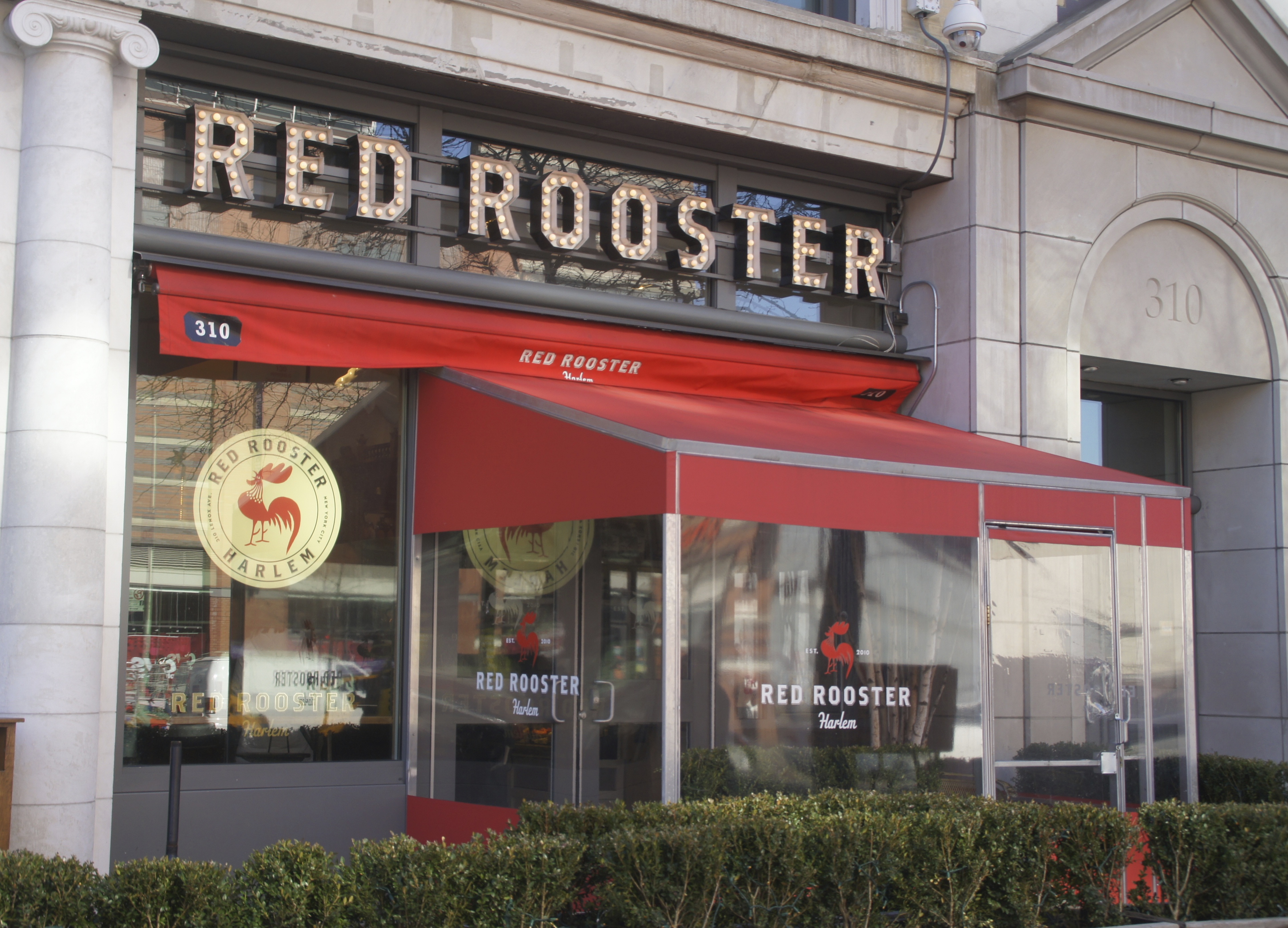
SONY DSCMy family and I enjoyed a tasty brunch on Sunday at Red Rooster in Harlem. Named after a legendary Harlem speakeasy, it’s one of chef Marcus Samuelson’s restaurants and has been a huge hit since it opened (on Lenox Ave between 125th and 126th) in 2010. While the food is stellar, the restaurant has higher goals: “We aim to play a role in the future of Harlem, by hiring our family of staff from within the community; inspiring better eating through neighborhood cooking classes; and buying from local purveyors.”

But there’s more at the Rooster.  We headed downstairs to Ginny’s Supper Club where they offer a Gospel Brunch every Sunday. For anyone who is interested in the literature, music and culture of the Harlem Renaissance , Ginny’s is a great place to get a little feel of what that era was like, whether you arrive on Sunday morning or any evening during the week. The Sunday morning entertainment is considerably more wholesome than in speakeasy days:  Gospel for Teens. Check out the group’s impressive and poignant story top-circlethat appeared on CBS’s 60 Minutes a couple of years ago. Fortunately, we ate before the show started because otherwise we wouldn’t have been able to sit still long enough to fit a forkful of food into our mouths with all the clapping, dancing, and those kids singing their hearts out.

For better or worse, this section of Harlem escaped much of the demolition of urban renewal and redevelopment, so a lot of the original gorgeous architecture along Lenox Avenue remains. After brunch, we walked down Lenox and into Central Park. This is a great excursion for anyone who would like to skip the typical mid-town tourist scene. And, if you’re thinking of heading to Harlem, take a look at any of the books listed below regarding the Harlem Renaissance and you’ll appreciate the neighborhood even more.

Ralph Ellison, The Invisible Man, the complex life of a young African American man in the South and later Harlem.  Winner of the National Book Award.

Langston Hughes, The Collected Poems of Langston Hughes and Not Without Laughter, classic works from one of the most famous figures of the Harlem Renaissance.

David Lewis (ed.), The Portable Harlem Renaissance Reader. An anthology.

James Baldwin, Go Tell It on The Mountain, a semi-autobiographical story of a young African-American boy in 1930s Harlem.

Zora Neale Hurston, Their Eyes Were Watching God.  Though her story takes place in Florida, Hurston was an important player in the Harlem literary scene.

Laban Carrick Hill, Harlem Stomp! A Cultural History of the Harlem Renaissance. This is actually aimed at young adults, but the book has been so critically acclaimed, it’s great for any age group.

Dreary Weather and Creativity

0
Today’s weather make me feel like this.

I just returned from walking my dog, Duffy, and he’s a big wet ball of mud. It’s about 40 degrees and rainy outside, the worst possible weather for Minnesotans.  Most of us relish the cold and snow and spend a lot of time outside enjoying it while also feeling slightly superior to those who live the easy life in warmer climates.  Wimps.

When it’s really cold here, its also sunny, a very cheerful combination. We run out with show shoes or skis or simply gaze out on the sparkling snowbanks, hot cocoa in hand. By contrast today is capital D Dreary.  No amount of cocoa will make me feel better unless it’s some of “Mr. Smith’s special hot chocolate” that my spouse used to take along on kids camp outs. Add to the drippy weather the fact that we’re so far north it gets dark really early in winter, so by about 4:30 it will be dark and dreary… sounds like Edgar Allen Poe.

On the upside, I’ve always felt that people who are too happy have nothing to write about. Would  Poe have penned The Raven if he were feeling anything but morose?  Could Jon Krakauer have written Into Thin Air if his Mt. Everest trek hadn’t been a disaster?  One of my favorite writers, Tim Egan, concurs.  In a recent New York Times column, “The Longest Nights,” he says the bleak winter is prime time for writers and other creative people. “At the calendar’s gloaming,” he says, “while the landscape is inert, and all is dark, sluggish, bleak and cold, writers and cooks and artists and tinkerers of all sorts are at their most productive.”

He lives in Seattle and his article ponders the relationship between Seattle’s uber rainy weather and the number of writers in that city.  He says, “I’ve come to the conclusion that creativity needs a season of despair. Where would William Butler Yeats be if he nested in Tuscany? Could Charles Dickens ever have written a word from South Beach? And the sun of Hollywood did much to bleach the talents out of that troubled native of Minnesota, F. Scott Fitzgerald.”

So I welcome the bleak mid-winter.  What else is there to do but towel off the dog, roll up my sleeves, and write… and perhaps sip a steaming cup of “special” hot cocoa?

Preserving F. Scott Fitzgerald's Birthplace

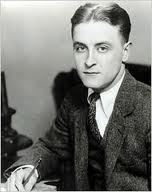
My book club took a little F. Scott Fitzgerald tour in St. Paul a few weeks ago.  We walked around the neighborhood where he was born and grew up, taking in his various residents and hang-outs and staring as so many Fitzgerald pilgrims do at the house where he was born at 481 Laurel Avenue.  (See my previous post on the St. Paul Fitzgerald tour. We gathered just off the front porch and gazed up like a bunch of tourists and in a few minutes one of the people who live in the building, Richard McDermott, saw us and called us in for a little talk about the building, which was a real treat because he was instrumental in preserving the building. I was sad to see in the Minneapolis Star Tribune an article about him and the fact that he has terminal cancer.  He has done much to preserve Fitzgerald’s heritage in St. Paul and had regaled visitors from around the world, including Azar Nafisi, with stories about the building. Here’s an article about the charming Mr. McDermott

Literary Death Match: A Cerebral Slugfest

I’m heading over to the Literary Death Match (LDM) tonight, which sounds like some sort of mixed martial arts combat. But, there will be no Junior dos Santos, Antonio “Bigfoot” Silva or other UFC luminaries at tonight’s competition at the Nomad World Pub in Minneapolis. (I’m hoping to see some beefcake, but keeping my expectations low.) Despite its violent-sounding name, LDM is a comedic/literary competition that has made its way around the globe and regularly stops in the Twin Cities. These are great events for book clubs to attend together. Four authors read something they’ve written and three literarily (is that a word?)-inclined judges offer their comments on each reading, with an emphasis on humor rather than violence, though there is sometimes beer-fueled mayhem as the audience votes on the winner. Everyone goes home happy—no bruises, even to their egos.

Tonight’s readers include L.A. Times-award-winning young-adult novelist Pete Hautman (The Big Crunch and The Obsidian Blade), Minnesota Public Radio Electric Arc Radio‘s Stephanie Wilbur Ash, poet and author Juliet Patterson (author of Truant Lover) and poet-musician Jeffrey Skemp (author of Spent). The judges: Jamaican native Marlon James (author of The Book Of Night Women and John Crow’s Devil), cartoonist and host of the Lutefisk Sushi podcast Danno Klonowski, and former journalist turned sci-fiction writer Dennis Cass.

LDM creator and host Todd Zuniga works as hard as any fight promoter to put these shows together and hopes eventually to bring LDM to television.  He says, “Literary Death Match started because there was a real need to evolve literary events beyond a bar reading where Reader 1 would read for 12 minutes beyond the time limit, Reader 2 would read a slice-of-life blog entry they wrote earlier that day and Reader 3 would blow everyone’s mind. We wanted an event where everyone was Reader 3. So, we went around and asked literary entities and asked them to send us someone to represent them. Secondly, we wanted to seamlessly integrate comedy into a literary night, and that’s where the judges come in — regardless if the story was about a bad day at work, or surviving cancer.”

Todd shares my passion for making reading a way to create community and sees a trend toward people seeking entertainment and social connection through activities that exercise a bit of brainpower like LDM, a cerebral form of extreme cage fighting. He says, “LDM is a highly intellectual event, but we’re also zany and love bolts of silliness. I’m my mother’s son, so I want everyone in the room to feel good after it’s done. And what’s better than having a real conversation with someone fantastic? Our goal is to get people to read, and to keep helping people to understand that books aren’t always a solitary, lonely affair. We want to fill the room with the smartest, kindest, most fascinating people we can find. So, after the event they can talk about Etgar Keret’s Suddenly a Knock at the Door before they talk about the latest episode of Mad Men or Breaking Bad.”

Um, I have to figure out who Etgar Keret is before I can join that conversation, but I am looking forward to watching a few rounds of literary pugilism. Kudos to The Loft Literary Center for sponsoring this event.

Stanley and Stella Shouting Contest in New Orleans

Stella!

I just got back from a few days in New Orleans where I caught a portion of the Tennessee Williams/New Orleans Literary Festival.  The fest features famous writers, actors and authors (this year including Piper Laurie, Amanda Plummer, and playwright John Guare)  performing and discussing their work and that of Tennessee Williams.  Touring around the city, I was amazed to see New Orleans’s huge comeback after Katrina.  I thought I would see areas that still looked demolished, but with a few exceptions the city is back in shape and New Orleans tourism has hit the level it was before 9/11.  Beyond that, the city is as crazy as ever, with an above-average level of drinking.  As an example of “only in New Orleans” behavior, I offer the Stanley and Stella Shouting Contest, which caps off the Tennessee Williams Festival.  Click on the following link and watch the video that appears at the end of the page.  It’s just great. www.nola.com/news/index.ssf/2012/03/photos_and_video_stella_and_st.html

Beyond Austin into the Texas Hill Country

A Texas Longhorn Grazing in the Hill Country

Though the South by Southwest music, film and interactive fest has dominated Austin lately, the city has has a ton to offer year-round including great food, shopping, and music coming out of every doorway on 6th Street. In addition, if you have an extra day on your visit to Austin, you’ll find plenty to see, do and eat in the Hill Country west of Austin. It offers a chance to see the Texas countryside, with stunning wildflowers in spring, and even a few longhorn cattle.

Head first to Fredericksburg, a charming town that German settlers founded back in the mid-1800s. A trip down Main Street there is like a walk back into the old west, lined with historic limestone buildings, but with cute shops that cater to tourists on the inside. If it’s hot, you’ll find plenty of beer gardens and craft beer to slake your thirst.

The Texas White House of LBJ

Turn back in the direction of Austin, and pay a visit at the Lyndon Baines Johnson Ranch, home of our 36thPresident, and known as the Texas White House during his presidency.   Be sure to read Doris Kearns Goodwin’s Lyndon Johnson and the American Dream or Billy Lee Brammer’s, The Gay Place which is about Texas politics and Lyndon Johnson to get the most out of your visit here. The ranch is now operated by the National Park Service. You can tour both an historic Texas farm and the Texas White House, circa 1968. It’s a great way to get off the road and see what a Texas ranch looks like, get a look at the lovely Pedernales River, and see the ranch house as it was, right down to the clothes in the closets.

End your day with a stop in Driftwood at the legendary rib joint and meat-lovers heaven, the Salt Lick. (Cash only and B.Y.O.B. or purchase a beer and wine a the wine bar next door.)

Vivid: South Beach Lifeguard Houses, Miami Beach, Florida

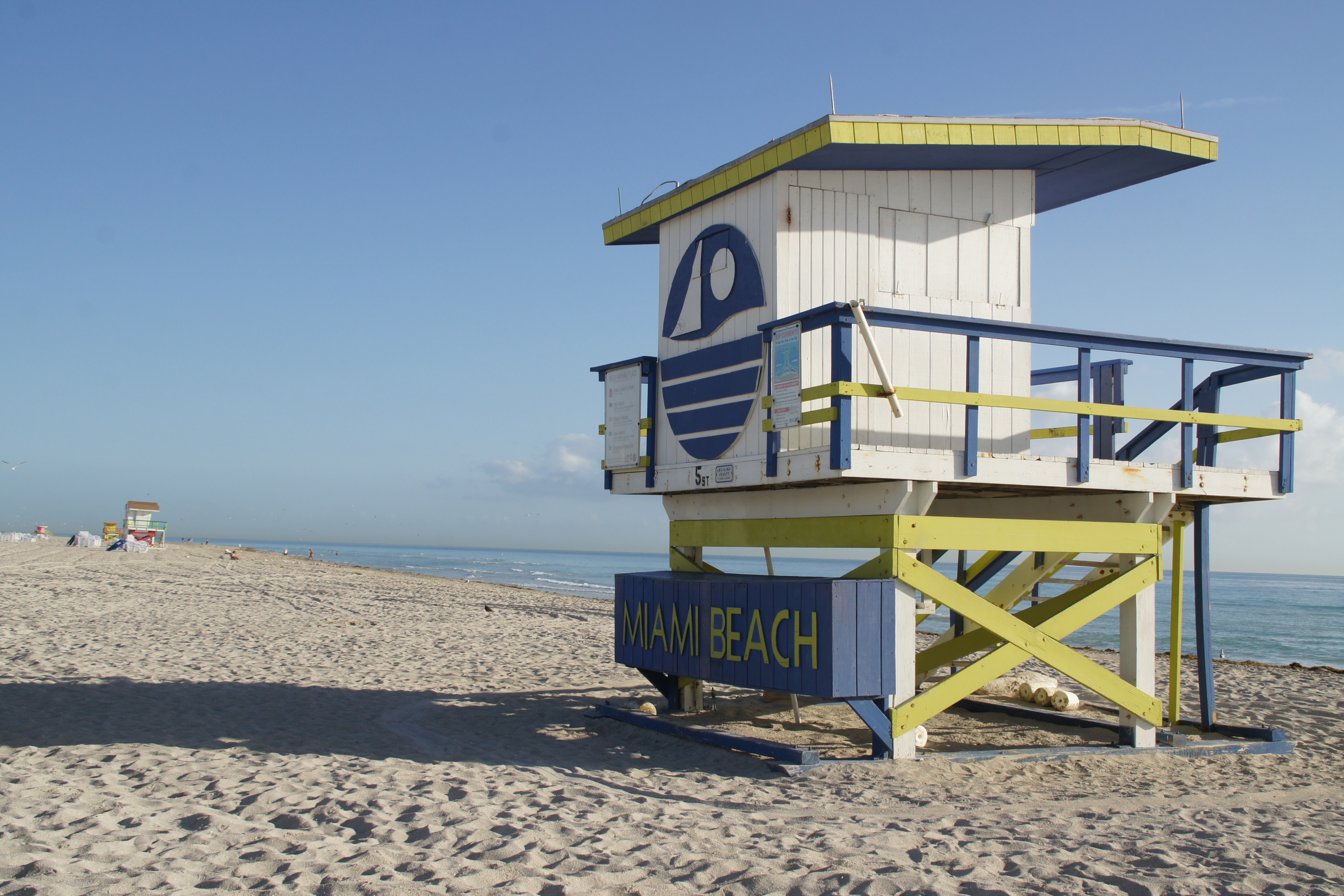
The 5th Street Guardhouse– beach yoga and a cruise ship leaving port.

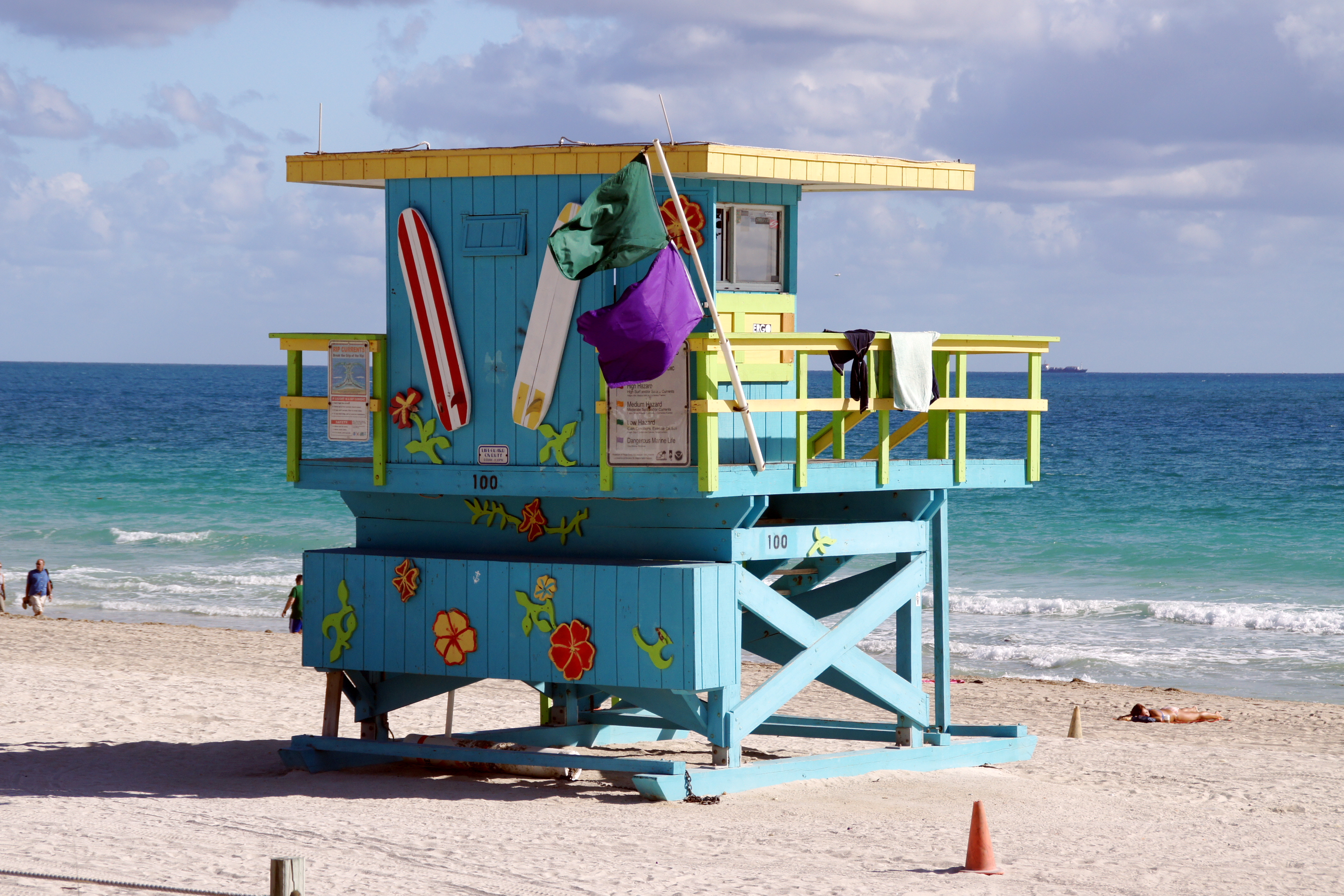
The hotels and other buildings in the South Beach art deco district of Miami Beach, Florida, get all the attention.  But if you’re there, you should lift your head up from your beach chair and take notice of the collection of whimsical and funky lifeguard stations that extends from the jetty at South Point to 74th Street.  If you can’t make it to South Beach, take a look at photographer and former newspaper journalist Susan Russell’s book, aptly titled South Beach Life Guard Stations to see what I’m talking about.

While there have been elevated lifeguard stations here almost since the area became a resort, they weren’t so interesting until Hurricane Andrew swept most of them away in 1992.  They were rebuilt with panache typical of South Beach. They serve a very practical purpose for lifeguards, but also make great landmarks when you stroll the beach and an excellent place to meet for beach yoga at sunrise.  Here are a few of more….

The Towers Guardhouse, a.k.a. The Surfboard, South Beach, Florida
Lifeguard station at the jetty, where you can see the entire vista of South Beach
The 5th Street Guardhouse, with a version of the Miami Beach logo.

Shadow Country and Swamplandia! in Florida's Ten Thousand Islands

Grinning gators galore in the Everglades.

If you’re a fan of Peter Matthiessen’s National Book Award winner, Shadow Country, you

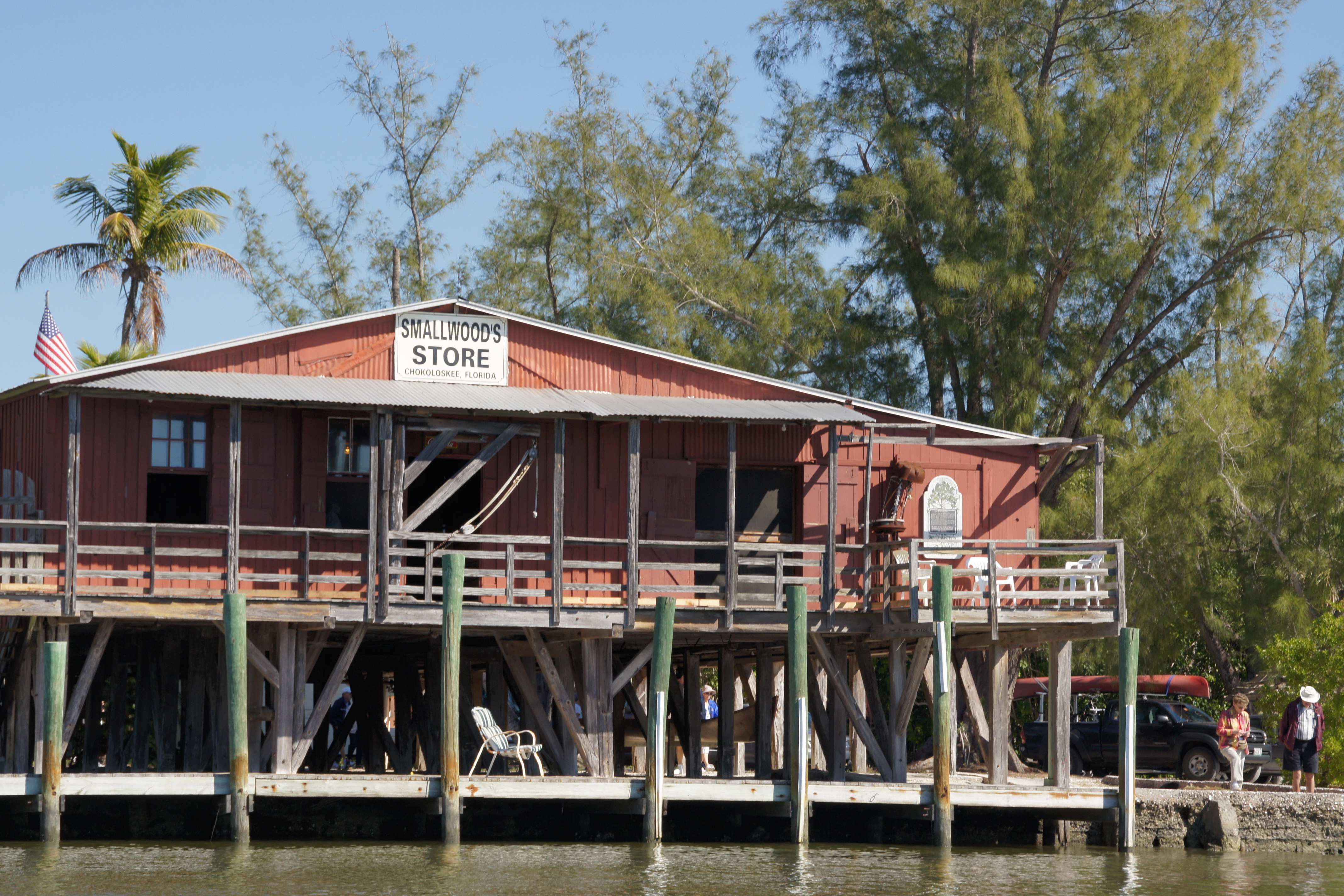
Smallwood Store, scene of E.J. Watson's murder.

may already have taken a day out of a Florida vacation and traveled to the Ten Thousand Islands area of southwest Florida to get a look at where the story happened.  Shadow Country is a fictionalized account of the story of the notorious real-life Everglades sugar cane planter and outlaw E. J. Watson at the turn of the 20th century.  But now, Karen Russell’s Swamplandia! (the fictional story of Ava Bigtree, a 12-year-old alligator wrestler who embarks on a strange journey through the area’s mangrove wilderness in search of her lost sister) creates another reason to investigate this section of the Everglades. So, last week a friend and I made the two-hour trip from Miami (it’s much closer to Naples on Florida’s Gulf Coast) to get a view of the mysterious watery world of these books.

We set out with fishing guide, Captain Rodney Raffield, from his home on Chokoloskee Island. Unlike the northern saw grass portions of the Everglades where the water is fresher, this section consists mostly of thousands mangrove islands in saltwater near the Gulf of Mexico. The Watson place is now a remote National Park Service campsite.  There isn’t

What's left of the Watson Place.

much left of the homestead except a huge vat where they boiled sugar cane to make syrup.  However, the Smallwood Store, the site where E.J. Watson was murdered by his neighbors, is still there on Chokoloskee Island and open as a

museum.

A boat ride around the area offers an impressive glimpse of the seemingly unending expanse of the Everglades.  To a visitor, there seem to be very few landmarks, so it was a pleasure to travel with Raffield, an affable fifth-generation resident of the area and a former stone crab fisherman who knows the place like the back of his hand and has plenty of stories to prove it.  As we wound our way through the mangrove islands, which are really just clumps of tangled roots rather than solid ground, we saw huge numbers of nesting birds. And, the alligators lolling on every open bank (some as much as twelve feet long), were the kind one might see on a tour of Russell’s fictional alligator park Swamplandia! Neither sea nor land, the Ten Thousand Islands make the perfect setting for Ava’s ghostly and gothic travels through the backwaters.

White pelicans near Rabbit Pass Key, Ten Thousand Islands, Florida

It’s a place where anything could happen… even something as unlikely as we non-fishers casting our lines for a few minutes and catching a “mess a fish,” as Raffield says. We then hustled over to the Havana Café in Chokoloskee, where they cooked ‘em up and we ate ’em, back on solid ground.