The ABC of It: Why Children’s Books Matter at the New York Public Library
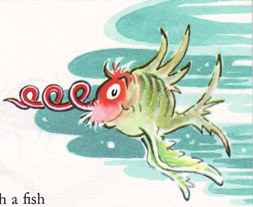
If you love to read, chances are you were lucky enough to have someone who read to you early in your life. I remember how special it felt to cuddle up next to an adult and open the pages of a book and listen to the stories. Like Marco, the young fisherman in my favorite book, Dr. Seuss’s McElligot’s Pool, who gazed into the pool and imagined all sorts of
You never know what fabulous things you’ll find when you open a children’s book.
fabulous creatures, I felt like there was just no telling what you might find in in the pages of each new book.
Reading leads to a richer life, beyond imagination and entertainment. Children who are read to become skillful readers themselves. Skillful readers do better in school. In fact, if you want your children to do well on their SATs, make sure they read a lot. Even more basic, reading plays a crucial role in brain development and language skills. As I mentioned in a previous post about the children’s literacy program at Hennepin County Medical Center in Minneapolis, studies show that low reading skill and poor health throughout life are clearly related.
Finally, the stories that we read at an early age connect us to each other, set the stage for our curiosity about other people, other places, and open us to the larger world. For children’s reading advocates it’s intuitive, but scientific studies have recently shown a link between reading and empathy. That’s why I’m excited that that Minneapolis author Kate DiCamillo has been named a National Ambassador for Young People’s Literature. The author of Because of Winn-Dixie and The Tale of Despereaux will work to raise awareness of issues related to reading and children’s literacy. She recently told the PBS NewsHour, “I want to remind people of the great and profound joy that can be found in stories, and that stories can connect us to each other, and that reading together changes everybody involved. …Story is what makes us human.”
But enough of the serious stuff. Children’s books are fun, even for adults. When I was in New York City in December, I got a chance to literally wander through the pages of several classic children’s books in a terrific exhibit at the New York Public Library. On display until March 23 their exhibit, “The ABC of It: Why Children’s Book Matter” draws on the library’s collections to present literature for children and teens against a sweeping backdrop of history, the arts, popular culture, and technological change. They’ve created an Good Night Moon room, which was clearly a favorite with the young adults I saw
A walk into Good Night Moon at NYPL brings back memories of reading to my own children.
wandering the exhibit. According to NYPL, “The books and related objects on view reveal hidden historical contexts and connections and invite second looks and fresh discoveries. They suggest that books for young people have stories to tell us about ourselves, and are rarely as simple as they seem.”
Dreaming of balmy weather and tropical sunsets in Miami Beach, Florida.
January. It’s the same routine every year. The relatives go home, the last toasts to the new year have been made, and I’m feel slightly blue–partly because my kids have left and partly because it’s been crazy cold here in Minnesota. It didn’t get above -11 on Monday. I’m talking Siberia cold.
Though it’s a bit of a letdown when the holiday frenzy is over, the quiet time of January provides a time to reflect on what I’ve done over the last year, new things I’d like to do this year, and after enough procrastination, to get fired up to do a few of those things. Since it’s been too frosty to go out, I’ve had plenty of time to hunker down and “reflect” (okay that’s my word for not getting to work). I looked back at the first post I made on this blog, which was called “Book Club Traveler” then, and I’m glad I took the time to revisit it. I always have giant lists this time of year of all the things I wish I had accomplished, a lot of “should-have-done this and why-didn’t-I-do-that,” things I need to do now. But looking back a couple of years at those first days of blogging, I’m feeling pretty good, optimistic even. My goal was to encourage readers to take their love of literature to the next level and actually travel to the places they read about. I concluded my first post with: “So, this blog will explore the places where literature and travel intersect, how to escape with a good book and understand the places we travel, with or without a book group, through the eyes of authors who have gone there before us. Let’s get out of the living room and hit the road.”
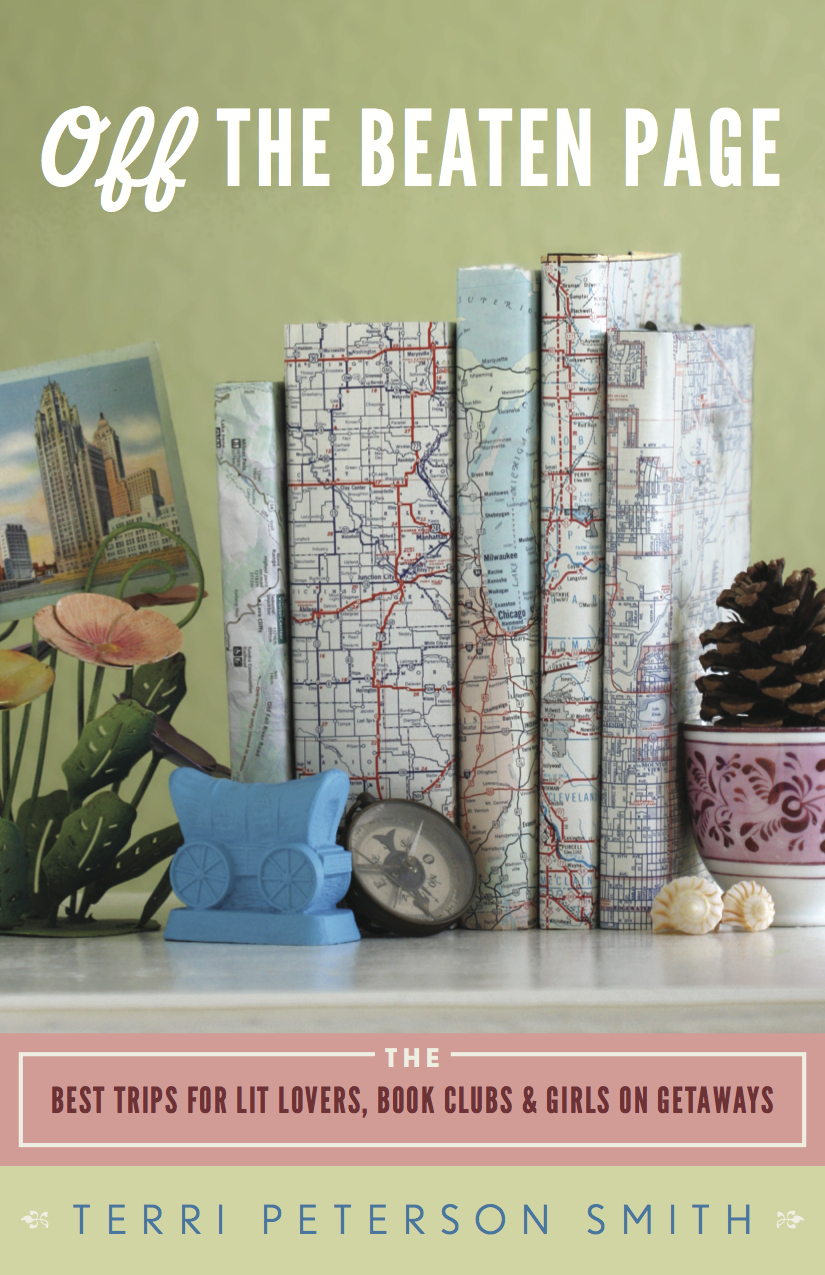
I got enough positive feedback on the concept and enough comments like, “I wish my book club would do that,” that I gradually I came to believe that the concept was worthy of a book. And, as a result, Off The Beaten Page: The Best Trips for Lit Lovers, Book Clubs and Girls on Getaways (Chicago Review Press) came out last May, hence the new name of the blog. The book features 15 U.S. destinations with essays, an extensive reading list, and a detailed itinerary for each. People always ask what was my favorite destination. In January, my favorite getaway is South Beach/Miami, Florida. I’ve written several posts about that trip like this and this. It was just arduous doing research there as you can see from this video. Notice that no one is wearing bulky sweaters or long johns.
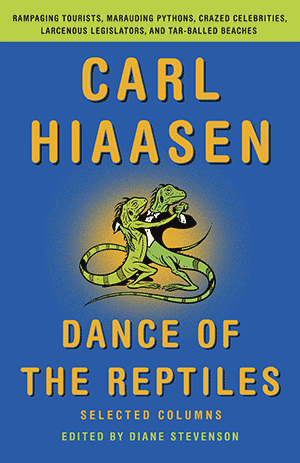
However, if you’re dreaming of Florida right now, but not exactly getting there as soon as you’d like, pick up any book by Carl Hiassen for a crazy look at south Florida, especially Miami; Susan Orlean’s The Orchid Thief; Peter Mathiessen’s Shadow Country about the Florida frontier; or Karen Russell’s Swamplandia! I’m snuggled in with new books to read and dreaming up potential new adventures for the year based on those books. One benefit of travel and reading is that even if I’m home in the deep freeze, I can conjure up previous tropical sojourns to warm my heart if not my fingers and toes.
I always laugh when I hear how differently people speak in each part of The United States. Truly, we are like many countries in one, each with a wildly distinctive world view, food, music, and a unique vocabulary and way of speaking, especially here in Minnesota, where I live.
Colin Woodard explains how this came about in his book American Nations: A History of the Eleven Regional Cultures of North America. He says, “There isn’t and never has been one America, but rather several Americas.” Consequently, he says, “Any effort to ‘restore’ fundamental American values runs into an even greater obstacle: Each of our founding cultures had its own set of cherished principles, and they often contracted one another,” which explains so many of our political difficulties.
However, as a traveler, these differences make visiting the various regions of the U.S. a real cultural experience and a lot of fun. So pick up your soda, or pop, or Coke and enjoy this video from The Atlantic on the way we Americans talk.
At St. Paul de Mausole near St. Remy, France, you can see exactly what Vincent Van Gogh saw and painted.
The gnarled olive trees, irises, lavender, and bright sunshine…Entering the Monastery of St. Paul de Mausole in St. Remy de Provence in southern France you have a feeling that you’ve seen this place before. That’s because you have.
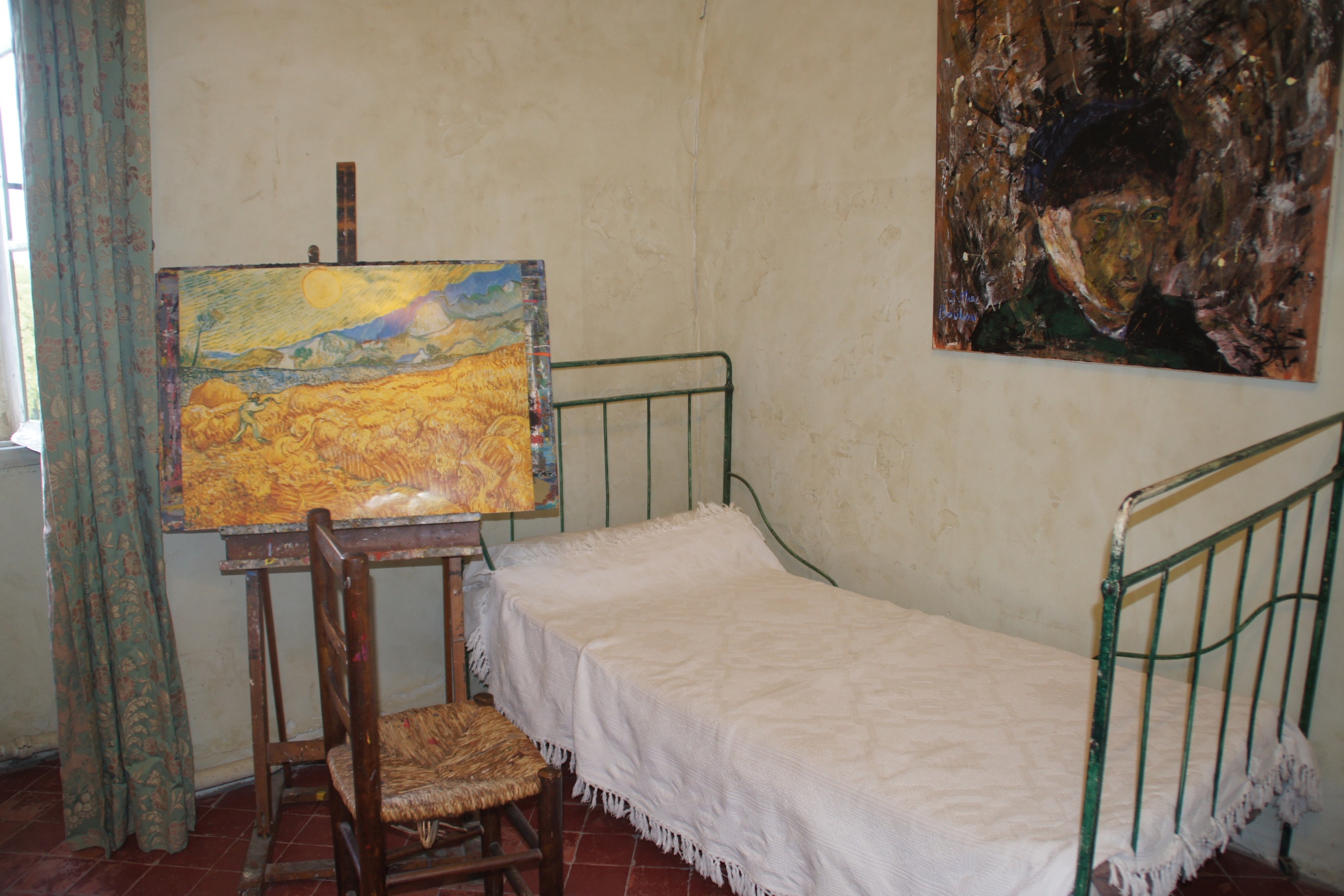
Van Gogh’s room is reproduced at the asylum in St. Remy, France, where he lived for a year and painted over 100 paintings.
This is the “maison de sante,” not far from Arles, where Vincent Van Gogh went to rest and recover his mental health in 1889, not long after the famous incident when he cut off his ear. He stayed here roughly one year and during that time he painted anything and everything in his surroundings–143 oil paintings and more than 100 drawings including two of his most famous masterpieces, Irises and The Starry Night. The fabulous thing about visiting St. Paul de Mausole is that photos of the paintings and and information about them appear where they were painted. So for example, a photo of “Les Oliviers,” which is now in the Minneapolis Institute of Arts, is posted right in front of those olive trees. You feel a little chill when you see exactly what he saw and how he interpreted it.
The imposed regimen of asylum life gave Van Gogh a bit of stability: “I feel happier here with my work than I could be outside. By staying here a good long time, I shall have learned regular habits and in the long run the result will be more order in my life.”
You’ll enjoy your trip more if you read up about Vincent. Irving Stone’s fiction classic Lust for Life provides a general knowledge of his story. But scholars continually interpret both his art and the health problems that may have been at the source of his mental illness. Most recently, Van Gogh: The Life by Steven Naifeh and Gregory White Smith offers a very readable portrait of Van Gogh and puts forth the idea that rather than committing suicide, Van Gogh was murdered. Traveling with kids? They’ll want to read van Gogh and the Sunflowers by Laurence Anhold.
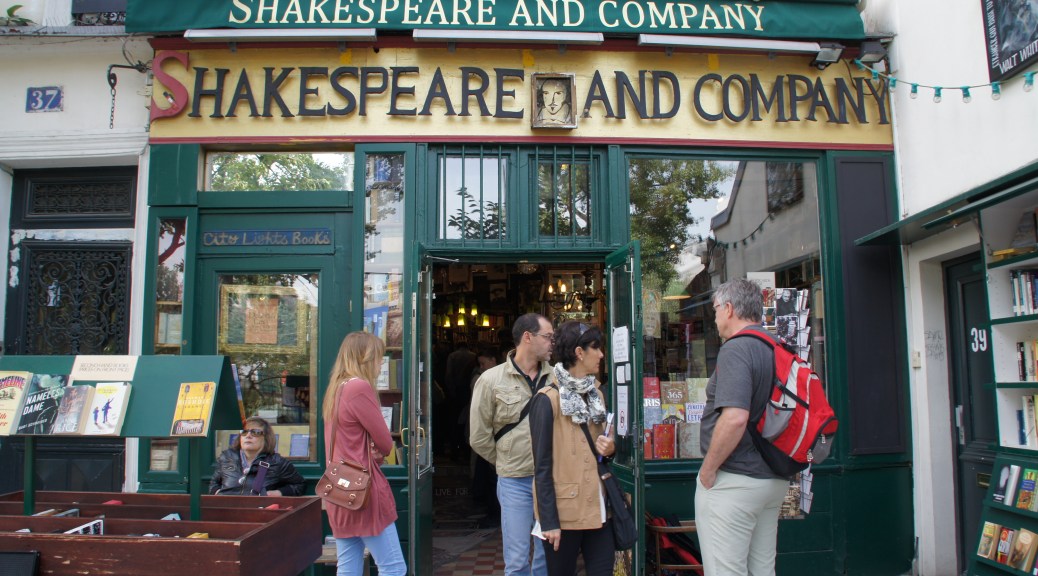
Book lovers from around the world visit the iconic Shakespeare and Company in Paris.
From the outside where bins of books lure visitors to pause and browse on a sunny day, to the golden hued interior where books fill every nook and cranny, Shakespeare and Company positively vibrates with literary history. In A Moveable Feast, Ernest Hemingway said of the famed Paris bookstore, “On a cold windswept street, this was a warm, cheerful place with a big stove in winter, tables and shelves of books, new books in the window, and photographs on the wall of famous writers both dead and living.” He could have been describing the store as it is today, in its current location at 37 rue de la Bûcherie, (formerly a monastery) across the Seine from Notre Dame Cathedral. It’s a place where the most current books and writers mingle with rare old volumes, where the tradition of fostering new writers merges with a heritage that reaches back to 1919 and “The Lost Generation.”
When Hemingway discovered Shakespeare and Company back in the 1920s it was located at 12 Rue l’Odeon. Its owner, Sylvia Beach, both sold books and loaned them out, which was perfect for the impoverished writer who had just moved to Paris with his wife Hadley. (Read their story in Paula McLain’s The Paris Wife.) In those days, her shop was the center of modernist literary culture, with writers such as Hemingway, Fitzgerald, Pound, Stein, and Joyce congregating in the “warm, cheerful place” full innovative ideas. Not surprisingly, one could find all of the books banned in England and America—most notably, Joyce’s Ulysses—readily available in Beach’s shop. After publishers rejected Joyce’s gigantic Ulysses as pornographic, Shakespeare and Company published it.
Housed in a former monastery, Shakespeare and Company continues the literary spirit of the Lost Generation and encourages modern writers, including its sponsorship of The Paris Literary Prize.
But that was before the World War II. The shop closed after the Germans occupied Paris. Hemingway himself “liberated” the store when he entered Paris with the American troops in 1944, but the store didn’t reopen until the 1950s when George Whitman a new shop, originally called Le Mistral and later Shakespeare and Company, in its current location and continued Beach’s work. Here, a second generation of writers gathered, everyone from the last modernists—Henry Miller, Anaïs Nin, Richard Wright, and Samuel Beckett—through the first Beats—Allen Ginsberg, William Burroughs and Lawrence Ferlinghetti. Whitman’s daughter, Sylvia Beach Whitman now owns Shakespeare and Company, which has become the world’s most famous bookstore. It still serves as a haven for penniless writers, who are allowed to sleep among its shelves for free.
I have a feeling that Hemingway would feel at home in the the store today, though he would surely miss the first Sylvia Beach… and they’d want him to buy the books.
The shutters at Shakespeare and Company tell the bookstore’s story.
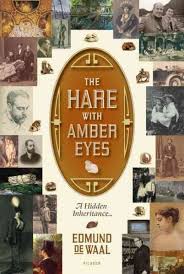
It’s a strange feeling when the story line in a book you’re reading matches front page news. I just finished reading The Hare With Amber Eyes, Edmund De Waal’s exploration of his family’s history through its art collection, in particular a set of Japanese netsuke, miniature sculptures, that were passed down through his family from the late 1800s onward. His fabulously wealthy Jewish family lived in a “palais” in Vienna packed with art. But when the Nazis moved into Austria, they confiscated the family’s possessions, their home, and in some cases took their lives, too. I finished the book just as the news hit that a huge amount of Nazi-confiscated art had been found in a Berlin apartment, about 1,500 works estimated to be worth $1.4 billion. If you’re not familiar with the unfolding story, you can read about it in this New York Times article. You have to wonder if any of De Waal’s family art collection will be discovered in this trove of paintings.
On a similar topic, The Monuments Men: Allied Heroes, Nazi Thieves And The Greatest Treasure Hunt In History by Robert M. Edsel has been made into a movie with George Clooney and Matt Damon. Though the trailer for The Monuments Men says it will be out in December, the release is now scheduled for February.
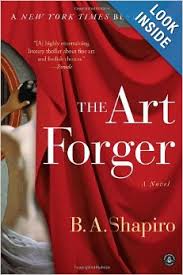
It’s no wonder that stolen art is such a hot topic in literature lately. The real-life stories have a plot line worthy of Robert Ludlum. My book club recently read B.A. Shapiro’s The Art Forger, which weaves the fictional story of a young woman who forges a work by Degas with the story of the heist from the Isabella Stewart Gardner museum in Boston, the largest unsolved art theft in history. See Shapiro’s excellent book trailer to understand how she used it as the foundation of her story. And, if you’re thinking of a trip to Boston, read The Art Forger and go visit the Isabella Stewart Gardner Museum. It’ll bring alive both your reading and your travel.
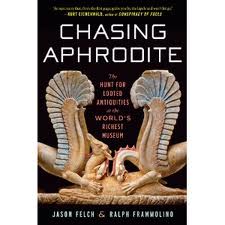
In addition, the Los Angeles/Santa Monica chapter of my book, Off The Beaten Page: The Best Trips for Lit Lovers, Book Clubs and Girls on Getaways, offers a weekend itinerary that includes a visit to the fabulous Getty Museum in Los Angeles. And on the reading list for that chapter is Chasing Aphrodite: The Hunt to Looted Antiquities at the World’s Richest Museum. It’s an investigation of the museum’s dealing in illegal antiquities from Los Angeles Times reporters, Jason Felch and Ralph Frammolino.
Looking for more on art heists? Here’s a Goodreads list that will keep you reading, and on the edge of your seat, well into the new year.
If you think reading is a solitary pursuit, you need to go to a book festival.
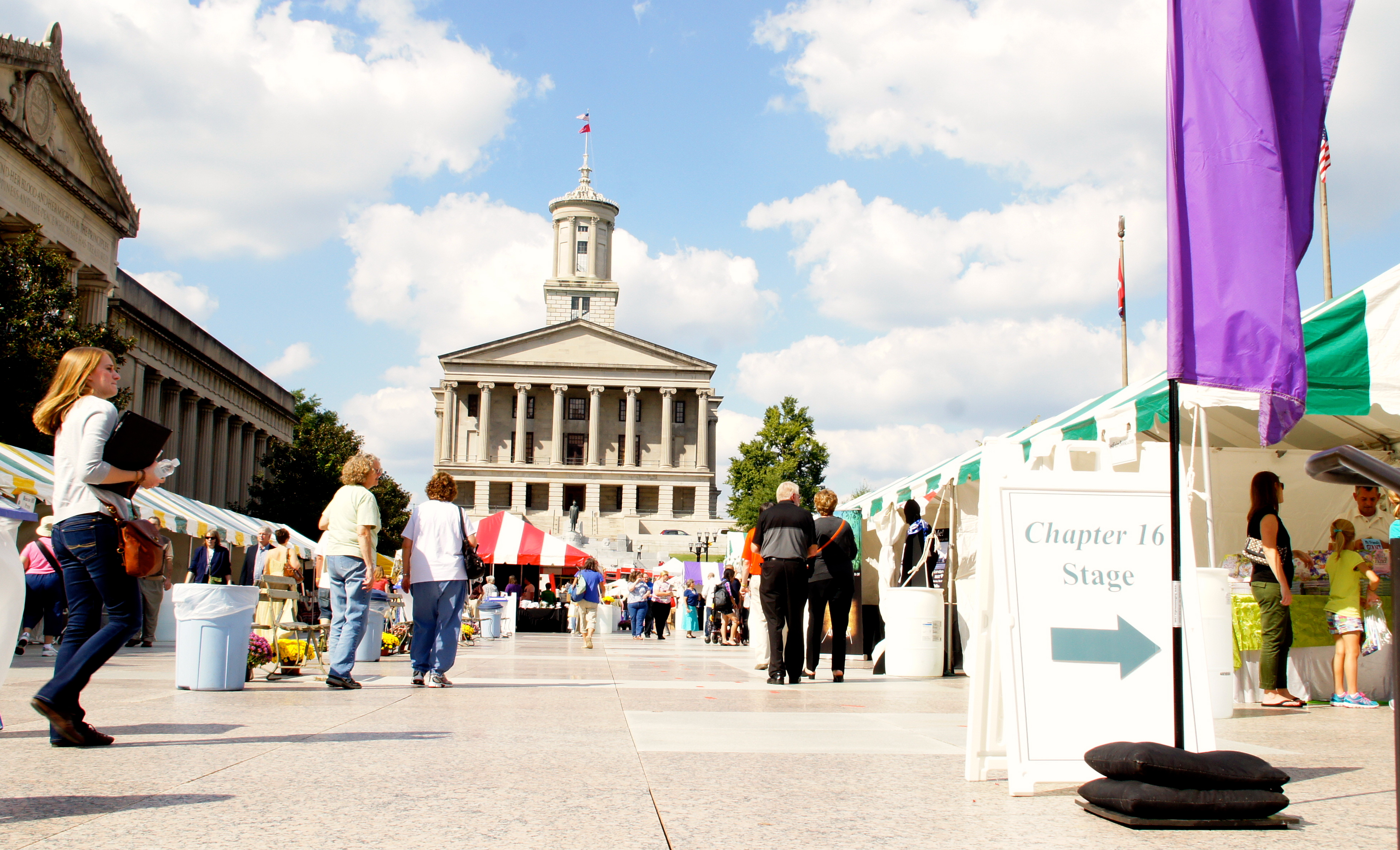
Southern Festival of Books on the Leglislative Plaza in Nashville, Tennessee
I moseyed down south to the Southern Festival of Books in Nashville a couple of weeks ago and found myself amidst about 30,000 kindred spirits. I strolled among rows of tents full of books and publishers–like an art fair for book lovers–set up on the capitol city’s Legislative Plaza. Program in hand, I had the difficult task of choosing among the 212 sessions, three performance stages, and 325 authors speaking and signing their books during the three-day event.
Sessions (usually about an hour) took place in Nashville’s gorgeous public library,
So many books and authors, so little time.
Legislative Plaza rooms, and in War Memorial Auditorium. Authors talked about their books, like a book club discussion. In fact, book clubs showed up to ask questions and share their enthusiasm for books their groups had read. I especially enjoyed hearing William Landay talk about his experiences as a prosecutor and the ideas that went into writing his bestseller, Defending Jacob. Another of my favorites, Meg Wolitzer, read from her book The Interestings and talked about how her own background influenced the story. But, the fest offers something for lovers of every literary genre, a look at regional writers who you may not know, as well as appearances from big name writers who this year included Bill Bryson, former Vice President Al Gore, Rick Bragg, Roy Blount, Clyde Edgerton, Chuck Palahniuk and others. It was a little slice of heaven for book enthusiasts and the throngs there offered clear proof that, though the publishing industry is changing dramatically, readers are more passionate than ever about books and relish the opportunity to connect with authors and with their fellow readers.
Encouraging the Readers (and Writers) of the Future
I was also impressed with the Festival’s efforts to boost childrens’ interest in literature. It offered sessions for teachers, parents, and young readers from toddlers to YA. Take for example, panels such as “Building Kids Imaginations through Picture Books: Museums, Libraries, Engineers, Mice and More” or “Zombie Tales of the Undead for Teens and Tweens,” or singer Janis Ian reading her book, The Tiny Mouse. In fact, about 60 of the featured authors this year write for children and teens. The biggest event: kids screamed for Rick Riordan (author of the Percy Jackson and the Olympians series) like he was a rock star. Read more about the Festival in Publishers Weekly.
If this sounds a little too book-obsessed, for a weekend in the Country Music Capitol, I want to assure you that we took advantage of the other great stuff to do in Nashville. Exhibit A, my new cowboy boots, perfect footwear to wander up and down Broadway, Nashville’s main music thoroughfare, where country tunes pour forth night and day.
You never know who you’ll meet on the street in Nashville.
Fall is the best time for literary travel just about anywhere, including Newport, Rhode island.
If you’re a traveler, fall, not Christmas, is the “most wonderful time of the year.” Same sites but fewer crowds, cooler temps, and often, lower prices. It’s the perfect time to go so many places, you may find it hard to choose a destination. The answer lies on your bookshelf. Whether they’re classics or “beach reads,” your favorite books can offer guidance and inspiration for a “lit trip” to see the sites of the stories, absorb the environment that inspired the authors, and even walk the paths of fictional characters. Literary travel allows you to extend the experience of a great book and expand your understanding of your destination. Reading and travel enhance each other, and one taste will leave you yearning to go back for more. Best of all, you don’t need to head for Hemingway’s favorite Paris haunts or Jane Austen’s English countryside to take a lit trip. Opportunities for book-based travel abound in the U.S., too, and many are at their best in fall.
California Wine Country – Vintage Reading
Harvest time in California’s wine regions, typically from mid-August through October, overflows with vibrant golden yellow and crimson colors and the trucks rumbling by overflow with grapes ready for the crush. M.F.K. Fisher captured the delights of Napa and Sonoma where she lived and wrote her classic essays on food, wine, and life. Jack London also loved the Sonoma area where he lived and wrote in his later years. And, for fans of another type of grape, The Grapes of Wrath (which has absolutely nothing to do with wine), the National Steinbeck Center in Salinas, is a short jaunt from wine country, making literature and wine the perfect blend for fall travel.
Read: M.F.K. Fisher, Musings on Wine and Other Libations, (Anne Zimmerman, ed.)
Jack London, Valley of the Moon (another name for Sonoma),
For more contemporary reading, try James Conaway, Nose, and Rex Picket, Sideways.
Explore: the vineyards of Napa and Sonoma counties, and take a side trip to the National Steinbeck Center in Salinas (www.steinbeck.org)
Stay: L’Auberge Du Soleil, Rutherford (www.aubergedusoleil.com)
Eat: pack a picnic and enjoy it on the grounds of your favorite winery or in Jack London State Historic Park in Glen Ellen www.jacklondonpark.com
Events: Fall in wine country means special celebrations of wine and food such as Flavor! Napa Valley in November (flavornapavalley.com), vintner dinners such as those at Grgich winery (grgich.com). Schramsberg winery in Calistoga offers special camps in fall and spring for wine and food lovers (www.schramsberg.com/news/campschramsberg)
Santa Fe – Willa Cather’s Archbishop Comes to Life
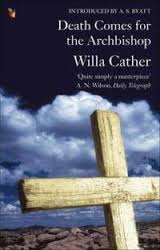
Santa Fe is a sensory fiesta year-round but in fall the aroma of roasting chili peppers adds to the mix. New Mexico’s beauty, dramatic history, and architecture have lured for artists and writers for decades. Among them, D.H. Lawrence (to Taos) and Willa Cather, who captured the drama of the New Mexico environment as she wrote a fictional version of the real-life story of Bishop Jean-Baptiste Lamy, in Death Comes for the Archbishop. Shoppers and art lovers will find equally dramatic adventures in Santa Fe.
Read: Willa Cather, Death Comes for the Archbishop
Explore: Bishop’s Lodge which offers a spa, horseback riding, and a chance to see Bishop Lamy’s chapel and home. (www.bishopslodge.com)
Stay: Inn on the Alameda (www.innonthealameda.com)
Eat: The Shed (www.sfshed.com)
Events: Santa Fe Wine and Chili Fiesta (www.santafewineandchile.org)
Newport, RI – America’s “Downton Abbey”
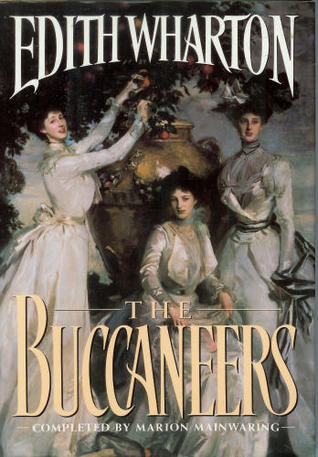
Since the 1800s, America’s wealthiest families have flocked to Newport, Rhode Island, and built summer “cottages” that most of us would call “palaces.” Among them was Edith Wharton, who wrote of her experiences in Gilded Age Newport in books such as The Buccaneers, which is about wealthy heiresses who married into the British aristocracy, much like “Downton Abbey’s” Cora Crawley. You can explore Newport’s Gilded Age mansions as well as its gorgeous seaside sites. The more “off season” you go, the more you can afford live like a Vanderbilt.
Read: Gail McColl and Carol Wallace, To Marry and English Lord
Edith Wharton, The Buccaneers
Explore: Newport Mansions (newportmansions.org)
Stay: Vanderbilt Grace (www.gracehotels.com/vanderbilt) Ask about packages that include admission to the Newport Mansions.
Eat: The Mooring (www.mooringrestaurant.com)
Events:
Polo matches, sailing regattas, or just a hike along Cliff Walk. In Newport you can sample “upper crust activities” or just enjoy the view. (www.gonewport.com)
Nantucket – A Whale of a Trip
You can’t find a more concentrated dose of New England charm than in Nantucket. And, if you’re a fan of Herman Melville’s whale tale, Moby Dick, you know that Nantucket is the place where Captain Ahab’s ship, the Peaquod, set sail.
Read: Herman Melville, Moby Dick,
Nathaniel Philbrick, Why Read Moby-Dick? and In the Heart of the Sea: The Tragedy of the Whaleship Essex
Sena Jeter Nasland, Ahabs Wife
Or for more contemporary tales, read Summerland and other books by Nantucket resident Elin Hilderbrand.
Stay: White Elephant (www.whiteelephanthotel.com)
Eat: Millie’s. Enjoy the sunset and sample a Whale Tale Pale Ale. (www.milliesnantucket.com)
Explore: Nantucket Whaling Museum (www.nha.org)
Events: The Nantucket Maritime Festival. You’ll hear sea shanties sung, see harpoons thrown, and boats raced. (www.nantucketmaritimefestival.org)
Driftless in Wisconsin
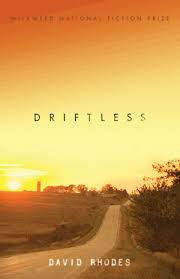
Because of its geology, the Driftless Area of southwest Wisconsin is a place tailor-made for meandering. And the fall colors are reaching their peak in Wisconsin right now. As David Rhodes explains it in his beautiful book Driftless, “The last of the Pleistocene glaciers did not trample through this area, and the glacial deposits of rock, clay, sand, and silt–called drift–are missing. Hence its name, the Driftless Region. Singularly unrefined, it endured in its hilly, primitive form untouched by the shaping hands of those cold giants.” In this area, you’ll meet friendly folks who may remind you of the characters in Rhodes’s book—organic farmers, artists, shopkeepers, and the nice Norwegian lady at the dairy coop. Amish folks sell produce and hand-made wares at roadside stands, making the entire area a giant farmers market through fall. By the end of your trip, you’ll be reluctant to leave. But you can return by reading Rhodes’s newest book, Jewel Weed.
Read: David Rhodes, Driftless and its sequel, Jewel Weed
Stay: Charming B&Bs abound in the Driftless Area. Check out The Roth House(therothhouse.com) and the sister property The Old Oak Inn (theoldoakinn.net) in Soldier’s Grove or Westby House Inn in Westby (www.westbyhouse.com)
Explore: Amish farms and shops (www.downacountryroad.com) and Wildcat Mountain State Park (www.dnr.wi.gov/topic/parks/name/wildcat/) For more Driftless information see driftlesswisconsin.com
Events: Gays Mills Apple Festival (www.gaysmills.org/Apple_Festival)
Literary Travel Isn’t Just for Book Clubs and Girls on Getaways–a guest post from Scott Smith, Edina, MN.
First things first: I’m a guy. I work hard during the week, bleed Maize and Blue sports, track the Wild and Vikes with interest, fire up the grill on weekends and tip back a beer or three in the process. Give me ESPN, a fishing rod, a deck of cards and some Blanton’s, and I’m happy as a clam. I’m not a complete Neanderthal – I do enjoy a good novel now and then, and I love to travel – but I’ve assiduously avoided this “lit trip” phenomenon up to now, largely out of fear of getting my man card revoked.
I’m also a huge WWII history buff, particularly with regard to the D-Day invasion and its
“Les Braves,” a nine-meter tall stainless steel sculpture by Anilore Ban rises from the sand at Omaha Beach near St. Laurent-sur-Mer, France. It honors all those men who landed there to liberate France. The sculpture has 3 elements: 1) Wings of Hope, 2) Rise, Freedom!, and 3) Wings of Fraternity.
aftermath, and I’ve read just about everything I can muster on the topic. Among my favorites, I’ve nearly broken the spine on Stephen Ambrose’s D-Day; my copy of Anthony Cave Brown’s A Bodyguard of Lies is lovingly dog-eared; and, Ben Macintyre’s Double Cross holds the current place of honor on the dresser next to my side of the bed. From my readings, I can name every landing sector in Normandy, the combat units that landed in each, and when. I know that “Hobart’s Funnies” is not an Australian comedy club and that the Falaise Gap is not a dental imperfection.
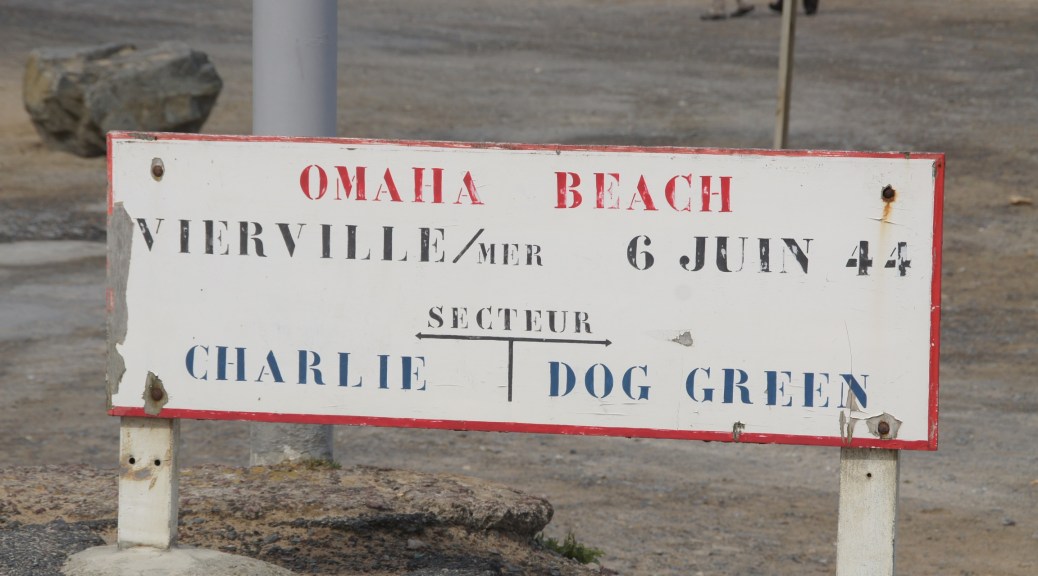
Go to Omaha Beach today, as Terri and I did a few weeks ago, and for the uninformed tourist it’s almost impossible to visualize what happened there nearly 70 years ago. Sure, the ruins of a few German gun emplacements are still there, and a couple of memorials (the one on the beach outside of St. Laurent is particularly striking) remind you of the historical importance of where you stand. Otherwise, the eyes see a gorgeous stretch of white sand, turquoise water just beyond it, children splashing in the surf, and lush green bluffs overlooking the seashore, like some Impressionist painting.
But I saw, and experienced, something entirely different. I saw exactly where the 116th
The American Cemetery, Normandy, France
Regiment’s Company A, National Guarders from Bedford, Virginia, came ashore at 6:30 am on D-Day morning – just a couple hundred yards below the gun emplacement at Vierville that’s now a National Guard memorial – and instantly comprehended why that unit suffered over 90 percent casualties in the space of 10 minutes. I looked on the bluffs and the draws above Omaha and witnessed vicariously the extraordinary leadership of young infantrymen who understood that the original assault plan was doomed and improvised their way to success. I visualized the beach obstacles, the barbed wire, the shingle – all gone today – and marveled at the bravery of those who swam and crawled ashore that day. And standing in the American cemetery in the bluffs outside of Colleville, amid row after row of crosses and Stars of David, I saw the selflessness of and the sacrifices made by the “Greatest Generation” in a whole new light.
And so I’m forced to confess. The umbilical between reading and travel isn’t necessarily reserved for book clubs and gals on getaways – it’s there for us XY types too. Maybe it’s a jaunt to Key West, to take in a little fishing with Hemingway’s Santiago. Perhaps it’s that trip to a Wyoming dude ranch with Larry McMurtry in hand. Or it’s a Dodgers game after reading The Boys of Summer. Your call. Like I experienced in Normandy, what you read may give special meaning to what you see. That’s a good thing. And I promise you won’t lose your man card in the process.
From Terri: In addition to Scott’s list of books, I’d add Jeff Shaara’s The Steel Wave, about the D-Day Invasion, which is part his World War II trilogy. It’s a good read, easy to digest.
I love the water, but as a Midwesterner, the ocean holds a special fascination because we don’t have one. Granted, the Great Lakes are big enough and fierce enough in bad weather to give the feeling of the ocean and the same waves of motion sickness wash over on me on rough water, salty or fresh. But there’s just something about the ocean that launches my imagination into overdrive.
First there are the tides. We visited friends one summer who live on a Pacific coast inlet. When we arrived we were oceanside. The next morning the water was gone and the boats all sat in the sand awaiting high tide to float them again. This was a freaky, Stephen King-like experience for a “lake person.”
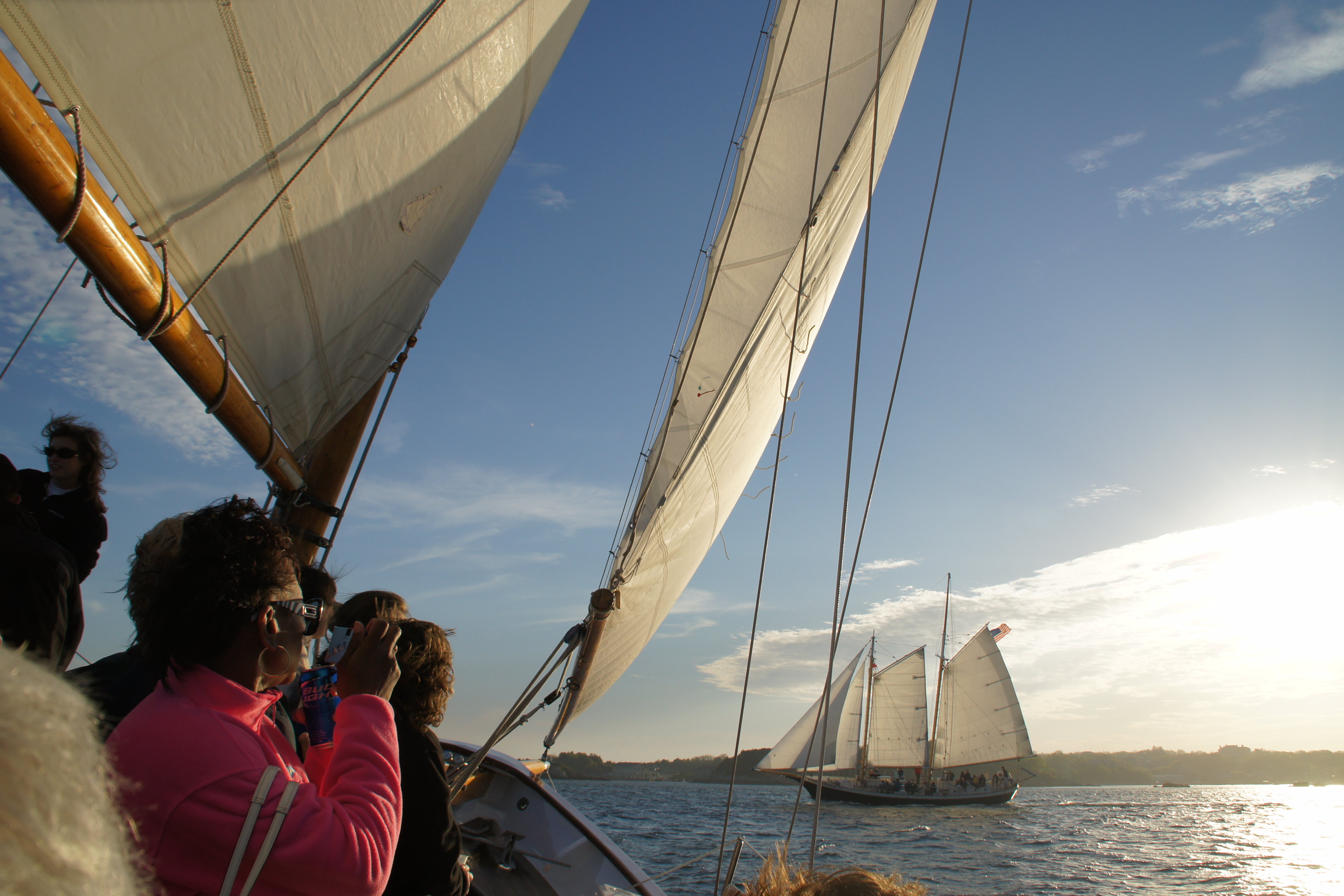
The wreck of the Edmund Fitzgerald aside, the ocean simply carries a bigger cargo of tales, from Moby Dick to Captains Courageous to The Perfect Storm and about a zillion classic novels in between. Gloucester, Mass., a real fishing town north of Boston, offers one of the best places to hang out and absorb a heavy dose of the maritime atmosphere that makes those stories come to life. You’ll get a double dose if you attend the Gloucester Schooner Festival this weekend.
Sailing the harbor, Gloucester, Mass.
Finally, few things are more pleasurable than being sea-side, dozing intermittently, lulled by the warmth of the sun, a view of the ocean, the sound of the surf, and the coconutty smell of sunscreen on your skin. I just read a post from a blog I follow, Jenn’s Bookselves, in which she writes about how much the venue in which we read a novel, can affect our
Beach reading, Rockport, Mass.
feelings and reading experience. I nominate surfside as one of the best places to read, though it’s important to do so with books that give your brain a chance to relax along with the rest of your body. So raise your pina colada and your copy of anything by Carl Hiassen. Here’s to beach reading.
Travel to the places you read about. Read about the places you travel.














 Off The Beaten Page Travel