Tag Archives: literature

Gifts for Mom: Ten Book Ideas to Inspire A Mother’s Day Adventure

Give your mom the Mother’s Day gift she really wants: time with her kids and a good book.  

SONY DSC
My 80-plus-year-old mother and I went sailing last year in Narragansett Bay while doing a Edith Wharton-related trip to Newport, Rhode Island. You can create a lit-trip just about anywhere, a great Mother’s Day gift.

It’s often a challenge to find an interesting way to celebrate Mother’s Day beyond flowers and candy, or maybe breakfast in bed.  But the gift of a good book and a book-based adventure to go with it makes a present any Mom will treasure.

Women love to bond over books. The popularity of book clubs proves that. But Moms and their kids—of any age—can also share the experience of reading a great book together.  Better yet, take reading a step further with a “lit trip,” based on the book. Meaningful time with her kids is the gift every mother wants.

My book, Off The Beaten Page: The Best Trips for Lit Lovers, Book Clubs, and Girls on Getaways offers reading lists and itineraries for three-day “lit trips” to 15 U.S. destinations. But it’s easy to create your own lit trip close to home, no matter where you live. Think “field trip” like the kind you took in school, only without the yellow bus and the sack lunch. Find a book topic that interests both you and your mother (or your kids), then think of place to go where you can experience the subject of the book in person. These don’t have to be high-brow or “girly” outings. We’re not talking reading Keats or Shelley and dancing the gavotte.  Here are a few of my ideas for Mother’s Day lit trips for readers, from young adults to the young at heart:

  1. For those who love horses or horse-racing- Read Laura Hillenbrand’s Seabiscuit
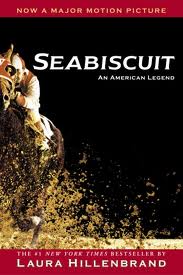
    Read Seabiscuit and head for the racetrack
    Read Seabiscuit and head for the racetrack

    and spend an afternoon at the track or visit a horse farm.

  2. For fans of “whodunits” – Read a book about an art heist such as The Gardner Heist: The True Story of the World’s Largest Unsolved Art Theft by Ulrich Boser or The Rockwell Heist by Bruce Rubenstein and visit an art museum.
  3. For history buffs – Read Assassination Vacation by Sarah Vowell (or ask a librarian for tips on great books about your local history) and visit an historical society, battlefield or landmark.
  4. For baseball fans – Read Bernard Malmud’s The Natural or Michael Lewis’s Moneyball and take in a game together.
  5. For animal lovers – Read Temple Grandin’s Animals Make Us Human or Julie Klan’s Love at First Bark: How Saving a Dog Can Sometimes Help You Save Yourself and visit or volunteer at an event at your local humane society or animal rescue group.
  6. For the outdoorsy – Read Cheryl Strayed’s memoir Wild: From Lost to Found on the Pacific Crest  Trail and go take a hike.
  7. For music fans– Read an autobiography by a favorite musician or other book about music and take in a concert. Try Cash: The Autobiography; Blues All Around Me by B.B. King; or  Girls Like Us: Carole King, Joni Mitchell, Carly Simon and the Journey of a Generation by Sheila Weller.
  8. For cooks – Read Animal Vegetable, Miracle by Barbara Kingsolver or My Life in France by Julia Child and visit a farmers’ market or take a cooking class.
  9. For movie goers – Read F. Scott Fitzgerald’s The Great Gatsby or Therese Anne
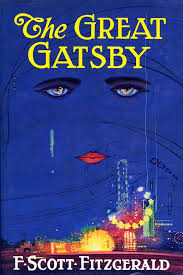
    How does the movie compare to the book? Read the Great Gatsby and then take in the movie.  A great outing for Mother's Day.
    How does the movie compare to the book? Read the Great Gatsby and then take in the movie. A great outing for Mother’s Day.

    Fowler’s Z: A Novel of Zelda Fitzgerald and see the new Gatsby movie starring Leonardo DiCaprio.

  10. And, for moms who really do love flowers, read The Language of Flowers: A Novel, by Vanessa Diffenbaugh and go on an arboretum or garden tour.

Off The Beaten Page: The Best Trips for Lit Lovers, Book Clubs, and Girls on Getaways, published by Chicago Review Press, is available now in bookstores and online everywhere.

Off The Beaten Page Interview on Minnesota Monthly Blog

Minnesota Monthly recently posted an interview that Joel Schettler did with me about

Off the Beaten Page: The Best Trips for Lit Lovers, Book Clubs and Girls on Getaways is now on sale everywhere.

Off the Beaten Page and literary travel.

“Designed for lovers of literature and travel, Off the Beaten Page: the Best Trips for Lit Lovers, Book Clubs, and Girls on Getaways, written by Edina resident Terri Peterson Smith, turns the power of a great story into a travel experience, taking readers on a tour of America’s most literary destinations. From a Mark Twain-inspired steamboat cruise on the Mississippi, to a walking tour of New York in the shoes of Holly Golightly from Truman Capote’s Breakfast at Tiffany’s, detailed travel ideas and itineraries are crafted for 15 destinations across the United States that are featured in the works of famous writers—including an entire chapter on Minneapolis and St. Paul.

“I had opportunity to ask the author about her inspiration for the book, which will be published next week. Hear her speak in person on May 28 at Barnes and Noble at the Galleria in Edina beginning at 7 p.m.”  Read the rest of the article.

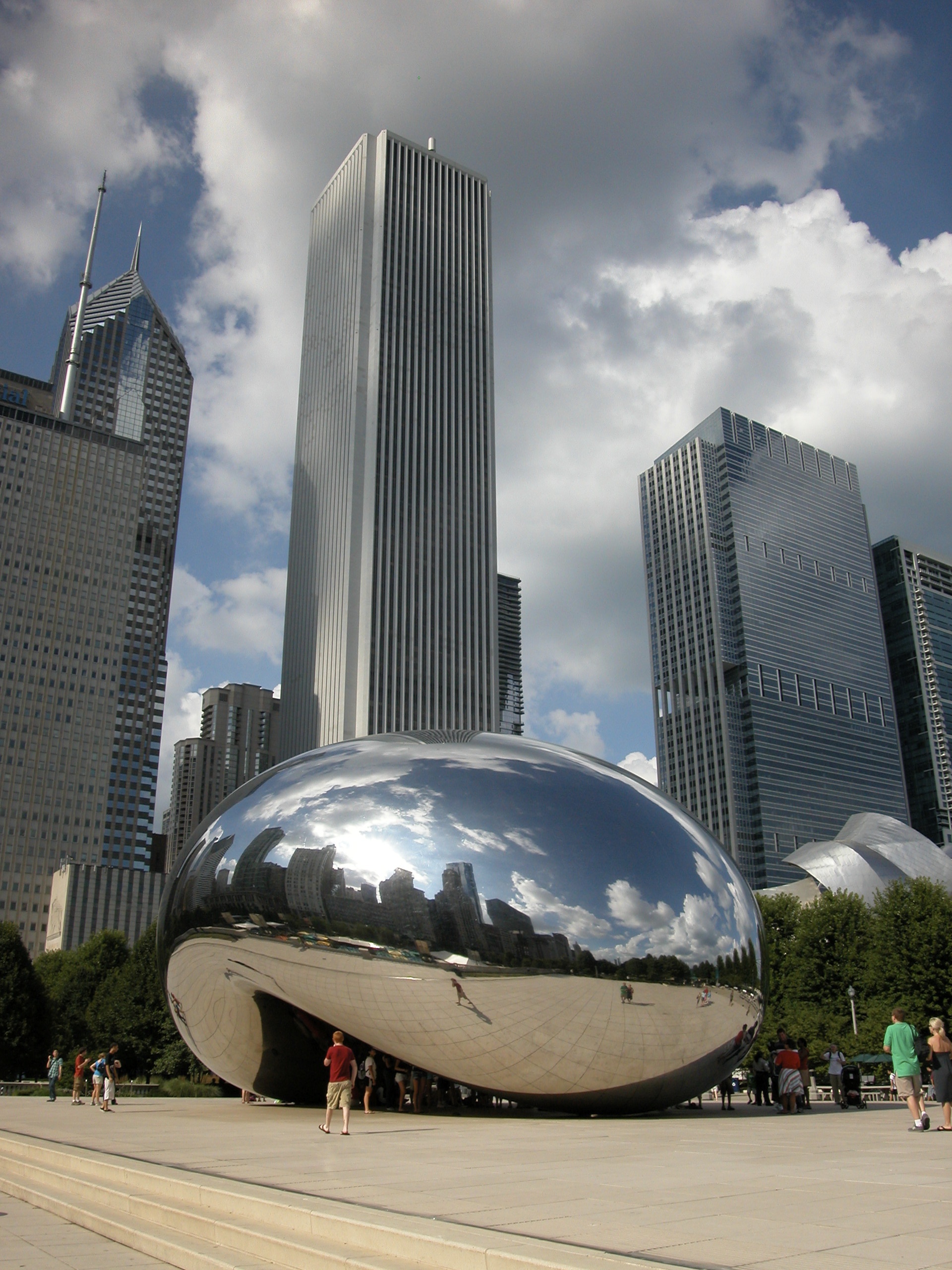
Weekly Photo Challenge: Up, Up and Off The Beaten Page in Chicago

Wherever you go in Chicago, it's important to keep looking up at the city's fabulous architecture.  Above, one of the latest additions to  Chicago's skyline, Cloud Gate, a.k.a. The Bean.
Wherever you go in Chicago, it’s important to keep looking up at the city’s fabulous architecture. Above, one of the latest additions to Chicago’s skyline, Cloud Gate, a.k.a. The Bean.

My book, Off The Beaten Page: The Best Trips for Lit Lovers, Book Clubs, and Girls on Getaways comes out May 1.  So, between now and then, I’m offering a glimpse of the 15 U.S. cities featured in the book.  Here’s a preview of the Chicago chapter, entitled “The Tales of Two Architects:”

Pulitzer Prize-winning architecture critic Paul Goldberger says, “Architecture is one  area in which we in New York truly do have a second city complex toward Chicago–not the other way around, as it is in so many other realms. And for all that has happened over the years, little has changed in the sense that those of us in New York, as well as the rest of the country, still have of Chicago as being the essential city of American architecture.”

But you don’t have to be a connoisseur of skyscrapers to understand Chicago’s pivotal place in architectural history and the innovative, risk-taking outlook that continues to make Chicago “America’s City.” Two books have generated sky-high interest in Chicago by combining the stories of the city’s architectural lions with juicy plots.  The first, Erik Larson’s The Devil in The White City: Murder, Magic, and Madness at the Fair That Changed America.  The other book, Nancy Horan’s Loving Frank, a novel of historical fiction, tells the tale of architectural genius Frank Lloyd Wright’s scandalous relationship with his client, Mamah Borthwick Cheney.

Each chapter in Off the Beaten Page includes an essay about a couple of books that create a theme or focus for your visit to that city, extensive reading lists, and three-day itineraries that offer ways to experience in person the books you’ve read and have fun in other ways, too. For example, the White City is long gone, but you can get a taste of what is was like by taking a tour with the Chicago Architecture Foundation. Wander Jackson Park, the site of the World’s Fair in The Devil in the White City, then tour Millennium Park, a modern-day bookend to the architectural innovation that began with that fair.  Wherever you go, keep looking up.

Are You a Travel Snob? Take this quiz and find out.

SONY DSC
Camel trekking in Morocco? Ten points!

During one of our recent “What is the world coming to?” discussions spurred by politics and other recent disasters, a friend handed me a book by David Brooks called Bobos in Paradise: The New Upper Class and How They Got There. In it, Brooks, who is a columnist for the New York Times, examines a social group that he has labeled bourgeois bohemians, or Bobos. He says a Bobo is a mix of bourgeois establishment square and bohemian artist intellectual.  Like an anthropologist studying an exotic tribe, Brooks looks at Bobo business culture, social, intellectual and spiritual life.  It’s a fun read because he seems like good-natured guy who admits he’s part of this group and doesn’t hesitate to point out its idiosyncrasies in a very humorous way.

What really caught my eye is his description of Bobo travel habits. I have to admit, to some extent, he’s describing me, many of the people I know, and almost all of the people you read about in travel magazines and and on travel blogs.  Tell me if this sounds familiar:

“There are a certain number of sophisticated travelers who wear their past destinations Unknown-9like little merit badges.”  According to Brooks, these aren’t people who simply name drop about the super luxe hotels and resorts where they stay.  “Their main joy in life comes from dropping whopping hints that everywhere you are just going they went to long ago when it still meant something.”  They’re masters of insufferable questions like “Didn’t the atabeg of Damascus stop there in 1139?” And, says Brooks, “They don’t say, ‘I know such-and-such a language.’  They say, ‘I have a little Portuguese” or ‘I have a few of the romance languages, of course,’ in that faux offhand manner that makes you want to stick the person’s head in a vise and squeeze it until the eyes pop out.”

But, we’re all travel snobs to some extent. For example, I was accused of travel snobbery when I said I didn’t really have a great desire to visit the Wisconsin Dells for vacation.  I also make snide comments about the oddly dressed tourists who pile off cruise ships and tour buses. But it’s a matter of degree. I definitely rate myself lower on the food chain of travel snootiness than the guy who rues the day electrification came to Belize, though I have told people I remember when the streets weren’t paved on Ambergris Caye.

The Quiz

Where do you rate on the travel snob-o-meter? With the help of Brooks analysis,  I’ve developed the following quiz so you can rate yourself. Give yourself 10 points if you answer yes to the following: 1. Have you ever one-upped someone in a travel conversation?

2. Do you avoid places that are “touristy” even though you’re dying to see them?

3. Do you wear outdoorsy travel gear acquired at places such as Eddie Bauer or REI even when you’re not on an expedition? Five extra points if your togs have lots of pockets.

4. Have you ever said you have a language instead of I speak a language? Or, another of  my favorites, do you use a “French” pronunciation for a word when it isn’t a French word?

5. Do you label yourself as “serious” about a travel or sporting pursuit, i.e. a “serious hiker,” or “serious kayaker?” Says Brooks, “The most accomplished are so serious they never have any fun at all.”

6. Do you seek out locales where simple peasants live in abundance farming or creating folk art?

7. Do you frequently mention using alternative modes of transportation, such as camels or tuk-tuks?

8. What’s that you say? You don’t travel because there’s no place that’s better than right where you are? If you say yes, you’re a reverse travel snob. Bam! 10 points.

Finally, does your idea of a great vacation involve pain and exertion– for example biking across a state larger than Rhode Island, or kayaking around Lake Superior or canoeing length of the Amazon? If your answer is yes, award yourself 20 points. “At the tippy top of the leisure status system are those vacations that involve endless amounts of agony and pain,” says Brooks.

Here’s how you stack up.  10 points: not a travel snob, but a little dull. 20-50 points: emerging snob, you just need to add on a few more miles, perhaps while trekking in Nepal. 60-80 points: You’re a snooty pants, and I’m sure those pants are made by Patagonia. And you’re probably a Bobo, too. 90-100 points: You’re an insufferable travel snob. We’d all like to go where you’ve been, but we don’t want you to tell us about it, so go kayak around Lac Superieur.

Dennis Lehane’s Boston

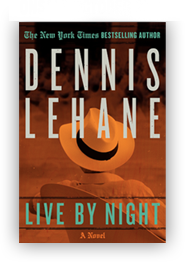
And speaking of Boston (see my last post), I want to emphasize how well Dennis Lehane’sbook books convey the Boston “voice,” and life in the tough, working class parts of Boston where he grew up. You may not want to actually spend your vacation in the Dorchester neighborhood, for example, but you can visit those places through Mystic River, Gone, Baby, Gone and his latest, Live by Night, which all make great reads before a trip to Boston and a nice diversion from the Freedom Trail.

I saw Lehane last week when he spoke at Pen Pals, the author series that raises funds for the Hennepin County Library system which serves the Minneapolis area. He’s one of the best speakers I’ve ever heard, mixing insightful literary observations, stories of his relationship with Clint Eastwood who directed Mystic River, writing for HBO’s The Wire, and hilarious anecdotes about his gigantic Irish American family.  He learned his storytelling expertise at family gatherings (and sometimes in bars) where his dad and his uncle told “true” stories that changed with every retelling.

You can see how his skills as a raconteur translate to novel writing, which he says is a much more difficult task than screen-writing. His novels, like his storytelling, incorporate great pacing, tightly wound plots, and characters drawn from the Boston streets. That’s one reason that Lehane isn’t, in my opinion typical of the crime genre where anyone with a laptop seems able to get published.  His work could better be described as well-crafted literary fiction…with a purpose.  One of his comments about fiction sticks with me: fiction is “the lie that tells the truth.”

On your way to Boston?  You’ll also want to pick up some of the books that Lehane suggested in a In  New York Times interview, which included classics such as The Friends of Eddie Coyle, by George V. Higgins, The Last Hurrah and The Edge of Sadness, by Edwin O’Connor, and in nonfiction, Common Ground, by J. Anthony Lukas. I also have scads of other Boston books on the reading list in Off The Beaten Page: The Best Trips for Lit Lovers, Book Clubs, and Girls on Getaways.


Off the Beaten Page in Boston

Literary travel doesn't have to be too serious. I love this sign in Rockport, Massachusetts.
Literary travel doesn’t have to be too serious.

My book, Off The Beaten Page: The Best Trips for Lit Lovers, Book Clubs, and Girls on Getaways comes out May 1.  So, between now and then, I’m offering a glimpse of the 15 U.S. cities featured in the book.  First up, Boston, Massachusetts where, with the help of great books, you can experience the city’s colonial heritage as well as its maritime tradition.  Each chapter offers an essay relating a couple of books to the city to create a theme for your trip, an extensive reading list, and a detailed itinerary…. read the book, go see where the story takes place.

9781416546818_p0_v2_s260x420Boston itineraries include colonial sites from the perspective of the founding mothers, whose story has only recently begun to be told.

You can also experience  “fish tales” such as Moby Dick

bhc_wwor  The Perfect Storm through activities such as sailing or whale watching in the Stellwagen Banks Marine Sanctuary with the New England Aquarium.
Shades of Moby Dick.... a breaching whale in the Stellwagen Banks off the coast of Massachusetts.
Shades of Moby Dick…. a breaching whale in the Stellwagen Banks off the coast of Massachusetts.


More Book Club Travel Tales: Exploring Lubeck, Germany, with Thomas Mann

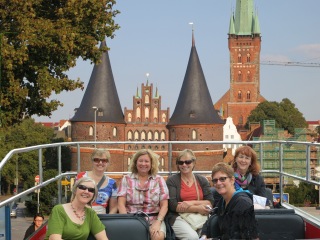
Lubeck2
Visiting Lubeck, Germany on a Thomas Mann-inspired tour.

This is the second part of an interview with Susan Jessop who has shared with me the experiences of her fabulous book club in Ottawa, Canada.  In my previous post, we covered some the group’s ideas for book-related travel close-to-home and some suggestions for Canadian authors you’ll want to add to your reading list, no matter where you live.

Next, we cover the group’s big trip:  to Lubeck (a.k.a. Luebeck), Germany. Admittedly, they have a leg up because Susan has family there, hence, the inside scoop on accommodations and tours.  I’ve never been to Lubeck, but from the pictures I’ve seen it’s old town area looks wildly charming. She has excellent tips to make a successful trip. Hopefully, their ideas will inspire you and your travel companions to venture out into the world with a few good books.

So, Susan, tell us in a nutshell about your lit trip to Germany.

I’m not sure who launched the idea initially but as I own a condo in the town of Lubeck, Germany and my brother has several tourist apartments, I thought that this was quite doable. I checked with family for dates and availability. Once we’d settled on a date, I agreed to put together a program and run it past our group (I was really hoping for full executive control knowing that I’d wear this if we took a haphazard approach!). We had a planning meeting with the six ladies who finally committed to going.

I settled on the book Buddenbrooks: A Family in Decline written by Thomas Mann in 1918 at the age of 23. The selection was a no-brainer as there is nary a German alive who doesn’t know of and admire this book. Thomas Mann won the Nobel Prize for Literature in 1923 mainly for this novel. Lubeck is the setting for the book and many landmarks are Unknown-5still there today. In fact, a few years earlier a German production was filmed on location and my sister-in-law and nephew were film extras. It was a natural choice, but at over 700 pages and written almost 100 years ago I was worried the ladies would kill me if they didn’t like it!

Our itinerary included a hop on/hop off tour, which had the worst English translations imaginable, of the city highlights. We were in stitches as we travelled through town. Fortunately, the tour I arranged at Buddenbrook Haus [if you can read German, check out their Web site, http://buddenbrookhaus.de%5D was led by a highly competent tour guide who captivated us for two hours on Mann family lore. We also arranged for a viewing of the movie (the very one featuring my nephew walking down the street from behind!). My brother has a wonderful retro home theatre complete with red velvet movie seats for 20. He served us champagne and home made popcorn! We also took an afternoon boat trip up the Trave River to the Baltic Sea where the Buddenbrooks holidayed, and a day trip to Hamburg where one of the characters lived. In between, I made sure there was lots of down time for shopping and entertainment (notably wine and good food). I think we had a really good time. The book was also a great read and really came alive as we walked the streets of this lovely medieval town.

Did the trip bring your group closer together? How so?

I think the trip did bring us closer together. It’s an interesting group.  Some women are close friends but mostly I would describe us as acquaintances that really enjoy each others’ company in the context of books. We all know the old adage that traveling is the surest way to get to know someone, for better or worse! We did indeed get to know each other better. There was a cranky moment or two, but when you have that many independent, take charge women together, it’s bound to happen!

Did it give you a greater understanding of the book(s) you read relating to the trip and the culture where you traveled?  Please explain.

Absolutely! My imagination has been fueled by reading all my life, but as an English major in university, the feelings I had when I finally walked through the locations from my favourite novels were special.

 Any tips or suggestions for people who are organizing book-related travel?

I think I implied in one of the previous answers that planning is really important! You want to make sure that you have your activities lined up and not left to chance. If you’re the organizer, ask your book club members for permission to take charge and give them a bit of a preview before the trip to confirm that you’re not out in left field. Our trip was about 6-7 days but I still made sure there were a couple of down days. For sure the first day has to be relaxed to allow for some recovery from jet lag if that’s a factor and leave time for shopping during the trip.

One other thing that proved to work well was that I provided a budget in advance, so that folks could have a sense of what the costs would be for the week (everything but the airfare). I collected the money at the beginning and we made all our purchases from “the kitty,” including food, wine, restaurants, admissions, bus, boat and rail fares, etc… I had calculated it quite carefully and we came in almost exactly on the Euro! As such we had no fussing around money and going to the bank, etc…

Anything else you want to add?

Do try this! Book club outings enrich the experience! You could reasonably begin with a local outing and move up to a weekend and finally an international trip. We are starting to talk and plan our next trip to Bath, England …. Jane Austen territory!!!! Woo Hoo. One of our members has a sister in Bath and she is doing some reconnaissance for us. One activity we’ve discussed is bringing her sister’s book group together for a meeting with ours while we are there. Now that will be interesting!

Oh Canada! You’ll Wish You Could Join This Canadian Book Club On Their Travels

IMG_3549
Boating and Books–a summer cabin in Canada is just one place where this book club meets.

Susan Jessop, a lit lover and travel enthusiast from Ottawa, Canada, contacted me to share her book club’s literary travel experiences.  Little did I know that I’d want to hop in the car and join them for their next outing. She had so much information, I’m going to share it in two posts, starting with their ideas for inviting authors to attend their meetings, and taking short “lit trips” close to home (from cottages to a penitentiary!).  You’ll find their “field trips” inspiring and you’ll want to check out the books she mentions, a nice list of Canadian authors. It’s always interesting to me how people in different regions are reading fantastic books you’ve never heard of. This is how to spread the word about your favorite authors. My next post will feature their really big book club travel tales.

Please tell me a little about your book group.

We are a group of women based in Ottawa, Ontario, Canada, our nation’s capital city. The group was established in 1996 and still has 3 founding members.The women come from many different professional backgrounds: urban planners, lawyers, museologists, a token engineer (!) and not unexpectedly, a few public servants… We share a love of literature, good food, wine and laughter! The group has always consisted of approximately 10 women, an optimal number to ensure manageable conversation. We think 10 is the ideal number.

What kinds of local trips or outings has your group enjoyed?  

The group has done a number of local expeditions that related to books we were reading. The first was to Aylmer, Quebec, just across the river from Ottawa to where the book Leaning, Leaning Over Water was set.  This book, a “novel in stories” marked the transition from short story writer to novelist for the author, Frances Itani, who went on to international recognition with her later novel Deafening.  We drove to several sites along the Ottawa River, our best guesses of the locations in the book.  We ended up at a local pub with an astounding international selection of beer, and some locals who it turned out were from the same neighbourhood as two of the book club women who had grown up in Aylmer.

One of our book club participants works at the national Museum of Civilization, and we’ve had a couple of fascinating excursions there.   The first was an evening devoted to the famous Klondike poet Robert W. Service, and featured readings of his poetry in a replica of the “Wildcat Cafe” from his adopted home town of Yellowknife, Northwest Territories.  Tracey Riley, a singer and waitress from that café, performed for us, and we were served authentic grub.  The museum later featured a fabulous exhibit on “The Bog People.” As part of its lecture series, the museum featured Kathy Reichs, (who is both a working forensic anthropologist and a crime writer) so we read her novel du jour Deja Dead and went off to hear her lecture and visit the exhibit.

For the past 9 years or so, we end our season with a weekend of merriment at one member’s cottage, about an hour and a half out of Ottawa.  It’s a great sign off to the book season (we take a summer hiatus).  Our host arranged to have a local author, Merilyn Simonds, attend our meeting to discuss her novel The Holding as well as her earlier non-fiction book The Convict Lover, which some of us also read.  Since the latter book was set in and around the Kingston Penitentiary, we took a field trip from the cottage and had a fascinating visit at Kingston’s Penitentiary Museum. We met with Merilyn a second time a few years later and visited her garden which was the subject of her book A New Leaf, a collection of anecdotes and meditations focused on that very garden.

Do you ever invite authors to attend your meetings?

We have looked for opportunities to invite local authors that we know (or through  a friend of a friend of a friend) or that someone decided to “cold call.” Surprisingly, most authors are flattered and pleased to attend. They sell a few extra books and get direct feedback. We’re always careful to get together a half hour or so before the author arrives to speak frankly about the book (and to make sure we didn’t all hate it!), and that we have a reasonable set of questions to ask. Happily, we have, for the most part, enjoyed those books. We have also welcomed authors: mystery writer R.J. Harlick (whose sister is one of the members) with The River Runs Orange, Terence Rundle West (twice)–Ripe for the Picking and Not In My Father’s Footsteps;  David Sacks, author of a history of the alphabet (!) that was issued under three different titles: Language Visible, Letter Perfect, and the less imaginative The Alphabet.   We will be hosting a new author this May, Missy Marston and her book The Love Monster and next fall, Ruth E. Walker whose book is Living Underground.

And, on many occasions, we’ve taken our “excursions” by way of the silver screen, pairing books with their filmed versions, usually on video but sometimes in theatres.  One member has a sister who’s a film-maker, so we’ve been lucky enough to view some of her films. I should mention too that we have an annual Christmas party (last year accompanied by a karaoke outing after dinner), with a secret Santa gift exchange.

Why take trips? Why not just meet in your homes and keep it at that?

The local trips or discussion with authors brought added context to the discussions and, frankly, were a lot of fun. Didn’t we all enjoy our school field trips a lot more than just the classroom discussion?! The same principle applies here, I think.


A Flea Grows in Brooklyn (Sorry, I Couldn’t Help Myself): Fashion, Food, and Reading Among the Hipsters

SONY DSCFrannie Nolan, the heroine of Betty Smith classic A Tree Grows in Brooklyn, just wouldn’t recognize the place. The book opens in 1912 and is set in the (then) tenement-filled Brooklyn neighborhood of Williamsburg. It was a place to get away from.

Now Brooklyn is “IT.”  People flock to Brooklyn for its trendy shops, restaurants, and entertainment. They may make fun of Brooklyn’s hipster aesthetic, but can’t resist those skinny jeans, ironic glasses, scarves and all the other accoutrements of Brooklyn hipsterdom. The style conscious from places such as Stockholm, London, and Paris look to Brooklyn for inspiration. And, if that weren’t enough, Girls, the hit HBO show based on the lives of four post-college friends trying to make it in the big city, sort of a poor girl’s “Sex in the City,” has begun to prompt the show’s fans to go on Girls tours of Brooklyn locations featured in the show.

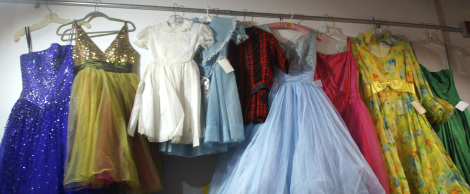
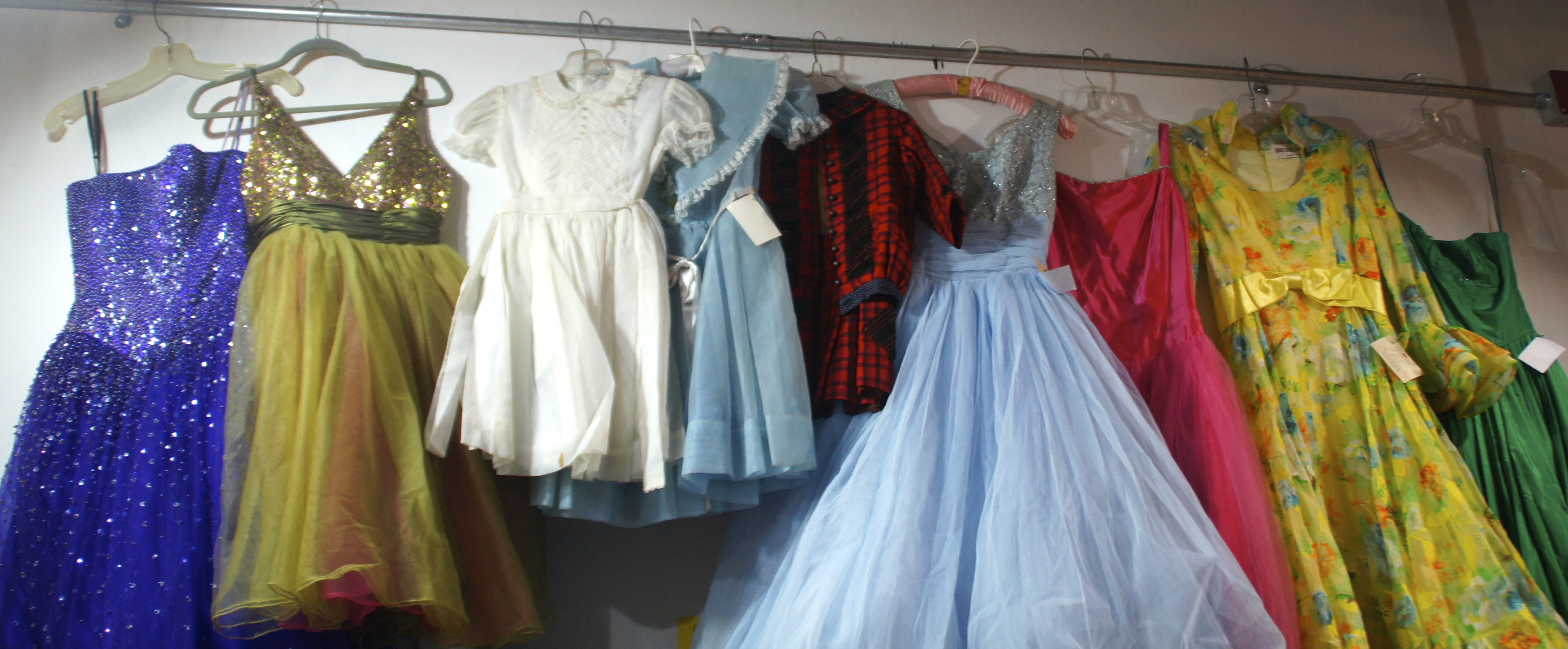
You don’t have to be a hipster or a Girls fan to have fun in Brooklyn, but when you SONY DSCwalk around places like Brooklyn Flea, you may be inspired to join in the fun.  At the very least, you’ll feel compelled to scrounge through your parents’ old clothes (think Mad Men era) or retrieve a few old dresses or flannel shirts from that box you were getting ready to send to Goodwill. This is no ordinary flea market.  The merchandise is mostly vintage or DIY and displayed in a way that makes it look as classy, and much more interesting, than Fifth Avenue fare.   You’ll find cool jewelry made of repurposed zippers or typewriter keys, dresses that would make Betty Draper envious, and re-claimed-repurposed-recycled furniture. In winter the flea takes place in the former Williamsburg Savings Bank at One Hanson Place, where vendors sell their wares from teller’s windows and the zodiac mosaics on the ceiling make it worth the trip, even if you’re not a shopper.  But during warm weather (April through Thanksgiving,), the market takes place outdoors: on Saturdays in Fort Greene and on Sundays in Williamsburg.

When you’re shopped out, I suggest wandering the Williamsburg neighborhood where you’ll find great restaurants (the Vietnamese restaurant An Nhau works well for a group and has a great patio in back), outrageous chocolate and incomparable people-watching. A walk across the Brooklyn Bridge into Manhattan offers views of the skyline, the Statue of Liberty, and a sense of walking through the city’s history. If you’re looking for a more formal tour, Big Onion tours offers several walking tours of Brooklyn neighborhoods.

Can’t make it to Brooklyn any time soon? The borough has a literary heritage that’s as distinctive as the rest of its culture so there are plenty of books that will make you feel like you know the place before you even leave the L Train. But break out some eccentric-looking clothes–maybe a spangly dress, or a raccoon hat–before you settle in to read them. Here are a few:

Betty Smith, A Tree Grows in Brooklyn.

David McCullough, The Great Bridge, non-fiction about building the famous Brooklyn Bridge and This Side of Brightness by Colum McCann fiction about tunneling beneath the East River to create another Brooklyn-Manhattan connection.

Jonathan Lethem, Motherless Brooklyn and The Fortress of Solitude.

Colm Toibin, Brooklyn

Paule Marshall, Brown Girl, Brownstones

Paula Fox, Desperate Characters.

Red Rooster: A Taste of Harlem with a Chaser of Gospel Music

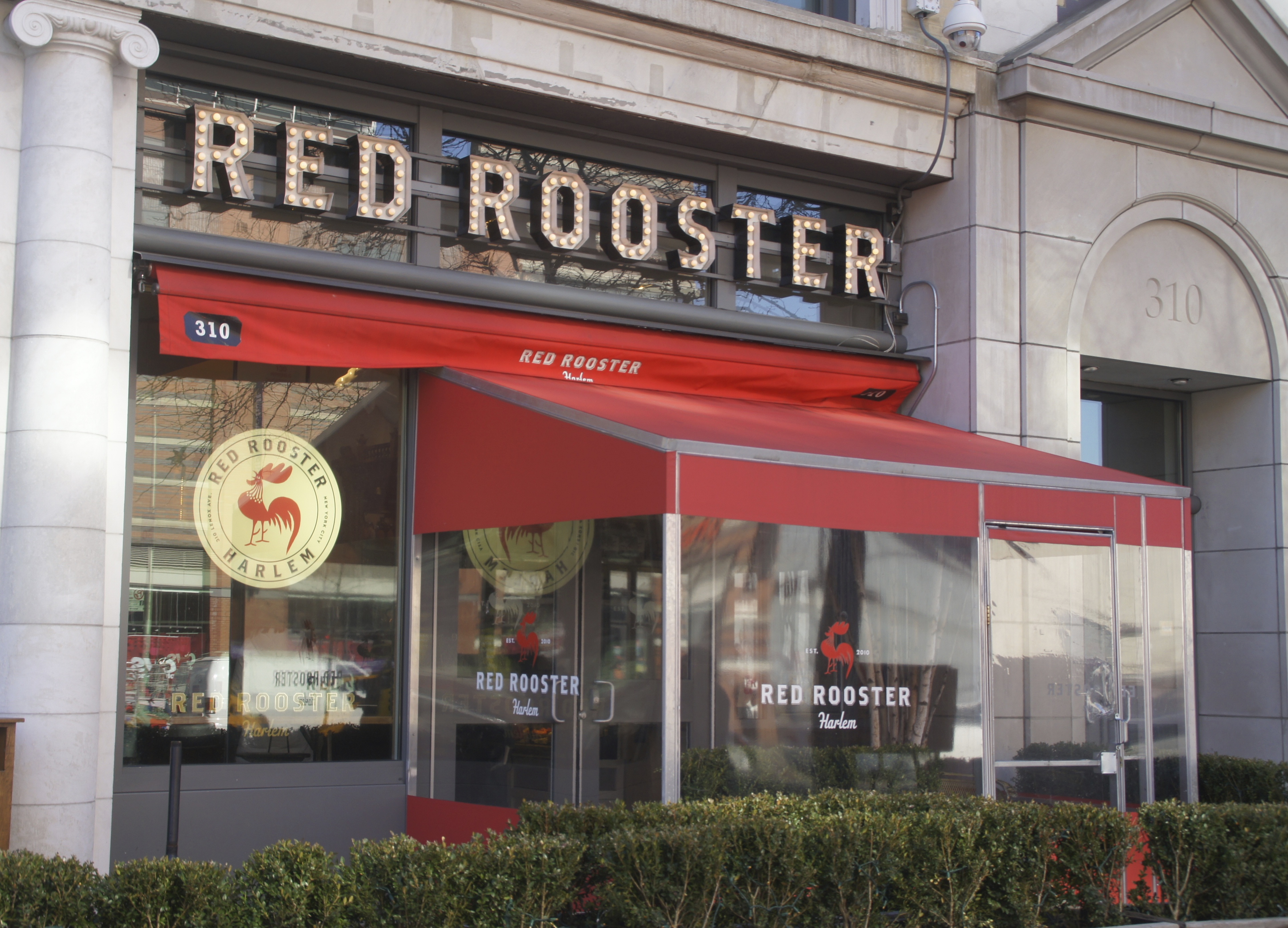
SONY DSCMy family and I enjoyed a tasty brunch on Sunday at Red Rooster in Harlem. Named after a legendary Harlem speakeasy, it’s one of chef Marcus Samuelson’s restaurants and has been a huge hit since it opened (on Lenox Ave between 125th and 126th) in 2010. While the food is stellar, the restaurant has higher goals: “We aim to play a role in the future of Harlem, by hiring our family of staff from within the community; inspiring better eating through neighborhood cooking classes; and buying from local purveyors.”

But there’s more at the Rooster.  We headed downstairs to Ginny’s Supper Club where they offer a Gospel Brunch every Sunday. For anyone who is interested in the literature, music and culture of the Harlem Renaissance , Ginny’s is a great place to get a little feel of what that era was like, whether you arrive on Sunday morning or any evening during the week. The Sunday morning entertainment is considerably more wholesome than in speakeasy days:  Gospel for Teens. Check out the group’s impressive and poignant story top-circlethat appeared on CBS’s 60 Minutes a couple of years ago. Fortunately, we ate before the show started because otherwise we wouldn’t have been able to sit still long enough to fit a forkful of food into our mouths with all the clapping, dancing, and those kids singing their hearts out.

For better or worse, this section of Harlem escaped much of the demolition of urban renewal and redevelopment, so a lot of the original gorgeous architecture along Lenox Avenue remains. After brunch, we walked down Lenox and into Central Park. This is a great excursion for anyone who would like to skip the typical mid-town tourist scene. And, if you’re thinking of heading to Harlem, take a look at any of the books listed below regarding the Harlem Renaissance and you’ll appreciate the neighborhood even more.

Ralph Ellison, The Invisible Man, the complex life of a young African American man in the South and later Harlem.  Winner of the National Book Award.

Langston Hughes, The Collected Poems of Langston Hughes and Not Without Laughter, classic works from one of the most famous figures of the Harlem Renaissance.

David Lewis (ed.), The Portable Harlem Renaissance Reader. An anthology.

James Baldwin, Go Tell It on The Mountain, a semi-autobiographical story of a young African-American boy in 1930s Harlem.

Zora Neale Hurston, Their Eyes Were Watching God.  Though her story takes place in Florida, Hurston was an important player in the Harlem literary scene.

Laban Carrick Hill, Harlem Stomp! A Cultural History of the Harlem Renaissance. This is actually aimed at young adults, but the book has been so critically acclaimed, it’s great for any age group.