I never thought a Golden Retriever would lead me anywhere literary. My own Golden
Jake and pals.
Retriever, Jake, has led me a lot of places—swamps, the neighbors’ back yard after he ate all the peanut butter and jelly sandwiches at their daughter’s birthday party, wading in lakes after balls that he refused to retrieve…. never to poems. But Mark Doty’s Golden, Beau, opened my eyes to the potential of reading poetry, and just in time for National Poetry Month.
Doty appeared at the Hennepin County (MN) Library Foundation’s Pen Pals series last week. He’s funny, entertaining, insightful, and has a beautiful voice, which makes me think that poetry is best read aloud, by the poet—so intimate. He writes about many other things, but he got me with the dogs. Of course, even those poems are about more than canines; they’re about aging, joy, love, living in the moment.
After I finished blowing my nose and blotting my eyes in the back of the auditorium, I told Doty I’m a convert. Check out his poem Golden Retrievals on thePoetry Foundation’s Web site.
I’m off again: muck, pond, ditch, residue of any thrillingly dead thing. And you?
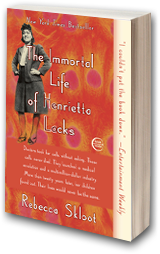
I recently attended a gathering at the University of Minnesota, through its Learning Life series, where Jeff Kahn, director of the University’s Center for Bioethics, discussed Rebecca Skloot’s The Immortal Life of Henrietta Lacks. For anyone who hasn’t read Skloot’s huge bestseller, here’s the Amazon description:
Henrietta Lacks was a mother of five in Baltimore, a poor African American migrant from the tobacco farms of Virginia, who died from a cruelly aggressive cancer at the age of 30 in 1951. A sample of her cancerous tissue, taken without her knowledge or consent, as was the custom then, turned out to provide one of the holy grails of mid-century biology: human cells that could survive–even thrive–in the lab. Known as HeLa cells, their stunning potency gave scientists a building block for countless breakthroughs, beginning with the cure for polio. Meanwhile, Henrietta’s family continued to live in poverty and frequently poor health, and their discovery decades later of her unknowing contribution–and her cells’ strange survival–left them full of pride, anger, and suspicion.
Kahn started the evening by admitting that Skloot had contacted him when she was doing research for the book and he told her that she shouldn’t bother to write the story, everyone already knew about HeLa cells. It’s good she didn’t take his advice. As a science writer, I admire Skloot’s tenacity, not only in ignoring the naysayers, but also in winning the trust of the Lacks family to get their story; it took her ten years. I also admire the way she has woven together both the science and human-interest sides of the story to make a really readable book. That’s the biggest challenge for science writers because straight science is really, really dull. Some people at this session thought Skloot had become too involved with the family and inserted herself into the story too much. I disagree. A personal relationship was necessary to gain the confidence of the family and it seems like she has taken care not to exploit them. In fact, she donates a portion of her book’s proceeds to the Henrietta Lacks Foundation, which she created to provide financial assistance to needy individuals who have made important contributions to scientific research without their knowledge or consent. That should be a fairly sizable amount of money because Skloot’s book has been on the bestseller list for months and Oprah has bought the option for a movie.
Kahn offered a bit of background on how researchers have exploited disadvantaged people. Some experiments were quite barbaric. These include the Tuskegee Institute study of untreated syphilis in black men, an experiment at the Willowbrook State School (on Staten Island) in the 1960s which exposed mentally retarded children to hepatitis, and another 1960s experiment at New York’s Jewish Chronic Disease Hospital in which vulnerable patients were injected with cancer cells. These have all led to a mistrust of healthcare among groups who have been exploited. We discussed how slowly laws regarding consent, privacy and other ways of protecting human research subjects lag behind the science. During Henrietta Lacks’s time, there were no such laws.
Here are a few other questions to think about if you pick up the book:
-Do you think the Lacks family deserves some financial benefit from Henrietta’s cells?Courts have ruled that it’s not the cells that have value in such situations; it’s the intellectual property created by science that has value.
-How is this any different than selling organs? The only person that doesn’t receive a benefit from the current transplant system is the donor.
-Should companies be able to patent and profit from a person’s DNA?
-Are we appropriately concerned with the ethics of using animals in scientific experiments?
-What ethical considerations and laws have changed since the 1950s? What have we gained as a matter of morality?
As bioscience moves forward with increasingly complex technology, ethicists such as Kahn will have plenty to keep them busy. To me, the saddest and most challenging ethical issue of this story isn’t as much about science as it is about education and the appalling knowledge gap between rich and poor. Especially in health care, ignorance puts the uneducated at a great disadvantage. That’s an issue for which we are all ethically responsible.
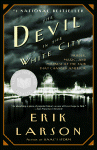
Last weekend I spent a really cold but delightful couple of hours wandering around Jackson Park in Chicago. I’ve wanted to go there ever since I read Erik Larson’s bestseller The Devil in the White City. Jackson Park is where the World’s Columbian Exposition of 1893 took place and that’s the subject of Larson’s non-fiction book. In The Devil in the White City, he weaves together the stories of Daniel H. Burnham, the legendary architect responsible for the fair’s construction (and later the Plan of Chicago) and H.H. Holmes, a serial killer masquerading as a charming doctor. He crafts the story so dramatically that readers often wonder if the book is a true story or a gripping work of fiction.
I’m not the only one who has wanted to see where the story takes place. “When I finished The Devil in the White City I got in my car and drove to Jackson Park,” says Mary Jo Hoag, who is now tour director for the Chicago Architecture Foundation’s Devil in the White City tours. “I just wanted to see where it all took place.” So many readers have come in search of the White City that a host of tours have sprung up (given by CAF, the Chicago History Center, the Art Institute and other organizations) catering to readers who want to see first-hand where the plot thickened. Word has it that a movie version of The Devil in the White City is finally in the works, starring Leonardo DiCaprio as H.H. Holmes. That will create even more interest in seeing the real place where it all happened.
Almost nothing remains of the famed White City, though it was the greatest tourist attraction in American history, hosting 27 million visitors. Burnham and Frederick Law Olmsted (who also designed Central Park) began to lay out the fairgrounds in 1890. It took three years and 40,000 workers to construct the fabulous Beaux-Arts style fair buildings and monuments…out of plaster. The historic fair opened to visitors on May 1, 1893. It closed six months later and within a year almost every structure from the fair was destroyed by fire, demolished or moved elsewhere. Only the Palace of Fine Arts, on the north end of Jackson Park, remains. The building is now Chicago’s Museum of Science and Industry. It’s sad that such beauty was so ephemeral; I’d love to have seen it. Hoag says that, at the time, the fair’s huge white buildings– illuminated by the amazing new technology, electric lighting–were so dazzling that people who arrived at night got off the
The fair at night-- "like a sudden vision of heaven."
train and simply fell on their knees they were so astonished at the sight. One fairgoer described it as “a sudden vision of heaven.”
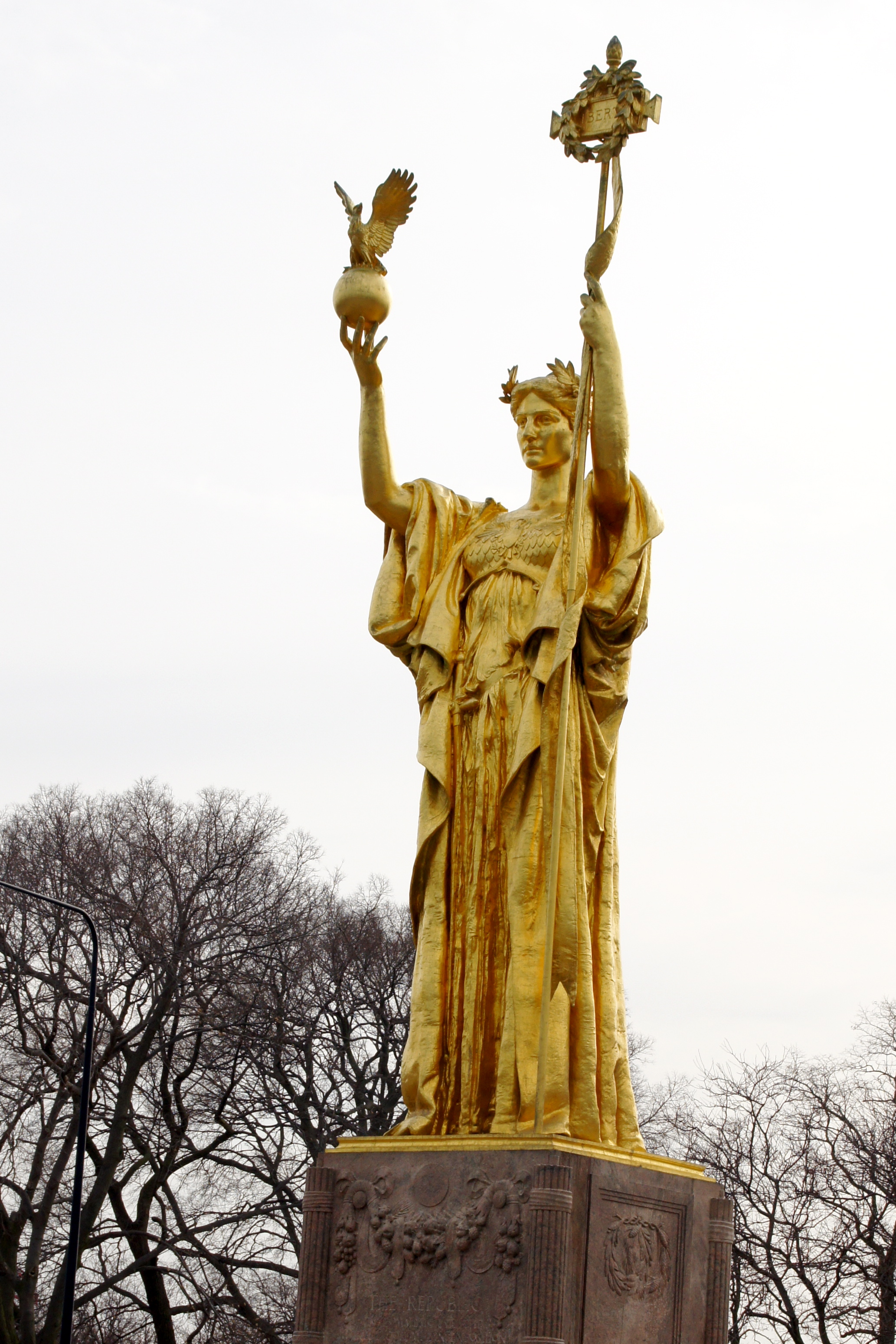
A one-third scale replica of Daniel Chester French's Republic, which stood in the great basin at the World's Columbian Exposition of 1893.
It’s good that at least the Museum of Science and Industry survives (as the Palace of Fine Arts it held some of the world’s most valuable art and was built extra strong and fireproof) because it gives a frame of reference for what the other buildings at the fair looked like. That, along with Hoag’s collection of photographs and her great descriptions, helped kick start my imagination as we strolled through Jackson Park. Over here the Agriculture Building…over there the gigantic Manufacturers and Liberal Arts Building…a replica of the iconic statue of the fair, The Republic…. the Wooded Island where architect Frank Lloyd Wright took inspiration from the Japanese pavilion… Modern life creeps back in, though. Over there is the basketball court where Barack Obama used to shoot hoops with Michelle’s brother.
Looking north down the lakefront from the Museum of Science and Industry, one has the sense that though the White City is gone, one of the best legacies of the fair endures: the idea that cities can be well planned and beautiful places. Jackson Park and Chicago’s long string of parks and open lakefront (part of Daniel Burnham’s Plan of Chicago) that make this city so special are examples of that great idea. Still, I look forward to seeing The Devil in the White City movie and how its special effects bring the White City back to life.
New York City is one of the best places in the country to taste (quite literally) the immigrant experience, particularly that of the great wave of newcomers who arrived in America at the turn of the last century. Prep for your trip with books such as Jane Zeigelman’s 97 Orchard: An Edible History of Five Immigrant Families In One New York Tenement, E.L. Doctorow’s Ragtime, orJacob Riis’ How the Other Half Lives. Plan to start on lower Manhattan’s west side at Battery Park and work your way across lower Manhattan for an immigrant history “trifecta.”
First, board a Statue Cruises ferry (operating out of Battery Park) for a trip to Ellis Island and turn on your imagination. The Statue Cruises ferry out of Battery Park in lower Manhattan stops at Liberty Island first. From there, the boat stops at Ellis Island, then returns to New York City. You can choose to stop both places or just go to Ellis Island.
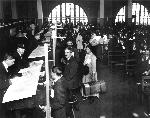
This small island in New York Harbor was originally part of the harbor defense system. Its size belies its importance in U.S. history; it was used as an immigration station from 1892 to 1954 and over twelve million immigrants entered the United States through Ellis Island. Its main building was restored after 30 years of abandonment and opened as a museum on September 10, 1990 under the management of the National Park Service.
It takes some effort to imagine these gigantic halls filled with people, but an array of tours, movies and exhibits fill in the picture. This is where steerage and third class passengers underwent medical and legal inspection. The day I went with my family to Ellis Island the weather took a nasty turn after we arrived. Awaiting our return ferry, the waves were crashing on shore and we felt like part of the “huddled masses,” so close, but yet so far.
The return trip to Manhattan offers a fantastic view of the city and you can imagine the excitement and trepidation new arrivals must have felt as they finally reached their destination. Yet, for many new arrivals, America wasn’t exactly the “land of milk and honey” that many anticipated. The Tenement Museum offers a glimpse of what life was like for Irish, Italian and eastern European families once they landed. It takes a little effort to get there and don’t look for a big museum a la MOMA. The office where you purchase tickets is at 108 Orchard. Then your tour group walks to the actual tenement building at 97 Orchard.
The Tenement Museum is one of my favorite places in New York City and provides a vivid contrast to today’s Fifth Avenue and Times Square. No Gilded Age J.P. Morgan opulence here. They’re not kidding; this is a real tenement. You can only see it with a tour (book ahead, the fill up). I visited “The Moores: an Irish Family in America.” I also spent quite a bit of time afterward visiting the gift shop, which ranges from literary to funky.
Part three of the immigrant tour brings a reward for your trek across Manhattan: food. Of course ethnic food abounds in New York, but for me a nibble in one of these lower east side establishments is an authentic way to cap off the tour. Katz Deli (205 East Houston) is just around the corner from the Tenement Museum. It’s one of the last of the delis that used to fill the neighborhood and was also the location of Meg Ryan’s famous “faking it” scene in When Harry Met Sally. The food is worth every artery-clogging bite.
Or try your hand at eating for some soup dumplings at Joe’s Shanghai (9 Pell Street). If you haven’t sampled soup dumplings, there’s an art to eating them which you can view in Joe’s rather lengthy “Kill Soup Dumpling” video. (Skim through it.)
Joe’s is in the heart of Chinatown, which has been a hub for numerous waves of immigrants in the city. This is the “Five Points” neighborhood, the setting of Herbert Asbury’s 1927 book The Gangs of New York and Martin Scorsese’s 2002 movie of the same name. (I love the names of the Irish gangs of the era: the Bowery Boys, the Dead Rabbits, the Plug Uglies, the Short Tails, the Slaughter Houses, the Swamp Angels.)
Not full enough? Loosen your borcht belt with a little Ukranian food at Veselka (144 2nd Avenue). You can rationalize all this eating with the fact that you’re gaining not only weight, but also a greater cultural perspective.
It’s sort of an American tradition to treat immigrants to this country like dirt and try to get the most work out of them for the least money. If your family was among the first waves of immigrants to the U.S.—the Germans or the Irish, for example—their experience as new arrivals was was a long time ago and perhaps forgotten. Yet, Benjamin Franklin opposed German immigration, stating that they would not assimilate into the culture. There was an anti-Irish “Know Nothing” movement in the 1840s and ‘50s predicated on the idea that Irish Catholic immigrants were overwhelming the country. The largest mass-lynching ever in the U.S. took place in 1891, after several Italian immigrants were acquitted of a murder in New Orleans. The scorn has been renewed with each new wave of newcomers–Jews from eastern Europe; my relatives, those dirty Scandinavians; the list goes on.
Literature takes immigration from the realm of policy and the culture wars, the view of immigrants as “those other people,” and makes it real. There’s no better way to get a glimpse immigrant life in America than by reading their stories. Their experiences kindle empathy, no matter what your political views. To that end, fellow book-blogger Colleen at Books in the City has thrown down the gauntlet with a reading challenge: to read a specified number of books about the immigrant experience in 2011. Check out the reading list. I plan to read Major Pedigrew’s Last Stand (Helen Simonson), Zeitoun (Dave Eggers), The Brief Wondrous Life of Oscar Wao (Junot Diaz) and 97 Orchard: An Edible History of Five Immigrant Families in One New York Tenement (Jane Ziegelman).
Literature lovers have used books to inspire their travels since the nineteenth
Twilight fans are trekking to Forks, Washington
century when they traveled around England to contemplate the sites that writers had written in or about, traversing imaginary literary territories such as “Dickens’s London” or “Hardy’s Wessex.” While much has changed on the literary scene since then, literary tourism is stronger than ever as the number of tours based on the Harry Potter novels, Eat, Pray Love, the Da Vinci Code and Under the Tuscan Sun have proven. More recently, Stieg Larsson’s trilogy has fueled a tourism boom in Stockholm and Stephanie Meyer’s Twilight series has put Forks, Washington, on the map for travelers. But you don’t have to travel to Bali in the footsteps of Elizabeth Gilbert to take a “lit trip.”
“You just need to pick a destination or a topic and find a book to match,” says Valerie Van Kooten. Van Kooten is an instructor at Central College in Pella, Iowa and an avid literary traveler. She approached a local independent bookseller, The Book Vault in Oskaloosa, Iowa, about coordinating a traveling book club. Through the Book Vault (so named because it’s located in an old bank building) she assembles book-based trips that range from close-to-home to cross-country. For example, in September a group read Bound for Canaan: The Underground Railroad and the War of the the Soul of America by Fergus M. Bordewich and Mary Kay Risks’ Escape on the Pearl. In October, they traveled to historic underground railroad “stations” in Iowa. No matter how great the book, there’s nothing like actually standing in a tiny space meant to hide a runaway slave to drive home the runaways’ experience. Next up on the traveling book club itinerary: a tour of haunted Iowa based on a book of the same name; a trip to Franklin, Tennessee, for tour of Carnton Plantation with The Widow of the South author, Robert Hicks, a pilgrimage to Laura Ingalls Wilder’s Little House on the Prairie sites, and a jaunt to Seattle and Forks, Washington, to get a real-life view of the landscape in Stephanie Meyer’s Twilight saga.
There’s been a lot of discussion in the press lately, most recently in The New York Times, about the ways in which independent bookstores are trying to retain their customers with “extras” such as coffee bars, wine bars and toy sections. Whether it’s a marketing tool or not, literary travel seems like the perfect means for independent booksellers to engage their readers in a special way, which is something they always try to do. “After I put down a book,” says Van Kooten, “I wonder what the place looks like, what the people there are like. It’s an incomplete experience.” Reading-related travel, she says, completes the picture. Contact her at VanKootenV@central.edu to find out more.
Even if you don’t live near Oskaloosa, check out the Book Vault’s terrific newsletter. It has synopses of books that look like great book club fare.
These frustrating attempts at interaction take place between spouses and between children and their parents every day. It can be a struggle to engage, even if you have plenty of time over the dinner table. So, imagine what it’s like when deployed soldiers and their families have just a short time to speak to each other.
Alison Baverstock, who is married to a British soldier stationed in Iraq, realized that her family was struggling to relate to one another during phone calls because of the difference in their daily experiences. She told the Guardian, “When your husband rings up from Afghanistan or Iraq, you have a very limited time to talk, but sometimes you just don’t know what to talk about. Your existence can seem quite humdrum in comparison to theirs – and you can’t ask them what they are doing [because military details are secret].”
She found an answer in books. “Being able to talk about a book we’re both reading is great because it gives us some common ground.” Consequently, this March she’s launching The Reading Force, a project designed to bridge the divide between military personnel serving overseas and their families at home by encouraging them all to read the same books. Reading Force will encourage groups of family and friends of soldiers to commit to reading the same book, and recording their thoughts about it – whether by letter, email or in a drawing – in a scrapbook. Those away on tour will also get involved, helping families feel connected and to bond again properly when the tour of duty is over.
Reading is at the core of another project that brings military family members closer, United Through Reading, which has been around since 1989. Through this program, soldiers bond with their families by reading books aloud, recording their reading on DVDs and sending the DVDs home. So, it’s like a virtual bedtime story. The organization has similar programs for grandparents who live life far away from their grandchildren and for parents who are incarcerated or in treatment.
Reading the same books provides common ground and creates community through shared experiences and ideas. Colleges and universities see the value in this concept and often assign all of the incoming freshman the same book to read before they arrive on campus, thus putting everyone on “the same page,” at least a little. The “one book, one city” programs embraced in Seattle, Chicago and many other communities across the country have the same goal. Check out Chicago Library Foundation’s One Book, One Chicago reading list, even if you don’t live in Chicago.
No matter how noble the mission, not everyone sees the value in the idea of entire communities reading the same thing. Harold Bloom, the country’s most prominent literary critic told The New York Times in 2002, “It is rather like the idea that we are all going to pop out and eat Chicken McNuggets or something else horrid at once.’’
Moreover, choosing a book to read together can create as much dissention as harmony. Entire committees meet to choose the right book for the programs in Seattle and Chicago and a book club can end the evening with everyone in a huff after wrangling over the book choices. I love discussing books with my family, but they’re all male, even the dog, and they each would rather have a root canal than discuss Jane Austen with me. We have found common ground in books like Cormac McCarthy’s The Road and Stieg Larsson’s Girl With the Dragon Tattoo and the rest of Larsson’s trilogy (over which you can start up a conversation with just about anyone in the world).
Okay, I can see why Larsson’s Lisbeth might be a more attractive character to guys than Austen’s Elizabeth. So, we compromise and end up with a mutual reading experience that brings us together for a while–far more satisfying than McNuggets.
I just finished reading Patti Smith’s National Book Award-winning memoir, Just Kids, the story of her life with the artist and photographer Robert Maplethorpe, a life dedicated to art and to each other. Smith and Maplethorpe met in New York in the late 1960s, while they were in their early twenties and through most of their journey together they lived like stereotypical starving artists—homeless, jobless, hungry, and itching from various vermin.
Of all her talents—art, punk rock, poetry—I’d say Smith is best at writing, which she demonstrates in this beautifully crafted memoir that’s hard to put down. I’m always fascinated with how writers, particularly memoirists, pick and choose the details they include in their stories. Smith offers less a photographic view than an impressionistic view of their lives, weaving together some (mercifully not all) of the seemy side (she seems surprisingly unfazed at the possibility of contracting gonorrhea from Maplethorpe) with fascinating encounters with the artists of the day including Jimi Hendrix, Janis Joplin, William Burroughs, Andy Warhol and Allen Ginsberg.
The book offers not only a fascinating and tender look at their relationship but also a tour of the Manhattan in the last period of 20th-century artistic ferment. Many hot spots such as Max’s Kansas City are long gone, and gentrification has pushed the art scene into the Meatpacking District, Brooklyn and beyond. Yet, there are still places that carry on the bohemian tradition, though like most of the parts of the city, they’re cleaner, nicer and more expensive than in the 60s. The biggest change has been in the Times Square area, which now fills with crowds of tourists and Disney characters instead of hustlers, addicts and panhandlers.
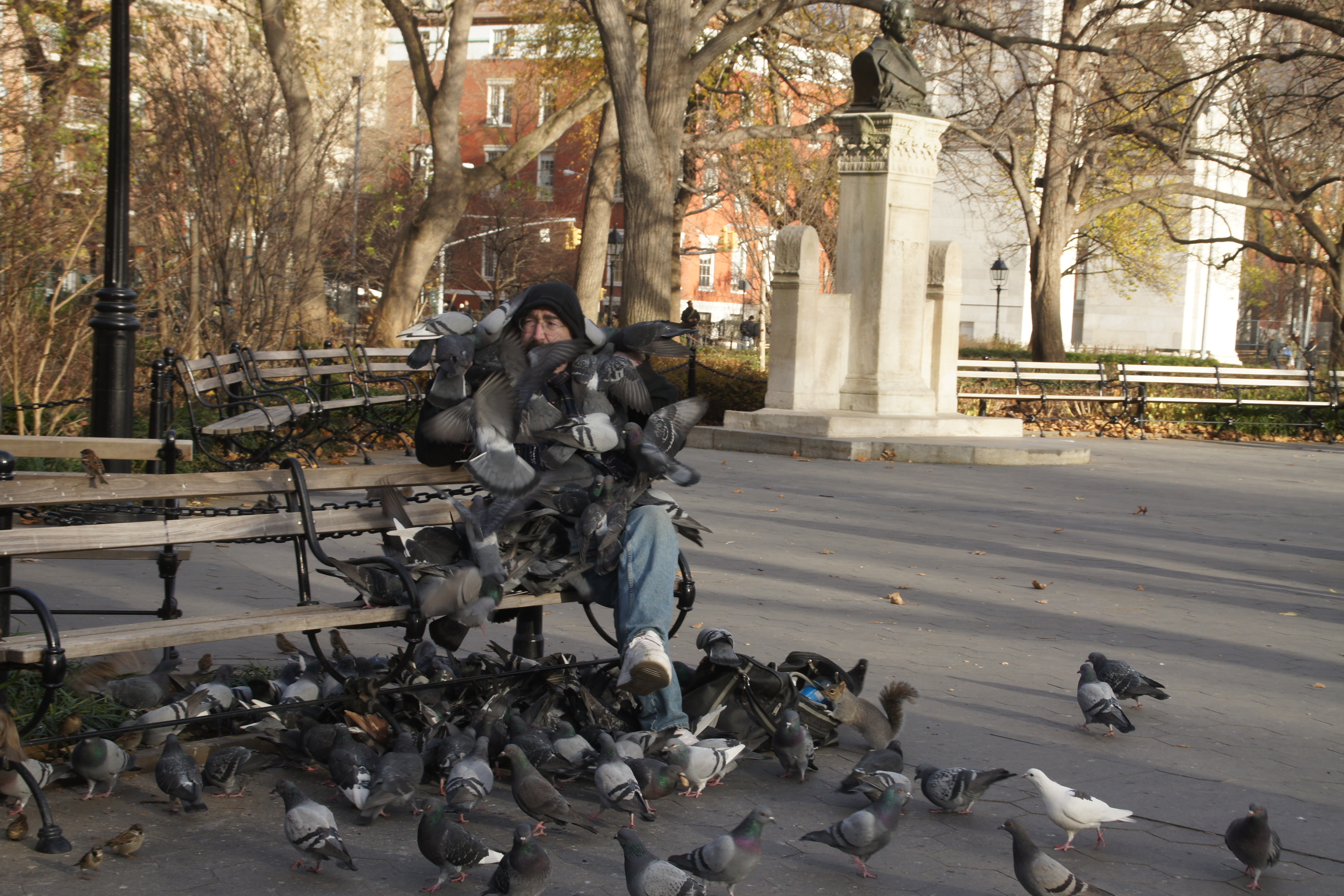
Ditto for the iconic Washington Square Park, which was refurbished over the last couple
Washington Square Park has been refurbished.......but still has its share of crazy people.
of years. Not to worry, there’s still enough questionable activity there to make it seem bohemian. Smith tells the story of a couple of tourists who saw her and Maplethorpe hanging out there. One asked the other if they were artists and hence people they should photograph. The other said no, they’re “just kids.”
You can still go to Coney Island as the pair did when they could only afford one hot dog at Nathan’s. And, if you’re particularly dedicated to experiencing the life at the Hotel Chelsea www.hotelchelsea.com where Smith and Maplethorpe lived for many years, you, too, can stay there. The rates are exponentially higher than in the early 70’s, but from what I can see from TripAdvisor reviews, you can have an authentic Chelsea Hotel experience—complete with the bugs, stains and loud music and with the same furniture and carpeting from Smith and Maplethorpe’s day. Better, perhaps, to fork out $40 for the occasional tour the Chelsea offers and actually sleep in another hotel.
The St. Mark’s Poetry Project where Smith performed is still going strong. To get another taste of the poetry scene, head to the Bowery Poetry Club and Café, especially on Tuesday nights for the Urbana Poetry Slam. If you get a chance, eat dinner at DBGB, across the street (by contrast, new and very trendy).
Looking for more of the history of Greenwich Village? Take a Big Onion Walking Tour, which travels into the tiniest and most charming streets of Manhattan, so unlike the concrete jungle beyond the Village borders. These are the haunts of William Faulker, Dylan Thomas and Jack Kerouac and his Beats buddies. Some of the buildings, which date back to colonial times, served as slave quarters and servants’ houses but are now the most expensive pieces of real estate in the city.
Top off your walking tour with a latte and a giant cookie at the cozy Grey Dog Coffee Shop on Carmine Street. I love that they serve my latte with the froth in the form of a dog’s paw print. Clearly, I don’t have what it takes to be a starving artist.
The hottest gift for anyone who reads this year is an e-reader, be it Kindle, nook, iPad or others. I’ll never give up printed books completely, but I’m sure to succumb to an electronic version for a lot of reasons. If you travel a lot, you can load up on books to take with you without needing an extra suitcase to carry them all. An electronic reader is an even greater benefit if you travel to places where books in English are few and far between. I’m leaning toward that new color version of the nook at Barnes & Noble, partly because that nice nook sales person greets me so enthusiastically every time I go to Barnes & Noble, which is a lot.
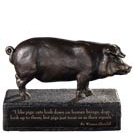
Yet, there’s a huge array of alternative and less expensive gifts for your favorite reader/traveler. At the other end of the spectrum from e-readers, Levenger.com offers a wonderful array of, as they say, “Tools for Serious Readers.” They have a greatassortment of bookends. I’m particularly partial to the Winston Churchill Pig bookend inscribed with his quote:
“I like pigs: cats look down on human beings, dogs look up to them, but pigs just treat us as their equals.”
A tenement isn’t the first place you think of for buying Christmas gifts, but I got an “I Read Banned Books” bracelet at the Tenement Museum in New York City a while back and every reader I know comments on it. Also, declaring that I read banned books makes me feel like a rebel.
A lot of stores are selling really cute Kate Spade “Library Books” and “World Traveler” mugs. You can find them online or at Macy’s, Bloomingdales and other places. Pop that together with a pound of coffee or some fancy tea and your “giftee” can settle in for a good read.
Magellan’s.com has a huge array of gadgets, gear and clothing for travelers. Check out the book 1,000 Places to Go Before You Die and its accompanying travel journal. Or, conversely, 100 Places Not to Go Before You Die.
Finally, if your goal is a gift for the greater good, give a copy of a book paired with a donation, for example Nicholas Kristoff and Sheryl WuDunn’s book Half the Sky with a donation to one of the many charities on the Half the Sky Movement Web site.
Bundle a book about Haiti such as Isabelle Allende’s novel Island Beneath the Sea or Tracy Kidder’s non-fiction Mountains Beyond Mountains about Dr. Paul Farmer’s work in Haiti with a contribution to Farmer’s organization, Partners in Health. Or, Dr. Greg Mortinson’s book Three Cups of Tea (a lot of book club people have already read this) or his newer book Stones into Schools pairs well with a donation to his non-profit foundation, the Central Asia Institute. He also has a children’s book called Listen to the Wind. Take a look at the video about the latter book and his work in Afghanistan.
For most visitors to New York, Midtown means the theater district and shopping. But, it also offers great strolling opportunities for lit lovers. I often start my mornings in this area with breakfast at Pain Quotidien (40th and 6th). It’s a chain, but very cozy, especially on a blustery New York winter day, and they offer great bread, pastries, fresh OJ, and killer oatmeal. If it’s warm, get coffee and croissants to go and eat across the street in Bryant Park.
Carb-fortified, I started my walk at the New York Public Library on Fifth Avenue at 42nd, adjacent to Bryant Park and gave a nod to Patience and Fortitude, the lions that guard the entrance. They’ve had several names since the library was dedicated in 1911, but Mayor Fiorello LaGuardia gave them these names in the 1930s because these were the qualities he felt New Yorkers needed during the Great Depression, qualities we need now, actually.
Books aside, the building’s colossal Beaux Arts architecture and majestic ceiling frescos make the library worth the trip. Yet, for book lovers, the sheer size and solidity of the place, with its grand staircases and the giant Rose Reading Room, give a feeling that books—in whatever form–will never go away. They also have a great gift shop. Check the Web site for current exhibitions. When I was there, among several others, they had a exhibit on Mark Twain, “The Skeptic’s Progress,” held jointly with my next destination, the Morgan Library & Museum at 225 Madison (at 36th ).
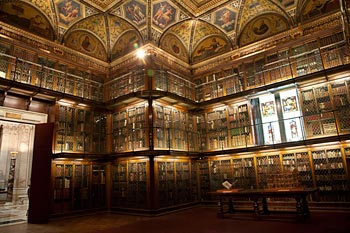
Financier and book/manuscript collector Pierpont Morgan built this library to house his collection (If this was his library, I’d love to see his house!) and the library has been adding to the collection ever since. They also added a modern wing. The original section of the library was restored this year.
When I was there Charles Dickens’s hand-written manuscript of A Christmas Carol was on display. And the Mark Twain exhibit, in honor of the 175th anniversary of his birth, was a treat for any Twain fan, loaded with photos and original hand-written letters and manuscripts.
Then, I hiked and window-shopped my way back up Fifth Avenue. Since it’s the holiday season, the tree at Rockefeller Plaza (at 46th) and the store windows along Fifth Avenue are worth the exercise. Pay homage to Holly Golightly at Tiffany (at 57th) (see also the story of Summer at Tiffany) and check out the jewelry boxes in the windows at Cartier (at 52nd) from which truly breath-taking jewelry emerges. Ispent quite a bit of time gazing at the crazy gorgeous windows at Bergdorf-Goodman (at 58th), which are works of art every year. Then, with Eloise in mind, I wandered by the Plaza Hotel. If you’re feeling wealthy, stop in for lunch or afternoon tea (including a Tea with Eloise menu) at the Palm Court. If you’re feeling really wealthy, you can stay in the Eloise Suite, which starts at $1125 a night. If not, looking around is free, which is what I like.
And, if you can’t make it to New York during the Christmas season, it’s also free to take a video trip to see Bergdorf’s windows, entitled “Follow Me.”









 Off The Beaten Page Travel