Tag Archives: reading

A Flea Grows in Brooklyn (Sorry, I Couldn’t Help Myself): Fashion, Food, and Reading Among the Hipsters

SONY DSCFrannie Nolan, the heroine of Betty Smith classic A Tree Grows in Brooklyn, just wouldn’t recognize the place. The book opens in 1912 and is set in the (then) tenement-filled Brooklyn neighborhood of Williamsburg. It was a place to get away from.

Now Brooklyn is “IT.”  People flock to Brooklyn for its trendy shops, restaurants, and entertainment. They may make fun of Brooklyn’s hipster aesthetic, but can’t resist those skinny jeans, ironic glasses, scarves and all the other accoutrements of Brooklyn hipsterdom. The style conscious from places such as Stockholm, London, and Paris look to Brooklyn for inspiration. And, if that weren’t enough, Girls, the hit HBO show based on the lives of four post-college friends trying to make it in the big city, sort of a poor girl’s “Sex in the City,” has begun to prompt the show’s fans to go on Girls tours of Brooklyn locations featured in the show.

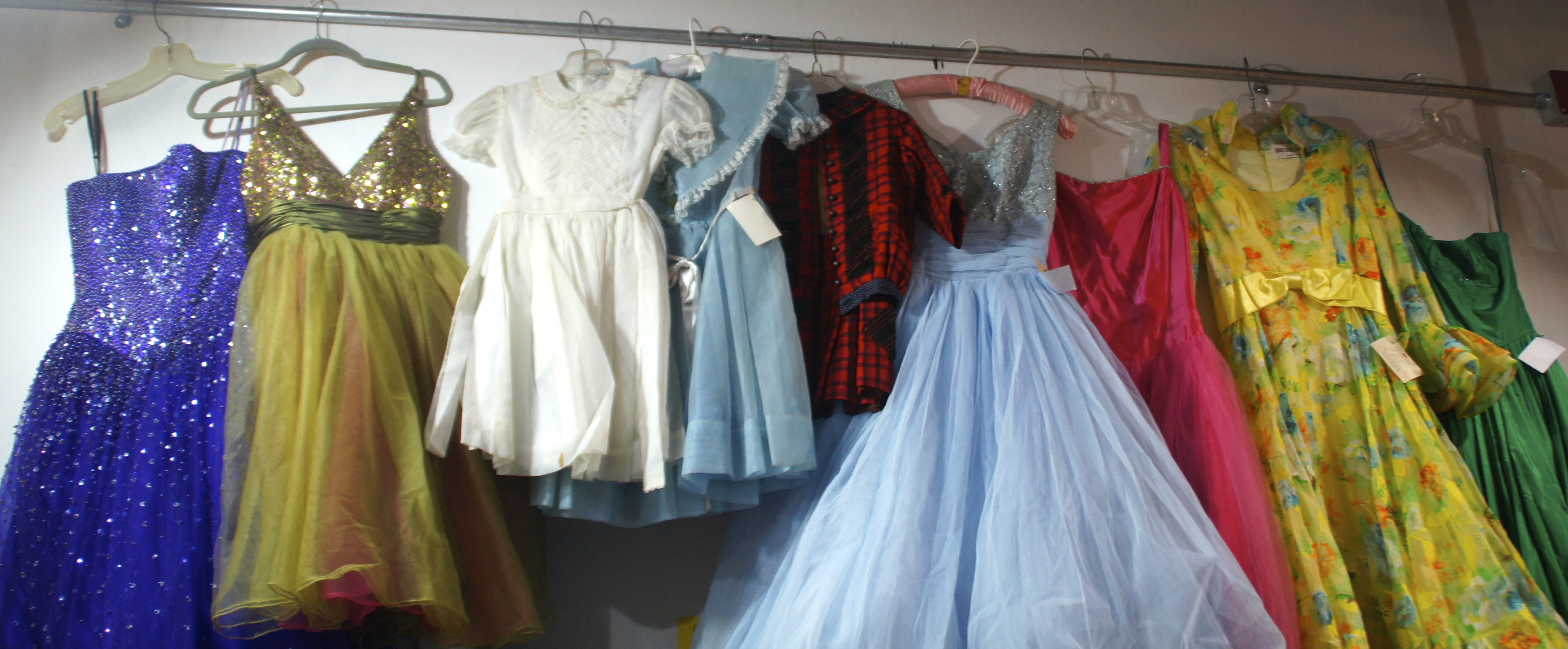
You don’t have to be a hipster or a Girls fan to have fun in Brooklyn, but when you SONY DSCwalk around places like Brooklyn Flea, you may be inspired to join in the fun.  At the very least, you’ll feel compelled to scrounge through your parents’ old clothes (think Mad Men era) or retrieve a few old dresses or flannel shirts from that box you were getting ready to send to Goodwill. This is no ordinary flea market.  The merchandise is mostly vintage or DIY and displayed in a way that makes it look as classy, and much more interesting, than Fifth Avenue fare.   You’ll find cool jewelry made of repurposed zippers or typewriter keys, dresses that would make Betty Draper envious, and re-claimed-repurposed-recycled furniture. In winter the flea takes place in the former Williamsburg Savings Bank at One Hanson Place, where vendors sell their wares from teller’s windows and the zodiac mosaics on the ceiling make it worth the trip, even if you’re not a shopper.  But during warm weather (April through Thanksgiving,), the market takes place outdoors: on Saturdays in Fort Greene and on Sundays in Williamsburg.

When you’re shopped out, I suggest wandering the Williamsburg neighborhood where you’ll find great restaurants (the Vietnamese restaurant An Nhau works well for a group and has a great patio in back), outrageous chocolate and incomparable people-watching. A walk across the Brooklyn Bridge into Manhattan offers views of the skyline, the Statue of Liberty, and a sense of walking through the city’s history. If you’re looking for a more formal tour, Big Onion tours offers several walking tours of Brooklyn neighborhoods.

Can’t make it to Brooklyn any time soon? The borough has a literary heritage that’s as distinctive as the rest of its culture so there are plenty of books that will make you feel like you know the place before you even leave the L Train. But break out some eccentric-looking clothes–maybe a spangly dress, or a raccoon hat–before you settle in to read them. Here are a few:

Betty Smith, A Tree Grows in Brooklyn.

David McCullough, The Great Bridge, non-fiction about building the famous Brooklyn Bridge and This Side of Brightness by Colum McCann fiction about tunneling beneath the East River to create another Brooklyn-Manhattan connection.

Jonathan Lethem, Motherless Brooklyn and The Fortress of Solitude.

Colm Toibin, Brooklyn

Paule Marshall, Brown Girl, Brownstones

Paula Fox, Desperate Characters.

Reading the Oscars

image_011

Be sure to check out the L.A. Times great little “Literary Oscar Quiz” to get you primed for this year’s Oscars.  It’s always fun to read the book, then see the movie and it makes a great book group outing.

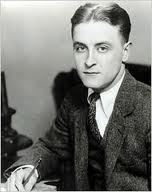
If you like the book/movie combo, you’ll and to (re)read one of my favorite books, The Great Gatsby by F. Scott Fitzgerald, now because the movie with Leonardo Di Caprio is coming out in May.  Will it be as good as the book?  How will it compare to the Robert Redford version? This Boz Luhrmann version certainly seems to have a harsher edge than the earlier movie. Check out the trailer.

Go on Girl! (Part Two): Ideas for Your Book Club

SAMSUNG
Go On Girl! Book Club’s 2011 Author of the Year, Daniel Black, author of Perfect Peace.

I’m an advocate of reading and travel to bring friends together. Go On Girl! Book Club (see previous post) does this in quite a spectacular way. GOG is one of the largest national, non-profit reading organizations dedicated to supporting authors of the African Diaspora. For the past 20 years they have hosted an author awards weekend in a different location each year, usually with 150 to 250 members and guests in attendance.  The chapters in the host city plan and execute a weekend full of activities that include a mixer for GOG members and authors, meetings of the national board and executive committee and membership breakfasts. They also have panel discussions, book signings and tours of the host city.

Says GOG President Lynda Johnson, “Our members love interacting with the authors, having serious one-on-one discussions with them and being treated to sneak peeks of their upcoming novels.” It sounds like the authors enjoy it, too. Says Johnson, “Bebe Moore Campbell once said to us that she really appreciated her readers because the craft of writing is a solitary art and when you hear from people who’ve read your work you know you are appreciated.”

The high point of the weekend is the awards ceremony in which the group honors its Author of the Year, New Author of the Year, Life Achievement Awardees, and scholarship winners. Says Johnson, “Walter Mosley, Terry McMillan, Diane McKinney Whetstone, Sonia Sanchez, J. California Cooper, Daniel Black, Isabel Wilkerson, Stephen Carter, and Bebe Moore Campbell are among the literary luminaries that have attended our event to accept their awards. Our members look forward to this annual event so they can bond over books, meet their favorite authors and rekindle the cross-country friendships they’ve forged with each other. We stay connected throughout the year with a membership newsletter, chapter meetings and other gatherings.”

But if events of such magnitude aren’t for your group, GOG has some ideas to spice up your book club’s interaction and activities. For example, members get together to support each other for charity functions such as donating books to libraries and schools, reading to shut-ins and even donating books to women behind bars. Says Johnson, “Our members do so much around literature such as attending and hosting book signings, inviting authors to our book discussions and bringing the books to life such as preparing meals around the foods discussed in a book. For instance, we baked the cookies from the novel Orange Mint and Honey by Carleen Brice and listened to the music of singer Nina Simone, who is prominently featured in the story. We also visit the locations in which the books take place. Our chapters in the Washington, D.C., Maryland, and Virginia areas visited Thomas Jefferson’s plantation, Monticello, when we read the historical novel, Sally Hemmings by Barbara Chase-Riboud.”

If your book club is looking for great African-American writers, check out the extensive list of the books GOGs have read over the past 21 years. Says Johnson, “Through the course of our book club’s existence we have discovered some amazing African-American writers and many writers who are struggling to get their work out there. What we as an organization would love to see is writers of color getting recognition on the very large literary landscape.”

Go On Girl! Book Club will host its 21st Annual Author Awards celebration from Friday, 2013-logo-header[1]May 31st to Sunday, June 2nd at the Sheraton Atlantic City Convention Center Hotel. The awards dinner on Saturday, June 1st will feature our 2012 winning authors, Marlon James, Author of the Year for The Book of Night Women and Karen Simpson, New Author of the Year for Act of Grace. Authors who have attended past awards dinners include, Walter Mosley, Terry McMillan, Diane McKinney Whetstone, Lawrence Hill, Jewell Parker Rhodes and many others. For more information and to purchase tickets to the awards dinner visit www.GoOnGirl.org/events.

Go on Girl! This is one inspiring book club. Part One.

While some book groups struggle to meet regularly or to get everyone to read the book goongirlbookclubbefore they meet, others take the reading group concept to a whole new level.

In the course of doing research for my upcoming book, Off the Beaten Page: The Best Trips for Lit Lovers, Book Groups, and Girls on Getaways, I was looking for book clubs that travel and do other interesting things together– beyond the typical meeting that includes book discussion, wine, and dessert, not necessarily in that order.  One of the most impressive groups I came across was the Go On Girl! Book Club.  They’re headquartered in New York but GOG has become a national organization with 30 chapters in the following 13 states.

Their mission: to encourage the literary pursuits of people of African descent. The group started with Lynda Johnson, Monique Greenwood, and Tracy Mitchell who all worked at Fairchild Publications as editors. Says Johnson, “Tracy and I were avid readers. She loved coming of age stories and I loved any and everything surrounding the Harlem Renaissance writers. Tracy and I were both reading the novel No Easy Place to Be by Steven Corbin and would discuss it over lunch. Monique heard our intense conversations and originally thought we were discussing real people. We told her she had to read the book; she did and joined our conversations. Based on our discussions Tracy suggested we get a small group of friends together and form a book club. It was during that first meeting that the foundation for GOG was set. Ironically, we had 12 women attend, all with different tastes in books.”

This formed Go On Girl! Book Club’s commitment to read 12 different genres a year, one for each month. They also decided to limit their group to 12 women to make for manageable book discussions. Eventually, various members of the group moved to other parts of the country and they established GOG chapters wherever they went, starting with Washington, D.C. and Chicago. They didn’t set out to form a national organization.  “Our growth happened very organically,” says Johnson.

But they eventually became women on a mission. “We chose to read writers from the African diaspora to support those authors and experience stories about ourselves. The publishing industry didn’t realize that a large black readership existed until the publication of Terry McMillan’s books. We quickly discovered so many wonderful black writers who weren’t getting recognition or support. We wanted to let them know that we realize they exist and are reading and discussing their books. We hosted book signings and readings for some of those authors and then decided to recognize them with our annual author awards weekend. We just wanted a platform for African American writers. There were so many great writers out there who we felt were following the tradition of Toni Morrison, James Baldwin and a host of literary writers from the Harlem Renaissance but not getting the recognition they needed. We felt we could do that for them as a book club and discuss and enjoy some great stories at the same time.”

Ultimately, GOG became a national, non-profit reading organization.  They give out scholarships to encourage writing of stories about the black experience. “We decided to give a scholarship to an aspiring writer studying literature/communications and an unpublished writer struggling to be read. And, if that’s not enough, for the last 20 years, the GOG chapters have come together in a different location each year, to connect with each other and to host author awards that have been attended by some of the luminaries of the literary world including Walter Mosely, Bebe Moore Campbell, Terry McMillan, and many others.

Impressed?  Read more about the Go On Girl! book club in my next post.

Dreary Weather and Creativity

0
Today’s weather make me feel like this.

I just returned from walking my dog, Duffy, and he’s a big wet ball of mud. It’s about 40 degrees and rainy outside, the worst possible weather for Minnesotans.  Most of us relish the cold and snow and spend a lot of time outside enjoying it while also feeling slightly superior to those who live the easy life in warmer climates.  Wimps.

When it’s really cold here, its also sunny, a very cheerful combination. We run out with show shoes or skis or simply gaze out on the sparkling snowbanks, hot cocoa in hand. By contrast today is capital D Dreary.  No amount of cocoa will make me feel better unless it’s some of “Mr. Smith’s special hot chocolate” that my spouse used to take along on kids camp outs. Add to the drippy weather the fact that we’re so far north it gets dark really early in winter, so by about 4:30 it will be dark and dreary… sounds like Edgar Allen Poe.

On the upside, I’ve always felt that people who are too happy have nothing to write about. Would  Poe have penned The Raven if he were feeling anything but morose?  Could Jon Krakauer have written Into Thin Air if his Mt. Everest trek hadn’t been a disaster?  One of my favorite writers, Tim Egan, concurs.  In a recent New York Times column, “The Longest Nights,” he says the bleak winter is prime time for writers and other creative people. “At the calendar’s gloaming,” he says, “while the landscape is inert, and all is dark, sluggish, bleak and cold, writers and cooks and artists and tinkerers of all sorts are at their most productive.”

He lives in Seattle and his article ponders the relationship between Seattle’s uber rainy weather and the number of writers in that city.  He says, “I’ve come to the conclusion that creativity needs a season of despair. Where would William Butler Yeats be if he nested in Tuscany? Could Charles Dickens ever have written a word from South Beach? And the sun of Hollywood did much to bleach the talents out of that troubled native of Minnesota, F. Scott Fitzgerald.”

So I welcome the bleak mid-winter.  What else is there to do but towel off the dog, roll up my sleeves, and write… and perhaps sip a steaming cup of “special” hot cocoa?

The American Stories Behind Downton Abbey

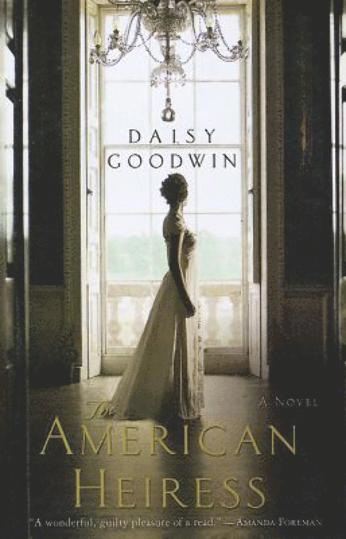
My book club is reading The American Heiress by Daisy Goodwin this month.  It’s a fairly 852358-BK-1-lrglight read, but just right to get any fan of Downton Abbey primed for the launch of season three this Sunday, January 6, on PBS.

Americans have a long-standing fascination with the British aristocracy. For example, while millions of Londoners piled in around Buckingham Palace to enjoy the festivities surrounding Kate and William’s wedding in 2011, there were probably an equal number of Americans (clad in funny hats) who stayed up all night to watch all the pomp and romance of the royal wedding on TV. And, we’re totally hooked on Downton Abbey,  the story of  life in the Edwardian country house of the Crawley family and their cadre of servants that has become stratospherically popular, I mean Justin Bieber popular.   Through the American Heiress, and other books, most notably, Edith Wharton’s The Buccaneers, American readers have a special connection to the Downton drama. Here’s why:

Before the fictional Cora became Downton’s Lady Crawley, she was the beautiful daughter of a dry-goods multimillionaire from Cincinnati. In the real world of the late 1800s, similarly wealthy American families, especially the newly rich who had yet to scratch out a place in Unknownoutrageously closed and rigid social world of this country’s wealthy elite, (the “500” of Mrs. Astor), looked across the pond to forge their reputations. The young women of these families became known as “buccaneers.” Marriage to a British aristocrat brought status to the social climbing wealthy Americans and their wealth brought an infusion of vital cash to the increasingly impoverished British aristocrats, who because of taxes and inheritance rules, were forced to cast a wide net to find relationships that could bring new wealth to support their estates. A win-win?  As you’ll see from the following book list, not always.

To Marry an English Lord, by Carol Wallace and Gail MacColl, offers an excellent nonfiction look at these buccaneers who inspired the Downton Abbey series. To-marry-an-English-Lord-for-web

The Gods of Newport by John Jakesabout life among the wealthy in Gilded Age Newport, Rhode Island.

Amanda Mackenzie Stuart, Consuelo and Alva Vanderbilt: The Story of a Daughter and a Mother in the Gilded Age. The non-fiction story of how Consuelo Vanderbilt was forced  into a loveless marriage to the Duke of Marlborough.

Also, any of Edith Wharton’s other classics such as The Age of Innocence, The House of Mirth and The Reef, offer a great look at life among America’s Gilded Age elite.

Book Club Traveler is now Off the Beaten Page Travel

It’s been quite a while since my last post because I’ve been hard at work on a forthcoming book entitled Off the Beaten Page: The Best Trips for Lit Lovers, Book Groups and Girls on Getaways, which will be out in May.  The book explores the idea of literary travel– what it is, how to plan lit trips large and small, and 15 of the best places in the U.S. for where you can both explore the settings of great books and have a great time with friends. I’m starting the new year with a new blog, Off The Beaten Page Travel, which will work in conjunction with the book, serve as a place to update lit lovers on my literary travel adventures as well as a forum where readers can share their ideas, too.

I have moved the content from Book Club Traveler to this new blog, so if you’re a subscriber to BCT, please subscribe to Off the Beaten Page Travel (www.offthebeatenpagetravel.wordpress.com).  You’ll find both the information from the last couple of years along with new and frequently updated thoughts on reading and travel. The goal will remain the same as my tagline says, “Travel to the places you’ve read about. Read about the places you travel.”

Preserving F. Scott Fitzgerald's Birthplace

My book club took a little F. Scott Fitzgerald tour in St. Paul a few weeks ago.  We walked around the neighborhood where he was born and grew up, taking in his various residents and hang-outs and staring as so many Fitzgerald pilgrims do at the house where he was born at 481 Laurel Avenue.  (See my previous post on the St. Paul Fitzgerald tour. We gathered just off the front porch and gazed up like a bunch of tourists and in a few minutes one of the people who live in the building, Richard McDermott, saw us and called us in for a little talk about the building, which was a real treat because he was instrumental in preserving the building. I was sad to see in the Minneapolis Star Tribune an article about him and the fact that he has terminal cancer.  He has done much to preserve Fitzgerald’s heritage in St. Paul and had regaled visitors from around the world, including Azar Nafisi, with stories about the building. Here’s an article about the charming Mr. McDermott

Literary Death Match: A Cerebral Slugfest

I’m heading over to the Literary Death Match (LDM) tonight, which sounds like some sort of mixed martial arts combat. But, there will be no Junior dos Santos, Antonio “Bigfoot” Silva or other UFC luminaries at tonight’s competition at the Nomad World Pub in Minneapolis. (I’m hoping to see some beefcake, but keeping my expectations low.) Despite its violent-sounding name, LDM is a comedic/literary competition that has made its way around the globe and regularly stops in the Twin Cities. These are great events for book clubs to attend together. Four authors read something they’ve written and three literarily (is that a word?)-inclined judges offer their comments on each reading, with an emphasis on humor rather than violence, though there is sometimes beer-fueled mayhem as the audience votes on the winner. Everyone goes home happy—no bruises, even to their egos.

Tonight’s readers include L.A. Times-award-winning young-adult novelist Pete Hautman (The Big Crunch and The Obsidian Blade), Minnesota Public Radio Electric Arc Radio‘s Stephanie Wilbur Ash, poet and author Juliet Patterson (author of Truant Lover) and poet-musician Jeffrey Skemp (author of Spent). The judges: Jamaican native Marlon James (author of The Book Of Night Women and John Crow’s Devil), cartoonist and host of the Lutefisk Sushi podcast Danno Klonowski, and former journalist turned sci-fiction writer Dennis Cass.

LDM creator and host Todd Zuniga works as hard as any fight promoter to put these shows together and hopes eventually to bring LDM to television.  He says, “Literary Death Match started because there was a real need to evolve literary events beyond a bar reading where Reader 1 would read for 12 minutes beyond the time limit, Reader 2 would read a slice-of-life blog entry they wrote earlier that day and Reader 3 would blow everyone’s mind. We wanted an event where everyone was Reader 3. So, we went around and asked literary entities and asked them to send us someone to represent them. Secondly, we wanted to seamlessly integrate comedy into a literary night, and that’s where the judges come in — regardless if the story was about a bad day at work, or surviving cancer.”

Todd shares my passion for making reading a way to create community and sees a trend toward people seeking entertainment and social connection through activities that exercise a bit of brainpower like LDM, a cerebral form of extreme cage fighting. He says, “LDM is a highly intellectual event, but we’re also zany and love bolts of silliness. I’m my mother’s son, so I want everyone in the room to feel good after it’s done. And what’s better than having a real conversation with someone fantastic? Our goal is to get people to read, and to keep helping people to understand that books aren’t always a solitary, lonely affair. We want to fill the room with the smartest, kindest, most fascinating people we can find. So, after the event they can talk about Etgar Keret’s Suddenly a Knock at the Door before they talk about the latest episode of Mad Men or Breaking Bad.”

Um, I have to figure out who Etgar Keret is before I can join that conversation, but I am looking forward to watching a few rounds of literary pugilism. Kudos to The Loft Literary Center for sponsoring this event.