All posts by Terri Peterson Smith

Volcano Follies in Guatemala

Shoe-meltingly hot lava on Volcan Pacaya

One of the most popular activities for visitors to the Guatemalan highlands is hiking up volcanoes.  Some people approach it like collecting merit badges, listing which ones they’ve “done.” That’s a big job because there are 33 volcanoes in Guatemala, three of them very active.

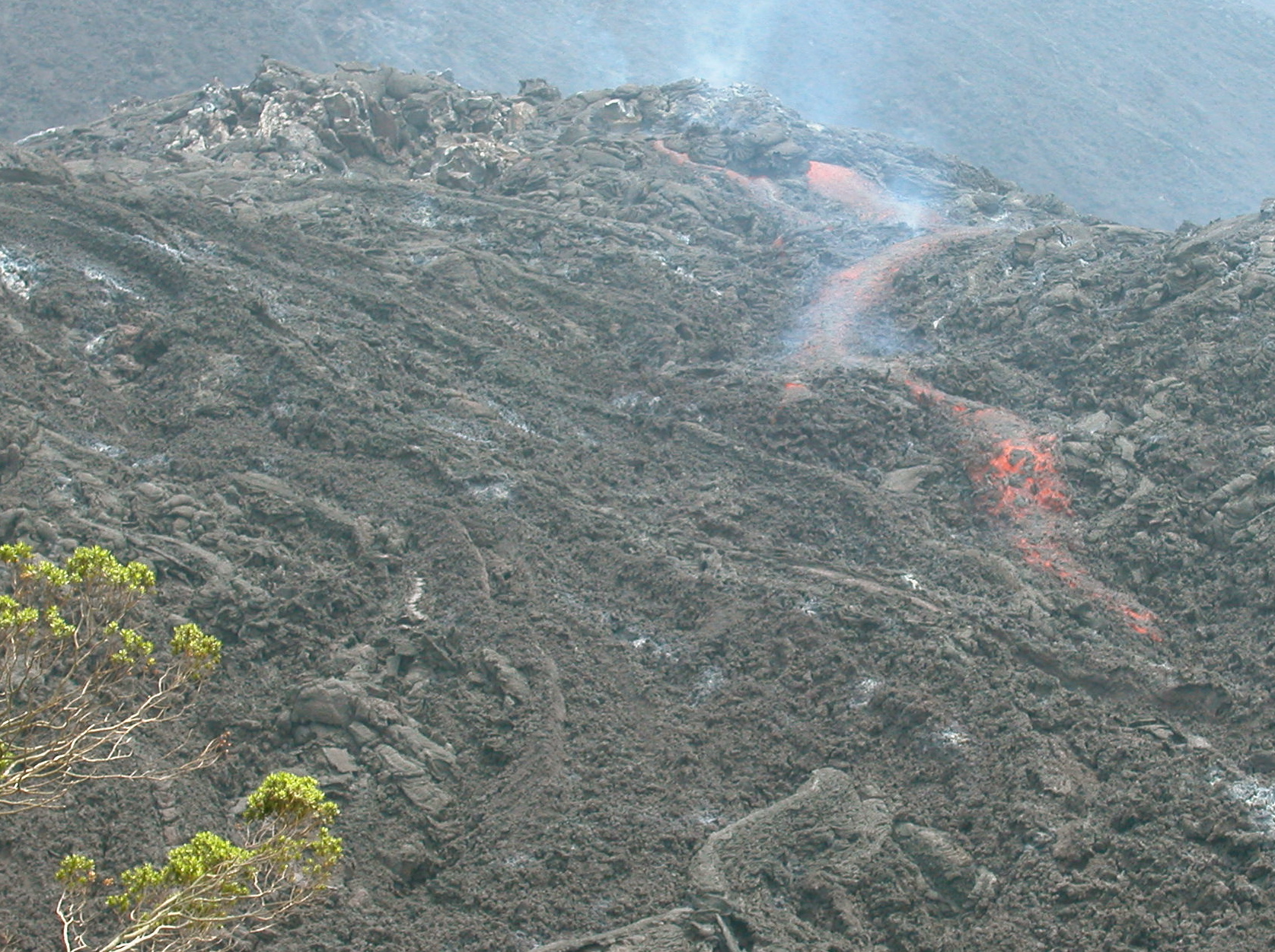
On our last visit to Guatemala, we hiked up Pacaya near Antigua, which is active, to say the least. It always strikes me when I visit developing countries how few safety rules there are.  For example, on Pacaya, there’s nothing stopping you from walking right up to the lava flow, except common sense, which from my own experience, (and judging from the video below) is often in short supply. Standing all too close to the lava flow—which felt like standing in front of a giant hair dryer—our guide suggested that we poke around with our walking sticks (rented from a group of local children who I initially feared wanted to swat us with them) to be sure that the scree underfoot was sturdy enough to stand on.  Oh, and be sure to check the bottoms of your shoes to be sure they’re not melting…  This just would not be allowed in the U.S. where we worry about keeping five- year-olds in car seats and constantly douse ourselves in Purell.
I recently scored my second Guatemalan volcano: Santiaguito, near Quetzaltenango.  Santiaguito is actually a junior version or extension of the much higher Santa Maria volcano, and therefore a shorter trek, which was fine with me.  The big attraction is that it erupts in a giant cloud of ash and steam about as regularly as Old Faithful geyser in Yellowstone. We started our trek around 6:30 a.m. in order to be in place to see it erupt around 8:30.  “Poco e poco,” and with several banana bread and water stops, we made it to the designated viewing spot, a kilometer or so from the crater, along with a fellow hiker from Hungary and a group from France.  Who knew scampering up a dusty trail in Guatemala could be such a cosmopolitan experience?

As can happen with travel, all did not go according to schedule.  Santiaguito was a little slow that morning.  We ate sandwiches in the company of a particularly persistent little begging dog and waited. The clouds rolled in, then the eruption began, half obscured, but viewable nonetheless.  The sound, even at that distance, was amazing, like a huge roaring jet engine.  Of course, if we had been closer, the clouds wouldn’t have been such a problem but I’ll trade a better view for a modicum of safety.  Here’s a video from a guy who was a little too close to Santiaguito for comfort. 

Poco a Poco: Biking to San Andres Xecul, Guatemala

Xela, Guatemala (a.k.a., Quetzaltenango) lies at 8,000 feet in the heart of the country’s

Biking through the farmland near Xela.

highlands and at the center of its Mayan population. Xela (pronounced shay-lah) is a great base from which to explore a huge array of nearby sites and activities. However, at

that altitude, I’m wary of doing anything that requires more exertion than sampling some of the country’s great coffee in a café or watching others exert themselves in a game of fútbol. Still, the possibility of a trip to a rural village that boasts the most colorful church in all of Central America prompted me to get trade my café chair for a bike to ride to San Andrés Xecul.

Traditional Mayan worship meets Catholicism at San Andres Xecul in Guatemala

Fortunately, there were only a few steep patches, and the friendly people in the village (one little boy kept pointing at us and saying “Gringos, Mama!”), a nice sugary Roja from a local tienda, and the Technicolor church made it worth the occasional gasp for oxygen.  Our guide from Altiplano Tours  was merciful: “Poco a poco. It’s not a race.”  Poco a poco, little by little, became the mantra of our trip and as I think about it, that’s a pretty useful phrase for most of life.

Cuanto Cuesta? Getting Psyched to Bargain in Guatemala

Embroidery for sale in Chichicastenango, Guatemala. Who can resist?

In anticipation of traveling to Guatemala, I’m trying to get myself into bargaining mode. I have to do this because I am the world’s worst haggler.  Offer me something for $5, I’ll pay $8 for it. Put a cute kid in front of me and it’s all over. This drives my spouse, the world’s best and most unemotional bargainer, completely nuts.  It doesn’t matter how inexpensive the item the child is selling, he asks for a lower price.

I, on the other hand, offer an amount which is the selling price plus my “empathy quotient,” based on how much I envision the money meaning to the child’s family and how much I would hate having to go out and haggle with tourists if I were that kid.  Then I add more money simply because I’m a wimp.  Any ten-year-old Guatemalan kid holds great power over me. Then the word spreads that he has a “fish on the line.”  His friends show up. They laugh. They give each other high-fives. It doesn’t matter, I can’t say no. Last time I was there, a little girl asked me to buy some dolls.  I said I didn’t need them.  She said, “Buy them for your friends.”  I told her I didn’t have any friends.  She said, “For your enemies.” I told her I’d take two because she was funny.

So, if you see someone walking around Minnesota in winter wearing an embroidered blouse, sandals and carrying dolls, you’ll know it’s me.

New study: more books/reading equals educational achievement

I ran across an article in Miller-McCune about an interesting study that correlates the impact of books in the home with children’s success in education. “Home library size has a very substantial effect on educational attainment, even adjusting for parents’ education, father’s occupational status and other family background characteristics,” reports the study, recently published in the journal Research in Social Stratification and Mobility. “Growing up in a home with 500 books would propel a child 3.2 years further in education, on average, than would growing up in a similar home with few or no books.

But we book lovers already knew this.

McSorley's Old Ale House-Glad to see this NYC institution still going

I was happy to read in the New York Times that McSorely’s Old Ale House is going, even if its without the old chicken bones. Writers (Ginsberg, Kerouac, Menken, the McCourt brothers), artists, and politicians have whet their whistles here since forever.  e.e. cummings wrote a poem about the place

I was sitting in mcsorely’s. outside it was New York and beautifully snowing. inside snug and evil…

Some things just should not change.

Anticipating Travel: Guatemala

We’ll soon be off to Quetzaltenango, in the highlands of Guatemala, to visit our son Mike who teaches science at a school there. One of my favorite things about traveling is the anticipation of the trip.  I stretch out the pleasure by planning it for weeks. I read about where I’m going (in this case Francisco Goldman’s Long Night of the White Chickens, David Grann’s fascinating New Yorker article, Murder Foretold: Unraveling the ultimate political conspiracy, and a New York Times article on trekking the highlands). I talk to people who have been there, check Web sites, think about gifts I want to bring back for friends.

I plan partly because I want to do the best things available during my short time there.  But, I also plan as much as possible to avoid disasters. The more exotic and challenging the destination, the more I like to have some idea of what it will be like so I don’t make mistakes–get lost, get robbed, offend people, have them offend me.  A little planning makes me feel more confident and maybe that way I’ll blend in and avoid looking like a naïve tourist just ripe for fleecing.  Since I have short, stick straight blond hair, blending in poses a particular challenge in most of the places I travel lately.  When I went to Haiti, people regularly reached out to touch my very foreign-looking hair. “Madame Blanche!” On the other hand, how often do you get to feel that remarkable?

Ultimately, though I enjoy the planning and anticipation, some of the best parts of travel are those you don’t plan and can’t control.  These are little Zen lessons of being in the moment, as on our last Guatemala trip when I came upon the interesting Mayan women (pictured above) in Santa Catarina, near Lake Atitlan, or the mother and her adorable baby (below) in the square in Antigua.

Poet Mark Doty loves dogs. I love dogs. Hearing Doty’s poems about his dogs made me love poetry.

I never thought a Golden Retriever would lead me anywhere literary. My own Golden

Jake and pals.

Retriever, Jake, has led me a lot of places—swamps, the neighbors’ back yard after he ate all the peanut butter and jelly sandwiches at their daughter’s birthday party, wading in lakes after balls that he refused to retrieve…. never to poems.  But Mark Doty’s Golden, Beau, opened my eyes to the potential of reading poetry, and just in time for National Poetry Month.

Doty appeared at the Hennepin County (MN) Library Foundation’s Pen Pals series last week. He’s funny, entertaining, insightful, and has a beautiful voice, which makes me think that poetry is best read aloud, by the poet—so intimate.  He writes about many other things, but he got me with the dogs.  Of course, even those poems are about more than canines; they’re about aging, joy, love, living in the moment.

After I finished blowing my nose and blotting my eyes in the back of the auditorium, I told Doty I’m a convert. Check out his poem Golden Retrievals on the Poetry Foundation’s Web site.

I’m off again: muck, pond, ditch, residue of any thrillingly dead thing. And you?


Ethics and Henrietta Lacks

I recently attended a gathering at the University of Minnesota, through its Learning Life series, where Jeff Kahn, director of the University’s Center for Bioethics, discussed Rebecca Skloot’s The Immortal Life of Henrietta Lacks. For anyone who hasn’t read Skloot’s huge bestseller, here’s the Amazon description:

Henrietta Lacks was a mother of five in Baltimore, a poor African American migrant from the tobacco farms of Virginia, who died from a cruelly aggressive cancer at the age of 30 in 1951. A sample of her cancerous tissue, taken without her knowledge or consent, as was the custom then, turned out to provide one of the holy grails of mid-century biology: human cells that could survive–even thrive–in the lab. Known as HeLa cells, their stunning potency gave scientists a building block for countless breakthroughs, beginning with the cure for polio. Meanwhile, Henrietta’s family continued to live in poverty and frequently poor health, and their discovery decades later of her unknowing contribution–and her cells’ strange survival–left them full of pride, anger, and suspicion.

Kahn started the evening by admitting that Skloot had contacted him when she was doing research for the book and he told her that she shouldn’t bother to write the story, everyone already knew about HeLa cells.  It’s good she didn’t take his advice. As a science writer, I admire Skloot’s tenacity, not only in ignoring the naysayers, but also in winning the trust of the Lacks family to get their story; it took her ten years.  I also admire the way she has woven together both the science and human-interest sides of the story to make a really readable book.  That’s the biggest challenge for science writers because straight science is really, really dull. Some people at this session thought Skloot had become too involved with the family and inserted herself into the story too much. I disagree.  A personal relationship was necessary to gain the confidence of the family and it seems like she has taken care not to exploit them. In fact, she donates a portion of her book’s proceeds to the Henrietta Lacks Foundation, which she created to provide financial assistance to needy individuals who have made important contributions to scientific research without their knowledge or consent.  That should be a fairly sizable amount of money because Skloot’s book has been on the bestseller list for months and Oprah has bought the option for a movie.

Kahn offered a bit of background on how researchers have exploited disadvantaged people.  Some experiments were quite barbaric.  These include the Tuskegee Institute study of untreated syphilis in black men, an experiment at the Willowbrook State School (on Staten Island) in the 1960s which exposed mentally retarded children to hepatitis, and another 1960s experiment at New York’s Jewish Chronic Disease Hospital in which vulnerable patients were injected with cancer cells.  These have all led to a mistrust of healthcare among groups who have been exploited. We discussed how slowly laws regarding consent, privacy and other ways of protecting human research subjects lag behind the science.  During Henrietta Lacks’s time, there were no such laws.

Here are a few other questions to think about if you pick up the book:

-Do you think the Lacks family deserves some financial benefit from Henrietta’s cells?Courts have ruled that it’s not the cells that have value in such situations; it’s the intellectual property created by science that has value.

-How is this any different than selling organs? The only person that doesn’t receive a benefit from the current transplant system is the donor.

-Should companies be able to patent and profit from a person’s DNA?

-Are we appropriately concerned with the ethics of using animals in scientific experiments?

-What ethical considerations and laws have changed since the 1950s?  What have we gained as a matter of morality?

As bioscience moves forward with increasingly complex technology, ethicists such as Kahn will have plenty to keep them busy.  To me, the saddest and most challenging ethical issue of this story isn’t as much about science as it is about education and the appalling knowledge gap between rich and poor. Especially in health care, ignorance puts the uneducated at a great disadvantage. That’s an issue for which we are all ethically responsible.

A Glimpse of The Devil in the White City

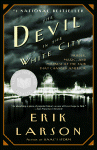
Last weekend I spent a really cold but delightful couple of hours wandering around Jackson Park in Chicago. I’ve wanted to go there ever since I read Erik Larson’s bestseller The Devil in the White City. Jackson Park is where the World’s Columbian Exposition of 1893 took place and that’s the subject of Larson’s non-fiction book. In The Devil in the White City, he weaves together the stories of Daniel H. Burnham, the legendary architect responsible for the fair’s construction (and later the Plan of Chicago) and H.H. Holmes, a serial killer masquerading as a charming doctor. He crafts the story so dramatically that readers often wonder if the book is a true story or a gripping work of fiction.

I’m not the only one who has wanted to see where the story takes place. “When I finished The Devil in the White City I got in my car and drove to Jackson Park,” says Mary Jo Hoag, who is now tour director for the Chicago Architecture Foundation’s Devil in the White City tours. “I just wanted to see where it all took place.” So many readers have come in search of the White City that a host of tours have sprung up (given by CAF, the Chicago History Center, the Art Institute and other organizations) catering to readers who want to see first-hand where the plot thickened. Word has it that a movie version of The Devil in the White City is finally in the works, starring Leonardo DiCaprio as H.H. Holmes.  That will create even more interest in seeing the real place where it all happened.

Almost nothing remains of the famed White City, though it was the greatest tourist attraction in American history, hosting 27 million visitors. Burnham and Frederick Law Olmsted (who also designed Central Park) began to lay out the fairgrounds in 1890. It took three years and 40,000 workers to construct the fabulous Beaux-Arts style fair buildings and monuments…out of plaster. The historic fair opened to visitors on May 1, 1893. It closed six months later and within a year almost every structure from the fair was destroyed by fire, demolished or moved elsewhere. Only the Palace of Fine Arts, on the north end of Jackson Park, remains. The building is now Chicago’s Museum of Science and Industry. It’s sad that such beauty was so ephemeral; I’d love to have seen it. Hoag says that, at the time, the fair’s huge white buildings– illuminated by the amazing new technology, electric lighting–were so dazzling that people who arrived at night got off the

The fair at night-- "like a sudden vision of heaven."

train and simply fell on their knees they were so astonished at the sight. One fairgoer described it as “a sudden vision of heaven.”

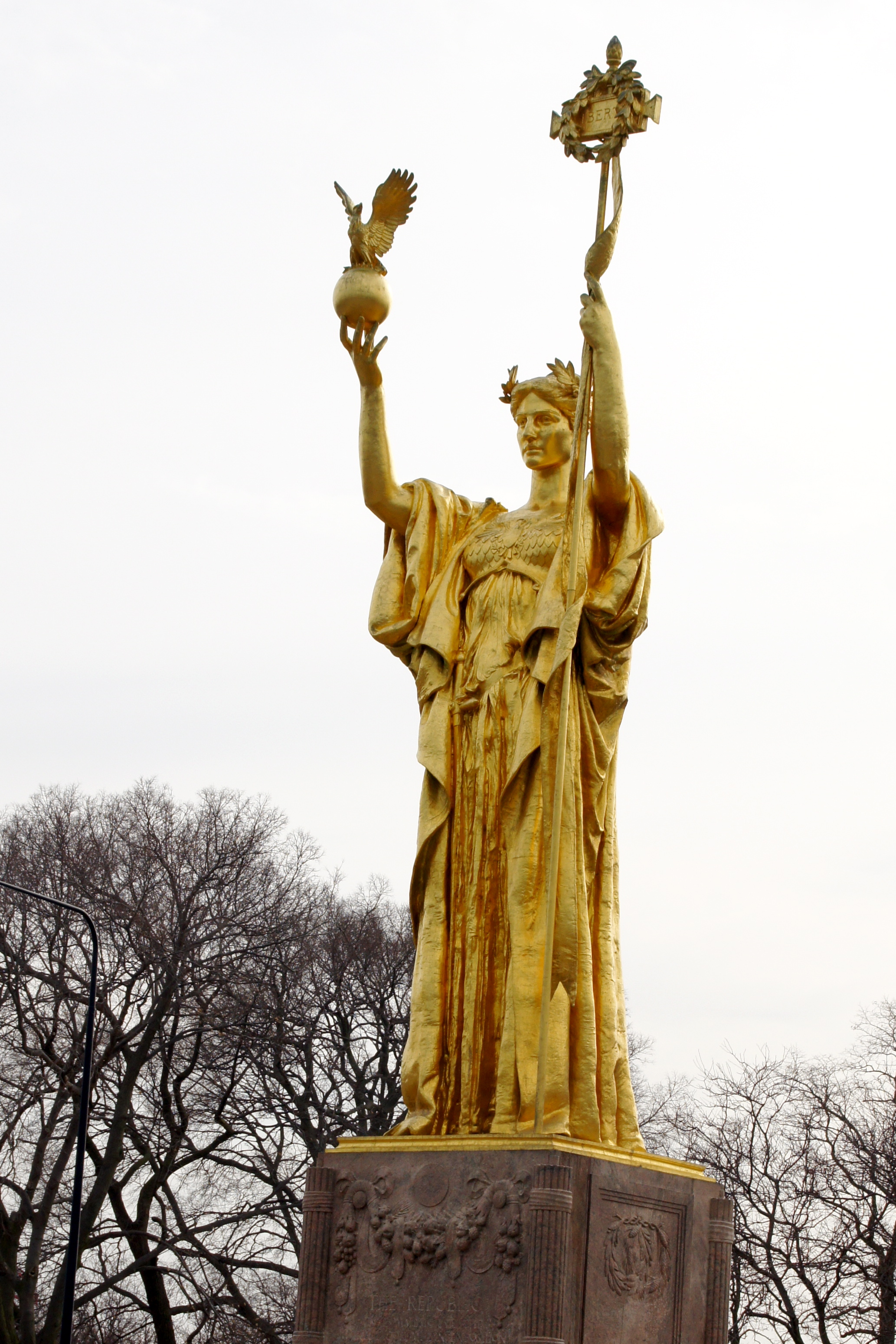
A one-third scale replica of Daniel Chester French's Republic, which stood in the great basin at the World's Columbian Exposition of 1893.

It’s good that at least the Museum of Science and Industry survives (as the Palace of Fine Arts it held some of the world’s most valuable art and was built extra strong and fireproof) because it gives a frame of reference for what the other buildings at the fair looked like. That, along with Hoag’s collection of photographs and her great descriptions, helped kick start my imagination as we strolled through Jackson Park. Over here the Agriculture Building…over there the gigantic Manufacturers and Liberal Arts Building…a replica of the iconic statue of the fair, The Republic…. the Wooded Island where architect Frank Lloyd Wright took inspiration from the Japanese pavilion… Modern life creeps back in, though. Over there is the basketball court where Barack Obama used to shoot hoops with Michelle’s brother.

Looking north down the lakefront from the Museum of Science and Industry, one has the sense that though the White City is gone, one of the best legacies of the fair endures: the idea that cities can be well planned and beautiful places. Jackson Park and Chicago’s long string of parks and open lakefront (part of Daniel Burnham’s Plan of Chicago) that make this city so special are examples of that great idea. Still, I look forward to seeing The Devil in the White City movie and how its special effects bring the White City back to life.

An Immigrant Tour of Lower Manhattan: Your Tired, Your Poor, Your Reading– Part 2

New York City is one of the best places in the country to taste (quite literally) the 
immigrant experience, particularly that of the great wave of newcomers who arrived in America at the turn of the last century. Prep for your trip with books such as Jane Zeigelman’s 97 Orchard: An Edible History of Five Immigrant Families In One New York Tenement, E.L. Doctorow’s Ragtime, or Jacob Riis’ How the Other Half Lives. Plan to start on lower Manhattan’s west side at Battery Park and work your way across lower Manhattan for an immigrant history “trifecta.”

First, board a Statue Cruises ferry (operating out of Battery Park) for a trip to Ellis Island and turn on your imagination. The Statue Cruises ferry out of Battery Park in lower Manhattan stops at Liberty Island first. From there, the boat stops at Ellis Island, then returns to New York City. You can choose to stop both places or just go to Ellis Island.

This small island in New York Harbor was originally part of the harbor defense system. Its size belies its importance in U.S. history; it was used as an immigration station from 1892 to 1954 and over twelve million immigrants entered the United States through Ellis Island. Its main building was restored after 30 years of abandonment and opened as a museum on September 10, 1990 under the management of the National Park Service.

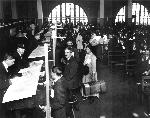
It takes some effort to imagine these gigantic halls filled with people, but an array of tours, movies and exhibits fill in the picture. This is where steerage and third class passengers underwent medical and legal inspection. The day I went with my family to Ellis Island the weather took a nasty turn after we arrived. Awaiting our return ferry, the waves were crashing on shore and we felt like part of the “huddled masses,” so close, but yet so far.

The return trip to Manhattan offers a fantastic view of the city and you can imagine the excitement and trepidation new arrivals must have felt as they finally reached their destination. Yet, for many new arrivals, America wasn’t exactly the “land of milk and honey” that many anticipated.  The Tenement Museum offers a glimpse of what life was like for Irish, Italian and eastern European families once they landed. It takes a little effort to get there and don’t look for a big museum a la MOMA. The office where you purchase tickets is at 108 Orchard. Then your tour group walks to the actual tenement building at 97 Orchard.

The Tenement Museum is one of my favorite places in New York City and provides a vivid contrast to today’s Fifth Avenue and Times Square. No Gilded Age J.P. Morgan opulence here. They’re not kidding; this is a real tenement. You can only see it with a tour (book ahead, the fill up). I visited  “The Moores: an Irish Family in America.”   I also spent quite a bit of time afterward visiting the gift shop, which ranges from literary to funky.

Part three of the immigrant tour brings a reward for your trek across Manhattan:  food. Of course ethnic food abounds in New York, but for me a nibble in one of these lower east side establishments is an authentic way to cap off the tour. Katz Deli (205 East Houston) is just around the corner from the Tenement Museum.  It’s one of the last of the delis that used to fill the neighborhood and was also the location of Meg Ryan’s famous “faking it” scene in When Harry Met Sally. The food is worth every artery-clogging bite.

Or try your hand at eating for some soup dumplings at Joe’s Shanghai (9 Pell Street). If you haven’t sampled soup dumplings, there’s an art to eating them which you can view in Joe’s rather lengthy “Kill Soup Dumpling” video.  (Skim through it.)

Joe’s is in the heart of Chinatown, which has been a hub for numerous waves of immigrants in the city. This is the “Five Points” neighborhood, the setting of Herbert Asbury’s 1927 book The Gangs of New York and Martin Scorsese’s 2002 movie of the same name. (I love the names of the Irish gangs of the era: the Bowery Boys, the Dead Rabbits, the Plug Uglies, the Short Tails, the Slaughter Houses, the Swamp Angels.)

Not full enough? Loosen your borcht belt with a little Ukranian food at Veselka (144 2nd Avenue). You can rationalize all this eating with the fact that you’re gaining not only weight, but also a greater cultural perspective.