We’ll soon be off to Quetzaltenango, in the highlands of Guatemala, to visit our son Mike who teaches science at a school there. One of my favorite things about traveling is the anticipation of the trip. I stretch out the pleasure by planning it for weeks. I read about where I’m going (in this case Francisco Goldman’s Long Night of the White Chickens, David Grann’s fascinating New Yorker article, Murder Foretold: Unraveling the ultimate political conspiracy, and a New York Times article on trekking the highlands). I talk to people who have been there, check Web sites, think about gifts I want to bring back for friends.
I plan partly because I want to do the best things available during my short time there. But, I also plan as much as possible to avoid disasters. The more exotic and challenging the destination, the more I like to have some idea of what it will be like so I don’t make mistakes–get lost, get robbed, offend people, have them offend me. A little planning makes me feel more confident and maybe that way I’ll blend in and avoid looking like a naïve tourist just ripe for fleecing. Since I have short, stick straight blond hair, blending in poses a particular challenge in most of the places I travel lately. When I went to Haiti, people regularly reached out to touch my very foreign-looking hair. “Madame Blanche!” On the other hand, how often do you get to feel that remarkable?
Ultimately, though I enjoy the planning and anticipation, some of the best parts of travel are those you don’t plan and can’t control. These are little Zen lessons of being in the moment, as on our last Guatemala trip when I came upon the interesting Mayan women (pictured above) in Santa Catarina, near Lake Atitlan, or the mother and her adorable baby (below) in the square in Antigua.
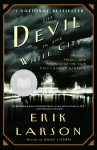
Last weekend I spent a really cold but delightful couple of hours wandering around Jackson Park in Chicago. I’ve wanted to go there ever since I read Erik Larson’s bestseller The Devil in the White City. Jackson Park is where the World’s Columbian Exposition of 1893 took place and that’s the subject of Larson’s non-fiction book. In The Devil in the White City, he weaves together the stories of Daniel H. Burnham, the legendary architect responsible for the fair’s construction (and later the Plan of Chicago) and H.H. Holmes, a serial killer masquerading as a charming doctor. He crafts the story so dramatically that readers often wonder if the book is a true story or a gripping work of fiction.
I’m not the only one who has wanted to see where the story takes place. “When I finished The Devil in the White City I got in my car and drove to Jackson Park,” says Mary Jo Hoag, who is now tour director for the Chicago Architecture Foundation’s Devil in the White City tours. “I just wanted to see where it all took place.” So many readers have come in search of the White City that a host of tours have sprung up (given by CAF, the Chicago History Center, the Art Institute and other organizations) catering to readers who want to see first-hand where the plot thickened. Word has it that a movie version of The Devil in the White City is finally in the works, starring Leonardo DiCaprio as H.H. Holmes. That will create even more interest in seeing the real place where it all happened.
Almost nothing remains of the famed White City, though it was the greatest tourist attraction in American history, hosting 27 million visitors. Burnham and Frederick Law Olmsted (who also designed Central Park) began to lay out the fairgrounds in 1890. It took three years and 40,000 workers to construct the fabulous Beaux-Arts style fair buildings and monuments…out of plaster. The historic fair opened to visitors on May 1, 1893. It closed six months later and within a year almost every structure from the fair was destroyed by fire, demolished or moved elsewhere. Only the Palace of Fine Arts, on the north end of Jackson Park, remains. The building is now Chicago’s Museum of Science and Industry. It’s sad that such beauty was so ephemeral; I’d love to have seen it. Hoag says that, at the time, the fair’s huge white buildings– illuminated by the amazing new technology, electric lighting–were so dazzling that people who arrived at night got off the
The fair at night-- "like a sudden vision of heaven."
train and simply fell on their knees they were so astonished at the sight. One fairgoer described it as “a sudden vision of heaven.”
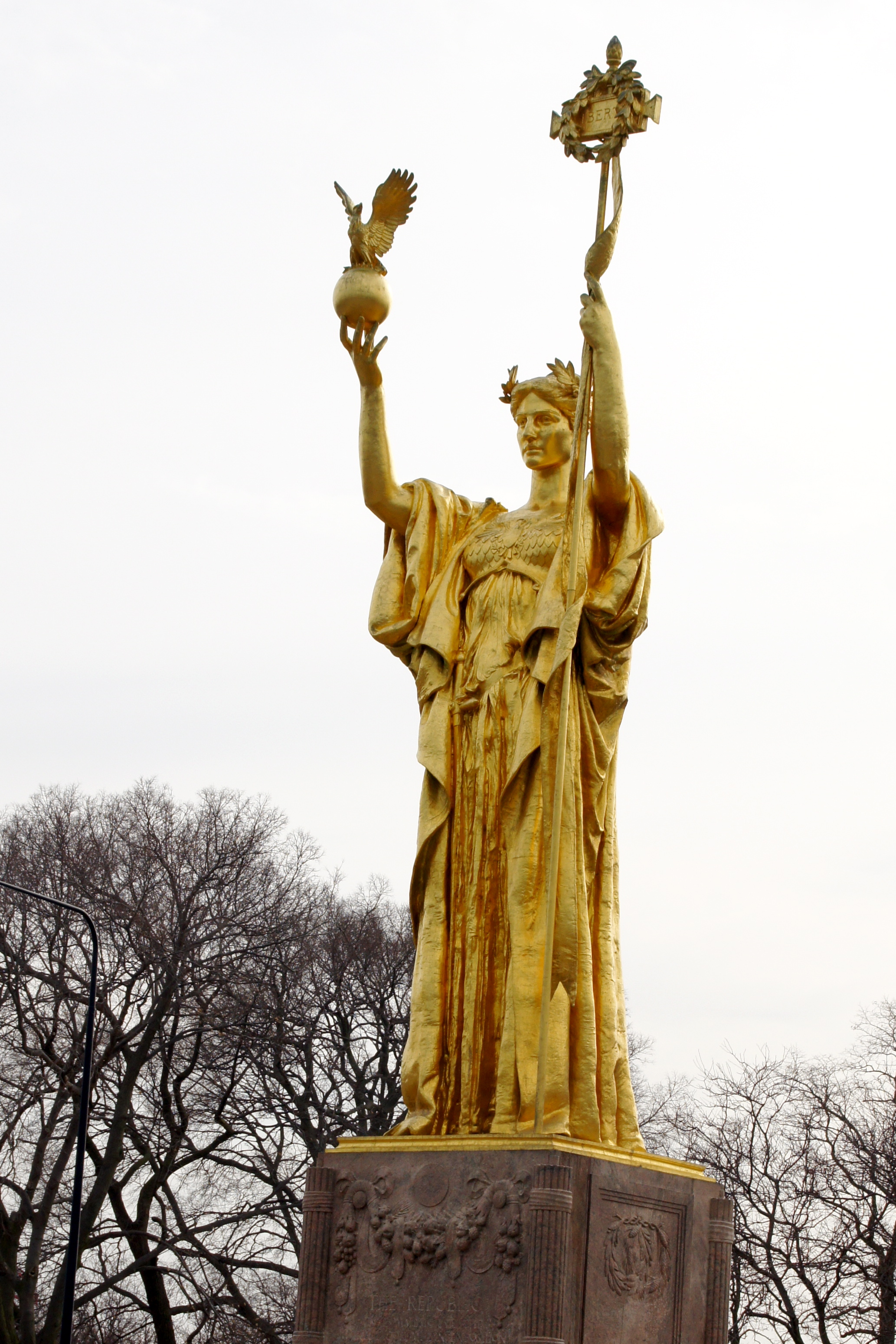
A one-third scale replica of Daniel Chester French's Republic, which stood in the great basin at the World's Columbian Exposition of 1893.
It’s good that at least the Museum of Science and Industry survives (as the Palace of Fine Arts it held some of the world’s most valuable art and was built extra strong and fireproof) because it gives a frame of reference for what the other buildings at the fair looked like. That, along with Hoag’s collection of photographs and her great descriptions, helped kick start my imagination as we strolled through Jackson Park. Over here the Agriculture Building…over there the gigantic Manufacturers and Liberal Arts Building…a replica of the iconic statue of the fair, The Republic…. the Wooded Island where architect Frank Lloyd Wright took inspiration from the Japanese pavilion… Modern life creeps back in, though. Over there is the basketball court where Barack Obama used to shoot hoops with Michelle’s brother.
Looking north down the lakefront from the Museum of Science and Industry, one has the sense that though the White City is gone, one of the best legacies of the fair endures: the idea that cities can be well planned and beautiful places. Jackson Park and Chicago’s long string of parks and open lakefront (part of Daniel Burnham’s Plan of Chicago) that make this city so special are examples of that great idea. Still, I look forward to seeing The Devil in the White City movie and how its special effects bring the White City back to life.
New York City is one of the best places in the country to taste (quite literally) the immigrant experience, particularly that of the great wave of newcomers who arrived in America at the turn of the last century. Prep for your trip with books such as Jane Zeigelman’s 97 Orchard: An Edible History of Five Immigrant Families In One New York Tenement, E.L. Doctorow’s Ragtime, orJacob Riis’ How the Other Half Lives. Plan to start on lower Manhattan’s west side at Battery Park and work your way across lower Manhattan for an immigrant history “trifecta.”
First, board a Statue Cruises ferry (operating out of Battery Park) for a trip to Ellis Island and turn on your imagination. The Statue Cruises ferry out of Battery Park in lower Manhattan stops at Liberty Island first. From there, the boat stops at Ellis Island, then returns to New York City. You can choose to stop both places or just go to Ellis Island.
This small island in New York Harbor was originally part of the harbor defense system. Its size belies its importance in U.S. history; it was used as an immigration station from 1892 to 1954 and over twelve million immigrants entered the United States through Ellis Island. Its main building was restored after 30 years of abandonment and opened as a museum on September 10, 1990 under the management of the National Park Service.
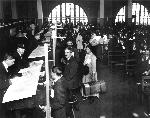
It takes some effort to imagine these gigantic halls filled with people, but an array of tours, movies and exhibits fill in the picture. This is where steerage and third class passengers underwent medical and legal inspection. The day I went with my family to Ellis Island the weather took a nasty turn after we arrived. Awaiting our return ferry, the waves were crashing on shore and we felt like part of the “huddled masses,” so close, but yet so far.
The return trip to Manhattan offers a fantastic view of the city and you can imagine the excitement and trepidation new arrivals must have felt as they finally reached their destination. Yet, for many new arrivals, America wasn’t exactly the “land of milk and honey” that many anticipated. The Tenement Museum offers a glimpse of what life was like for Irish, Italian and eastern European families once they landed. It takes a little effort to get there and don’t look for a big museum a la MOMA. The office where you purchase tickets is at 108 Orchard. Then your tour group walks to the actual tenement building at 97 Orchard.
The Tenement Museum is one of my favorite places in New York City and provides a vivid contrast to today’s Fifth Avenue and Times Square. No Gilded Age J.P. Morgan opulence here. They’re not kidding; this is a real tenement. You can only see it with a tour (book ahead, the fill up). I visited “The Moores: an Irish Family in America.” I also spent quite a bit of time afterward visiting the gift shop, which ranges from literary to funky.
Part three of the immigrant tour brings a reward for your trek across Manhattan: food. Of course ethnic food abounds in New York, but for me a nibble in one of these lower east side establishments is an authentic way to cap off the tour. Katz Deli (205 East Houston) is just around the corner from the Tenement Museum. It’s one of the last of the delis that used to fill the neighborhood and was also the location of Meg Ryan’s famous “faking it” scene in When Harry Met Sally. The food is worth every artery-clogging bite.
Or try your hand at eating for some soup dumplings at Joe’s Shanghai (9 Pell Street). If you haven’t sampled soup dumplings, there’s an art to eating them which you can view in Joe’s rather lengthy “Kill Soup Dumpling” video. (Skim through it.)
Joe’s is in the heart of Chinatown, which has been a hub for numerous waves of immigrants in the city. This is the “Five Points” neighborhood, the setting of Herbert Asbury’s 1927 book The Gangs of New York and Martin Scorsese’s 2002 movie of the same name. (I love the names of the Irish gangs of the era: the Bowery Boys, the Dead Rabbits, the Plug Uglies, the Short Tails, the Slaughter Houses, the Swamp Angels.)
Not full enough? Loosen your borcht belt with a little Ukranian food at Veselka (144 2nd Avenue). You can rationalize all this eating with the fact that you’re gaining not only weight, but also a greater cultural perspective.
I just finished reading Patti Smith’s National Book Award-winning memoir, Just Kids, the story of her life with the artist and photographer Robert Maplethorpe, a life dedicated to art and to each other. Smith and Maplethorpe met in New York in the late 1960s, while they were in their early twenties and through most of their journey together they lived like stereotypical starving artists—homeless, jobless, hungry, and itching from various vermin.
Of all her talents—art, punk rock, poetry—I’d say Smith is best at writing, which she demonstrates in this beautifully crafted memoir that’s hard to put down. I’m always fascinated with how writers, particularly memoirists, pick and choose the details they include in their stories. Smith offers less a photographic view than an impressionistic view of their lives, weaving together some (mercifully not all) of the seemy side (she seems surprisingly unfazed at the possibility of contracting gonorrhea from Maplethorpe) with fascinating encounters with the artists of the day including Jimi Hendrix, Janis Joplin, William Burroughs, Andy Warhol and Allen Ginsberg.
The book offers not only a fascinating and tender look at their relationship but also a tour of the Manhattan in the last period of 20th-century artistic ferment. Many hot spots such as Max’s Kansas City are long gone, and gentrification has pushed the art scene into the Meatpacking District, Brooklyn and beyond. Yet, there are still places that carry on the bohemian tradition, though like most of the parts of the city, they’re cleaner, nicer and more expensive than in the 60s. The biggest change has been in the Times Square area, which now fills with crowds of tourists and Disney characters instead of hustlers, addicts and panhandlers.
Ditto for the iconic Washington Square Park, which was refurbished over the last couple
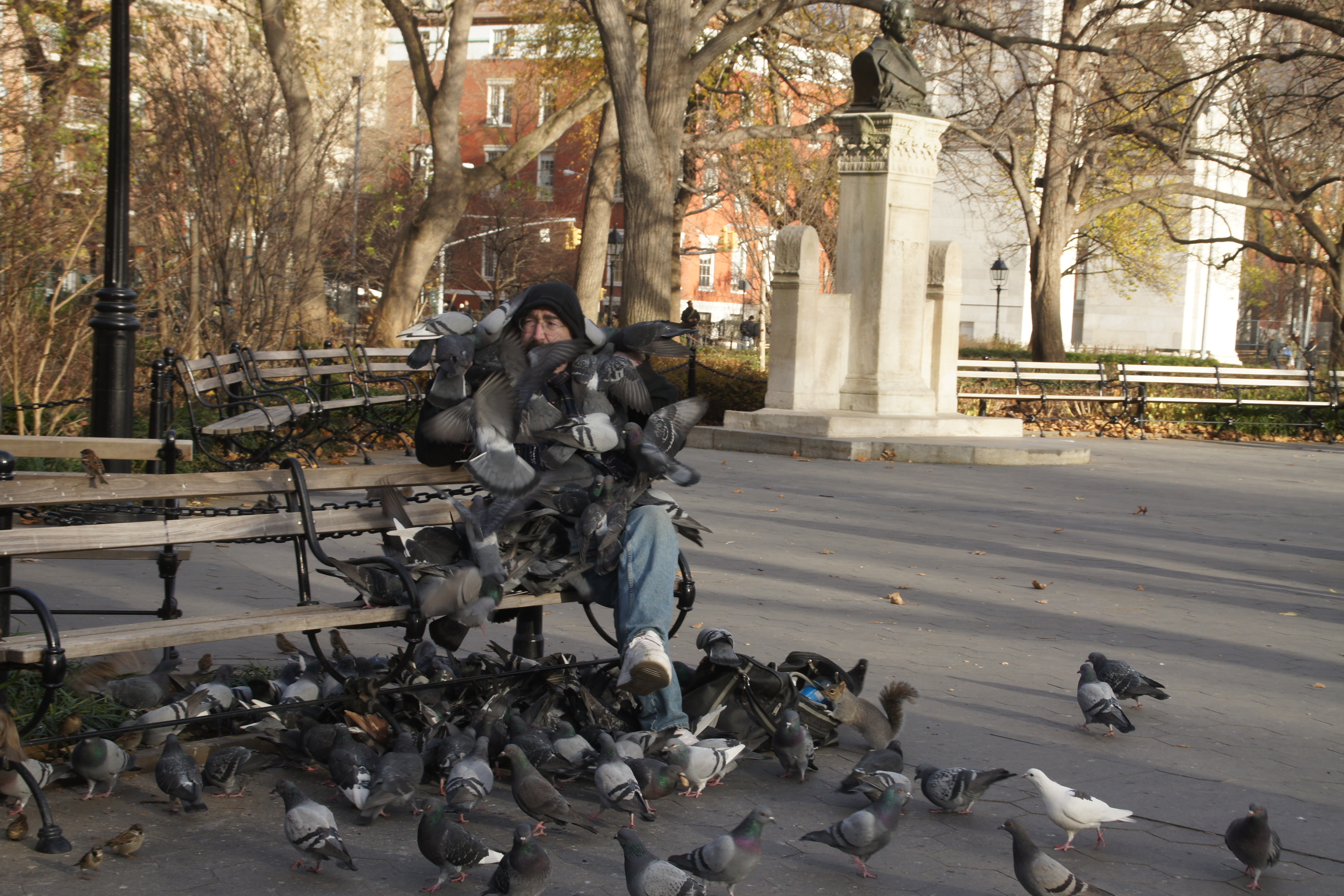
Washington Square Park has been refurbished.......but still has its share of crazy people.
of years. Not to worry, there’s still enough questionable activity there to make it seem bohemian. Smith tells the story of a couple of tourists who saw her and Maplethorpe hanging out there. One asked the other if they were artists and hence people they should photograph. The other said no, they’re “just kids.”
You can still go to Coney Island as the pair did when they could only afford one hot dog at Nathan’s. And, if you’re particularly dedicated to experiencing the life at the Hotel Chelsea www.hotelchelsea.com where Smith and Maplethorpe lived for many years, you, too, can stay there. The rates are exponentially higher than in the early 70’s, but from what I can see from TripAdvisor reviews, you can have an authentic Chelsea Hotel experience—complete with the bugs, stains and loud music and with the same furniture and carpeting from Smith and Maplethorpe’s day. Better, perhaps, to fork out $40 for the occasional tour the Chelsea offers and actually sleep in another hotel.
The St. Mark’s Poetry Project where Smith performed is still going strong. To get another taste of the poetry scene, head to the Bowery Poetry Club and Café, especially on Tuesday nights for the Urbana Poetry Slam. If you get a chance, eat dinner at DBGB, across the street (by contrast, new and very trendy).
Looking for more of the history of Greenwich Village? Take a Big Onion Walking Tour, which travels into the tiniest and most charming streets of Manhattan, so unlike the concrete jungle beyond the Village borders. These are the haunts of William Faulker, Dylan Thomas and Jack Kerouac and his Beats buddies. Some of the buildings, which date back to colonial times, served as slave quarters and servants’ houses but are now the most expensive pieces of real estate in the city.
Top off your walking tour with a latte and a giant cookie at the cozy Grey Dog Coffee Shop on Carmine Street. I love that they serve my latte with the froth in the form of a dog’s paw print. Clearly, I don’t have what it takes to be a starving artist.
For most visitors to New York, Midtown means the theater district and shopping. But, it also offers great strolling opportunities for lit lovers. I often start my mornings in this area with breakfast at Pain Quotidien (40th and 6th). It’s a chain, but very cozy, especially on a blustery New York winter day, and they offer great bread, pastries, fresh OJ, and killer oatmeal. If it’s warm, get coffee and croissants to go and eat across the street in Bryant Park.
Carb-fortified, I started my walk at the New York Public Library on Fifth Avenue at 42nd, adjacent to Bryant Park and gave a nod to Patience and Fortitude, the lions that guard the entrance. They’ve had several names since the library was dedicated in 1911, but Mayor Fiorello LaGuardia gave them these names in the 1930s because these were the qualities he felt New Yorkers needed during the Great Depression, qualities we need now, actually.
Books aside, the building’s colossal Beaux Arts architecture and majestic ceiling frescos make the library worth the trip. Yet, for book lovers, the sheer size and solidity of the place, with its grand staircases and the giant Rose Reading Room, give a feeling that books—in whatever form–will never go away. They also have a great gift shop. Check the Web site for current exhibitions. When I was there, among several others, they had a exhibit on Mark Twain, “The Skeptic’s Progress,” held jointly with my next destination, the Morgan Library & Museum at 225 Madison (at 36th ).
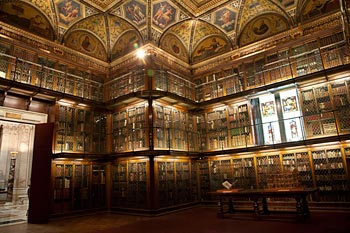
Financier and book/manuscript collector Pierpont Morgan built this library to house his collection (If this was his library, I’d love to see his house!) and the library has been adding to the collection ever since. They also added a modern wing. The original section of the library was restored this year.
When I was there Charles Dickens’s hand-written manuscript of A Christmas Carol was on display. And the Mark Twain exhibit, in honor of the 175th anniversary of his birth, was a treat for any Twain fan, loaded with photos and original hand-written letters and manuscripts.
Then, I hiked and window-shopped my way back up Fifth Avenue. Since it’s the holiday season, the tree at Rockefeller Plaza (at 46th) and the store windows along Fifth Avenue are worth the exercise. Pay homage to Holly Golightly at Tiffany (at 57th) (see also the story of Summer at Tiffany) and check out the jewelry boxes in the windows at Cartier (at 52nd) from which truly breath-taking jewelry emerges. Ispent quite a bit of time gazing at the crazy gorgeous windows at Bergdorf-Goodman (at 58th), which are works of art every year. Then, with Eloise in mind, I wandered by the Plaza Hotel. If you’re feeling wealthy, stop in for lunch or afternoon tea (including a Tea with Eloise menu) at the Palm Court. If you’re feeling really wealthy, you can stay in the Eloise Suite, which starts at $1125 a night. If not, looking around is free, which is what I like.
And, if you can’t make it to New York during the Christmas season, it’s also free to take a video trip to see Bergdorf’s windows, entitled “Follow Me.”
I wish I could find a Jen Knoch everywhere I travel. It’s easy to find travel agents, hotel concierges, and corporate event planners galore who can offer some piece of travel planning, but it’s seldom information that’s very customized or personal. Consequently, I spend a lot of time talking to friends to get their tips and pouring over sites like TripAdvisor. I’ve had great experiences with travel planners for big trips, groups like Costa Rica Expeditions or the Blue Men of Morocco, for example, but what if you’re an individual, family or a book group traveling to someplace like the Twin Cities or Chicago or Seattle?
Knoch’s Radar Virtual Concierge Services, which caters to Twin Cities experiences, offers customized suggestions, based on the client’s needs and it’s affordable for “regular” people. She says, “My sweet spot is the locally owned businesses that do tend to be more unique, under-the-radar and neighborhood type places that typically aren’t known to corporate event managers, hotel concierges, and travel agents. They tend to focus more on the obvious, larger venues, well-known, chains, etc. An individual, a couple, a group, a family looking for an adventure in the Twin Cities whether they live here or are visiting, are my absolute perfect clients! There is so much to do here and much of that is ‘unknown’ and I get my kicks out of blowing people away with the greatness of these cities from dining to music to retail to all-things culture.” Radar’s service is offered on a one time, weekend, annual or event-based basis, with the fees to match, starting at $15. I have yet to find a comparable service in other markets. Do they exist?
One of Knoch’s favorite “bookish” spots in the Twin Cities: Wild Rumpus. It’s one of my favorites, too, and I’ve missed going there now that my boys are grown. So, trolling their Web site, I was delighted to discover that they have an adults-only book club and, best of all, a remedial book club for adults who missed or want to revisit some of the classics of children’s literature. The store’s animal hosts alone make it worth a trip.
I went to Books & Bars Tuesday night in Minneapolis at the Bryant Lake Bowl to experience a fresh take on the traditional reading group, billed as “not your mother’s book club.” I went alone, but my visit confirmed why Msp.St.Paul magazine ranked Books & Bars as one of the best places for a newcomer to the Twin Cities to visit. I chatted it up with the people around me, all very hip and Uptown-looking and all very welcoming to a newbie.
The place was packed and with 90 or so people who discussed To Kill a Mockingbird with beer-fueled gusto—everything from the civil rights movement and the book’s relevance 40 years after its publication, to women’s roles, Atticus Finch’s parenting skills, and why we love Boo Radley. There were quite a few enthusiastic and thoughtful English teachers in the group and the conversation was free-wheeling. My favorite comment of the night was from a guy who said the best part of the book was when Atticus “shot that dog.”
The genial Jeff Kamin (henceforward, Genial Jeff in my mind) does a great job as the group’s host/facilitator/comedian. He alternately encourages participation from those who haven’t spoken, keeps the talkative from monopolizing the conversation, and injects new points of discussion. He also tempers conflicting points of view with a little humor—skills I hope to emulate when my relatives gather during the upcoming holidays.
I asked Kamin why he thinks Books & Bars has been so successful. He explains, “People like to read books, drink cheap beer ($2 Surly/$3 Fulton) and publicly express their opinions. And if they don’t want to talk, they enjoy hearing others talk about what they’ve read. It’s always a lot of fun. I do my best to keep everyone entertained and informed. People like to get out with like-minded types. The books have to be good, or at least discussion-worthy, but ultimately I think people come for the other people. They want to connect. And they want to laugh.”
For many, such face-to-face “networking” over a common topic is a welcome respite from the online social networking world. He says, “We have over 1000 fans on Facebook and almost as many newsletter subscribers. As much as I love to tweet and update my status and get a good on-line forum discussion going, nothing can compare to sharing a table, a meal, raising a glass with a friend and looking them in the eyes when you make fun of them. And hearing the agreeing laughter of the others around him.”
Another reason for the group’s success (it has expanded to twice-monthly and two locations) may be the mix of people, which is quite a departure from “your mother’s book club.” A surprisingly high number of men attend Books & Bars. The crowd is usually about 60/40 female to male depending on the book choice, and mostly 20-somethings, but with a few “women-of-a-certain age,” as the French say, in the mix. “We have a few mother/daughter and a mother/son teams every once in a while,” says Kamin. “I’d love to see more father/son readers give us a try. I actually pick more male authors than female in the hopes of balancing our membership.”
Another draw is the mix of books. I have to admit there are a lot of books on the B&B reading list I haven’t heard of. It’s also pretty cool that they sometimes do Skype sessions with authors at their meetings. “We do a classic every year, but try to shine a light on the lesser known, but equally deserving authors, too,” says Genial Jeff. “I love that we get 100 people together to discuss a book instead of reality TV around the water cooler. We’re reinventing the book club and bringing back literature as a topic of discussion.”
It seems like every week brings a new sad development in Haiti—cholera a couple of weeks ago, flooding from Hurricane Tomas this week—added to the devastation of the earthquake earlier in the year. I was particularly sad this week to see people in Leogane, where I visited a couple of years ago, dragging themselves through waist deep water. Then there are the earthquakes in Indonesia… Viewing these images on TV makes us stop for at least a moment and imagine what it must be like for people whose lives are devastated by these disasters, to empathize.
The New York Times’ Jane Brody, in her excellent piece “Empathy’s Natural, but Nurturing It Helps” says that, “Empathy, the ability to put yourself in someone else’s shoes and recognize and respond to what that person is feeling, is an essential ingredient of a civilized society. Lacking empathy, people act only out of self-interest, without regard for the well-being or feelings of others. The absence of empathy fosters antisocial behavior, cold-blooded murder, genocide.”
From natural disasters to politics (some might see those as overlapping), it seems like we could all use a little dose of empathy these days. Brody reports that one way to cultivate empathy in children is “reading books and talking about how people (or animals) in a story feel and why they feel that way.” Reading Rockets, a great Web site about “launching young readers,” has an interesting article called, “It Happened Over There: Understanding and Empathy Through Children’s Books.” Scroll down to the end of the article for children’s book suggestions.
Travel is, of course, another way to gain understanding and empathy for people whose lives are far different from ours. It’s not always possible to travel (or in the case of places with natural disasters, desirable), but you can do it through the pages of a book.
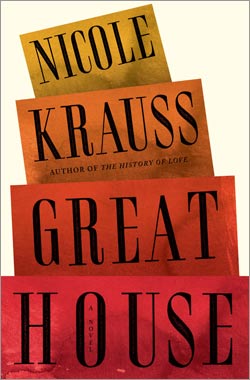
I went to St. Paul last night to listen to Nicole Krauss at a session of Minnesota Public Radio’s “Talking Volumes” series. Krauss has been nominated for the National Book Award for her third novel, Great House. (Read The New York Times review of the book. )
At events such as these, someone invariably asks about the author’s creative process, how he or she writes. Authors often have a very hard time coming up with an answer. That, or they’re sick of the question. And since, it’s a very abstract process, the answer is usually not very satisfying. I’d rather hear more generally about the ideas the author wants to convey than about her methods. However, Krauss speaks about as well as anyone I’ve ever heard on the subject of the writing process. She’s as articulate in a conversation as she is on the pages of her books. Krauss says writes as she goes, without a lot of outlining. She seems to go where the writing takes her. She revises as she writes so at the end of the process, she has mostly a finished product. “I make the doorknob first, then the door, and the room,” she said in describing her writing process. “Only much later do you step back and see the whole house.”
She spoke about how, perhaps because she’s a writer, it’s sometimes difficult to find books that totally carry her away, the way books affected her as a child. However, she raves about Israeli writer David Grossman and his book To the End of the Land. “It blew my mind,” she said. I’m eager to pick that one up and suggest it to my book club. (See the New Yorker article about Grossman.)
I also enjoyed a PBS Newshour interview with Krauss last week. Interviewer Jeffrey Brown ended the interview with, “Finally, sort of on that subject, I can’t help but notice the centrality of books and literature to many of the characters in this novel. A couple of them are writers, others are really great readers. We don’t seem to live in a time where that’s true for most people anymore.”
Krauss responded, “It’s certainly true in my life. I think I am who I am because of the books that I read, and I think of myself still as first and foremost a reader and then following that a writer. But I’m aware that both in my last novel The History of Love, where there was a book that was a center that connected all the characters, and now here is this desk, which is at least one of the components that connects, that these are objects that are saturated with the possibilities of literature. I do feel like I’ve staked my life on this, which is this idea that literature affords us this absolutely unique possibility in no other moment in life. Really, I think again in no other art form can you step so directly, so vividly without any mediation into another’s inner life. You are stepping fully into this stream of what it is to be another person. And I think when you do that, you inevitably form a kind of compassion. It teaches a kind of empathy. So for me this is like a great value of literature. It’s also again for me, somebody who’s obviously — all my characters are often solitary, they’re struggling with that solitude, but they are not content with it. They would like to move beyond it, to transcend it to express themselves to others in a way that I think they all feel is possible. And it’s no accident that literature becomes a kind of singular way for many of them to do that.”
Empathy, compassion, what it’s like to be another person… Makes you wish more people would pick up a book.
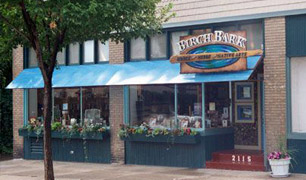
Yesterday was a blustery day in Minnesota that would surprise even Winnie the Pooh. I blew into the one of the best places in Minneapolis to be on a stormy day, Birchbark Books . It’s a cozy independent shop with warm wood, a dog to greet you, and an unusual array of books that might not come to your attention in a big chain bookstore. The shop reflects the literary, environmental and Native American cultural interests of its owner, National Book Award-finalist, Louise Erdrich.
In contrast to the agitating wind outside, soothing Native American music played inside as I strolled through the books, Native American quillwork, basketry and jewelry. Louise attaches hand-written notes to books she suggests which feels like she has left personal notes just for you. That sales technique certainly worked on me; I picked up a signed copy of Louise’s book The Last Report on the Miracles at Little No Horse, along with two books I would never have chosen, Risking Everything-110 Poems of Love and Revelation edited by Roger Housden, and just in time for Halloween, Elizabeth Kostova’s The Historian, about a vampire and a journey through the capitals of Eastern Europe.
The store creates an atmosphere that I would have loved as a child, with a tiny loft and a “hobbit hole” to play in, the kind of place that might stir up a child’s imagination and make even a reluctant reader want to big up a book or have a story read to him. Another of my favorite features of the store: a confessional that was formerly a sound booth in a bar as well as a confessional. As the shop’s Web site says, “One side is dedicated to Cleanliness, the other to Godliness. Louise is currently collaging the interior with images of her sins. The confessional is now a forgiveness booth, there for the dispensation of random absolution.”
This would be an excellent spot for a book club outing, perhaps with lunch or dinner at the Kenwood Café next door and a chance to hang out and chat with the store’s booksellers. They also organize a BYOB Book and Dinner Club.
Those who can’t make it to Minneapolis should take a bit of inspiration—okay, steal the idea—and organize your own Book and Dinner event. What a great way to share meaningful conversation and meet new friends.

 We’ll soon be off to Quetzaltenango, in the highlands of Guatemala, to visit our son Mike who teaches science at a school there. One of my favorite things about traveling is the anticipation of the trip. I stretch out the pleasure by planning it for weeks. I read about where I’m going (in this case Francisco Goldman’s Long Night of the White Chickens, David Grann’s fascinating New Yorker article, Murder Foretold: Unraveling the ultimate political conspiracy, and a New York Times article on trekking the highlands). I talk to people who have been there, check Web sites, think about gifts I want to bring back for friends.







 Off The Beaten Page Travel