Get a quick education on Ernest Hemingway with a visit to Oak Park, Illinois.
Ernest Hemingway’s personal life was as interesting and adventurous as his fiction. So, while I was in Chicago recently I took a side trip to the lovely suburb of Oak Park, where I visited the Ernest Hemingway House and Museum. For Hemingway fans or if you enjoy books about Hemingway such as The Paris Wife, you’ll find a stroll in the author’s old neighborhood is delightful.
In previous posts, such a the one about A Skeptic’s Guide to Writer’s Houses, I’ve discussed the fact that authors’ homes aren’t as interesting as the places where their books are set. Still, it’s fun to see how an author lived and maybe hear a few stories about family life that may have shaped his world view. For example, when you take the guided tour in the home, you’ll see the little dining room where Hemingway’s grandfather sat with the children for breakfast and encouraged all of them to tell stories. He didn’t long enough to see what sprang from such encouragement.
So, if you’re in Chicago, make a trip to Oak Park to visit the Hemingway family home. Start at the museum at 200 Oak Park Avenue 708-524-5383, www.ehfop.org The home where Hemingway was born is one block north.
In my opinion, if you’re looking for one place where you can go to get an understanding of the United States–its culture, its history and its struggles–it’s Memphis. Robert Gordon says in It Came from Memphis, “No city has had more of an impact on modern culture.”
Those are pretty big statements, but after visiting Memphis, I think it’s true. I had never been there until I went on a “reconnaissance mission” while writing Off The Beaten Page: The Best Trips for Lit Lovers, Book Clubs and Girls on Getaways and by the time I left I felt a tie with Memphis that makes me want to go back to this gritty city on the Mississippi over and over.
It’s not a fancy place, like, for example another Southern city I love, Charleston. But, Memphis moves you. The Memphis mojo makes even the most reserved person want to snap her fingers and start dancing with abandon. In fact, go to the Stax Museum, “Soulsville, USA,” and hit the dance floor there which is surrounded by a video wall. Or, visit Sun Studio where a few guys named Elvis, Johnny, and Jerry Lee recorded their hits. Try to stand still; I dare you. I predict you’ll be rockin’ before you even notice it.
But it’s not all so happy-go-lucky. Memphis was a hub for the civil rights movement and Rev. Martin Luther King Jr. was assassinated there at the Lorraine Motel, which is now
The Lorraine Motel, and the National Civil Rights Museum, Memphis.
the National Civil Rights Museum, another “moving” place. This is mecca for anyone interested in the civil rights movement. It’s undergoing an extensive renovation and is currently featuring the exhibit, “Freedom’s Sisters.” Before you go, read Hampton Sides’ Hellhound on His Trail for background and to feel a very close connection to those events.
Then get rollin’ on the river with Mark Twain. His classic Life on the Mississippi outlines not only his experience as a young riverboat pilot but also his observations from a later trip on the river where he observes the cotton culture, the people and many other aspects of life on the Big Muddy. Take a short riverboat cruise and you’ll feel the river’s power and learn a little more about its history and integral role in the development of the country.
Need more excuses to visit Memphis? Check out a few of the city’s upcoming events including Elvis Week, the King’s birthday celebration (this year from August 10-17), and of course Graceland. The Memphis Music and Heritage Festival takes place every year on
You’ll also want to visit the gift shop at the Center for Southern Folklore in Memphis
Labor Day weekend. It’s organized by the Center for Southern Folklore. And, now through October you can visit Mud Island Park to see “Discovery: A Journey of Exploration and Imagination of America’s Waterways,” a traveling exhibit of the National Mississippi River Museum & Aquarium and the National Rivers Hall of Fame.
A carriage ride is a great way to get your bearings in Charleston.
“We just love the way y’all talk,” a Charleston carriage driver comments on my Midwestern accent. He says it, no doubt, with a bit of irony because so many Midwesterners say the same thing to him. Our banter is all in good fun. As we roll through some of Charleston’s most historic and elegant neighborhoods, I feel the warm, humid breeze from the bay blow over me and start to settle into the friendly, genteel hospitality of Charleston. It’s clear that the city still holds the same appeal that it did for Rhett Butler in the closing lines of Gone With the Wind. He tells Scarlett O’Hara that he’s going back home to Charleston, where he can find “the calm dignity life can have when it’s lived by gentle folks, the genial grace of days that are gone. When I lived those days, I didn’t realize the slow charm of them.”
Charleston is one of America’s oldest cities and many of its old guard trace their roots to English colonists, who laid out its series of broad, elegant boulevards. But while the city works hard to preserve its colonial and antebellum historic sites, it is by no means stuck in the days of tight corsets and hoop skirts. The city is home to charming shops (see upper and lower King Street and Broad Street) and restaurants such as Husk that I dream about long after I leave. Most notably, Charleston displays its vibrant cultural life with the Spoleto Festival USA which runs until June 9 and fills the city’s historic theaters, churches and outdoor spaces with performances by world renowned artists as well as emerging performers in opera; theater; dance; and chamber, symphonic, choral and jazz music.
Spoleto brings in artists from around the world. It’s the big boy in town. But if you’re
Piccolo Spoleto Poster
looking for a taste of regional arts and culture head for Piccolo Spoleto, which focuses primarily on artists of the Southeast region with an emphasis on events for children and families. There’s also a piccolo literary festival. Piccolo Spoleto offers performances and event either free of charge or at prices that are more affordable than its big brother.
No matter which Spoleto you choose, or if you prefer to simply stroll Charleston’s streets or visit nearby plantations, you’ll feel as at home here as Rhett Butler did. Heading for Charleston? Here are a few don’t-miss books to read before you go:
Pat Conroy- South of Broad, The Prince of Tides, Beach Music
Dorothea Benton Frank – Bulls Island, Folly Beach, Lowcountry Summer
Gloria Naylor, Mama Day
Edward Ball, Slaves in the Family
Alphonso Brown- A Gullah Guide to Charleston: Walking Through Black History.
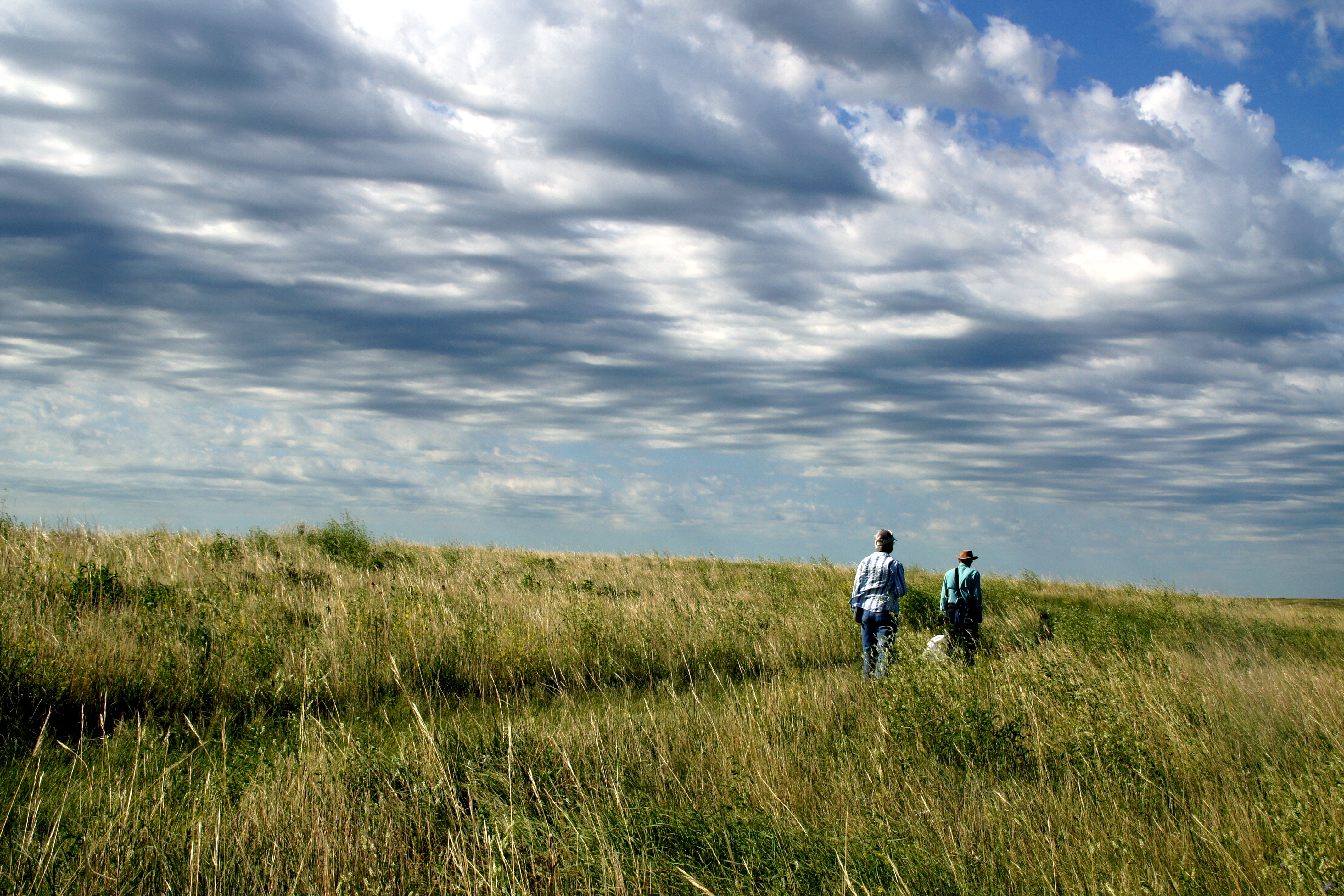
Hiking with the Nature Conservancy in the Samuel H. Ordway Memorial Preserve in South Dakota
On the prairie, the background is the story. More than most other places, the vast grasslands of the Dakotas make us stop and look for a moment at open spaces and realize that they are far from empty.
Gretel Ehrlich says in The Solace of Open Spaces, “We Americans are great on fillers, as if what we have, what we are, is not enough. We have a cultural tendency toward denial, but being affluent, we strangle ourselves with what we can buy. We gave only to look at the houses we build to see how we build “against” space, the way we drink against pain and loneliness. We fill up space as if it were a pie shell, with things whose opacity further obstructs our ability to see what is already there.”
There’s plenty to do in Newport, Rhode Island, year-round, but “America’s first resort” really swings into action starting Memorial Day weekend, through Labor Day. For example, you can spend a weekend sampling great chowder in Newport any time of year, but the Great Chowder Cook Off takes place June 1. You can plan a picnic and head for Brenton Point State Park to fly kites and enjoy the fabulous scenery and the Newport Kite Festival July 13 and 14. And, there’s the world famous Newport Jazz Festival August 2, 3, and 4. You can watch polo events and tennis tournaments, attend sailing regattas and find opportunities to go sailing yourself.
Admittedly, when you arrive in Newport, you may feel like you somehow stepped out of your car and into a Ralph Lauren ad. The town is a haven for hot-pink and lime-green plaid shorts, deck shoes, and monogrammed sweaters. But, as you may have seen from a few of my previous posts (see “The American Stories Behind Downton Abbey,” “Gifts for Mom“) I really love Newport, because it offers activities for just about every taste, even if you’re not part of the preppie set. And, while modern-day events like those above abound, the town also offers a special chance to glimpse its Gilded Age history when you go “calling” at the fabulous mansions along Bellevue Avenue. To get in the mood for your Newport trip, be sure to read Edith Wharton’s The Buccaneers, Thornton Wilder’s Theophilus North, or non-fiction works such as Lucius Beebe’s The Big Spenders or Amanda Mackenzie Stuart’s Consuelo and Alva Vanderbilt: The Story of a Daughter and a Mother in the Gilded Age. You’ll also want to check out a blog I’ve found, The American Countess, which is written by someone even more intrigued with Gilded Age Newport than I.
Newport is one of the destinations I investigate in Off The Beaten Page: The Best Trips for Lit Lovers, Book Clubs and Girls on Getaways. Find out more at http://www.terripetersonsmith.com
The first volume of Armistead Maupin’s many tales of San Francisco
Author Armistead Maupin was in the Twin Cities last week speaking at the wonderful Pen Pals, an author lecture series that raises funds for the Hennepin County Library system. I’m sure that when they booked him for the event no one knew that it would coincide with the passage of the bill that made Minnesota the twelfth state to legalize gay marriage, but his appearance last week couldn’t have been more timely.
Maupin is the author of the beloved Tales of the City series that began as a newspaper column in the 1970s, first in a Marin County paper and then in the San Francisco Chronicle. Much the way Charles Dickens’s work appeared in serial installments, each Tales of the City column delivered a new episode in the lives of a quirky and sometimes bizarre collection of transsexual, straight, and gay characters who reside at the fictional 28 Barbary Lane, San Francisco. The series grew into eight best-selling novels, a television miniseries, a film and a musical.
Maupin was one of the first openly gay authors and his stories were ground-breaking in a time when there were no gay people in popular culture. I was thinking as he spoke about how much things have changed, particularly in light of Minnesota’s new marriage law. His conversation was peppered with a few “motherfuckers” and some colorful comments about his sexual behavior. I wondered if such in-your-face speech seemed a bit dated, unnecessary in the era of Ellen Degeneres and “Modern Family” when gay people are more part of the mainstream. That was Friday. Then Saturday night in New York’s Greenwich Village, a gay man was murdered in what was clearly a hate crime. So, that answered my question. Maupin’s attitude and his stories are as pertinent as ever. When he started writing there was the homophobic Anita Bryant. Now we have Rep. Michelle Bachmann.
Maupin’s groundbreaking stories incorporate the politics of the 1970s but also focus on universal themes of love and longing that have made the “Tales” endure over the decades with broad appeal. Maupin says, “We read to feel less alone, to find our experience reflected in that of others.” I would add that reading opens our minds to the the experience of others even if it isn’t the same as ours. The best thing about reading: it fosters empathy.
For anyone traveling to San Francisco, the Tales are a must read and Maupin’s web site offers a great map to the real places that you read about in the books. That reading and travel combination gives insight into the city’s history not only as ground zero in the gay rights movement but also its position as the America’s foremost place for iconoclasts–the Beats, hippies, immigrants from around the world, and cultural and spiritual seekers of all sorts who have changed the way we think and influenced our culture.
Though he will forever be associated with San Francisco, Maupin and his husband Christoper Turner, have decamped for Santa Fe, for what Maupin says is a new adventure in a place that has amazing vistas, adobe homes, and wide open spaces. But, he says, “San Francisco is still in my heart.”
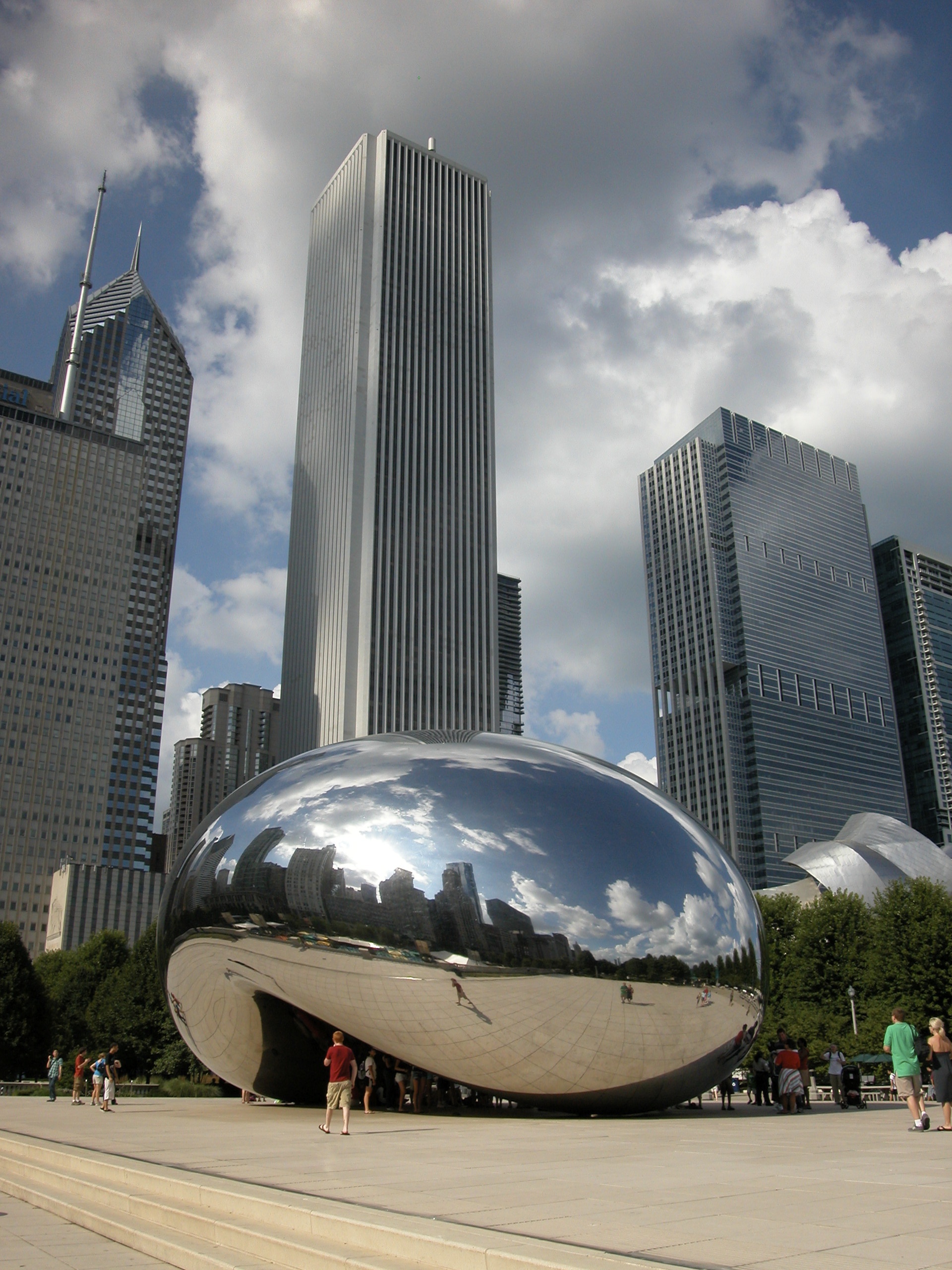
Wherever you go in Chicago, it’s important to keep looking up at the city’s fabulous architecture. Above, one of the latest additions to Chicago’s skyline, Cloud Gate, a.k.a. The Bean.
My book, Off The Beaten Page: The Best Trips for Lit Lovers, Book Clubs, and Girls on Getaways comes out May 1. So, between now and then, I’m offering a glimpse of the 15 U.S. cities featured in the book. Here’s a preview of the Chicago chapter, entitled “The Tales of Two Architects:”
Pulitzer Prize-winning architecture critic Paul Goldberger says, “Architecture is one area in which we in New York truly do have a second city complex toward Chicago–not the other way around, as it is in so many other realms. And for all that has happened over the years, little has changed in the sense that those of us in New York, as well as the rest of the country, still have of Chicago as being the essential city of American architecture.”
But you don’t have to be a connoisseur of skyscrapers to understand Chicago’s pivotal place in architectural history and the innovative, risk-taking outlook that continues to make Chicago “America’s City.” Two books have generated sky-high interest in Chicago by combining the stories of the city’s architectural lions with juicy plots. The first, Erik Larson’s The Devil in The White City: Murder, Magic, and Madness at the Fair That Changed America. The other book, Nancy Horan’s Loving Frank, a novel of historical fiction, tells the tale of architectural genius Frank Lloyd Wright’s scandalous relationship with his client, Mamah Borthwick Cheney.
Each chapter in Off the Beaten Page includes an essay about a couple of books that create a theme or focus for your visit to that city, extensive reading lists, and three-day itineraries that offer ways to experience in person the books you’ve read and have fun in other ways, too. For example, the White City is long gone, but you can get a taste of what is was like by taking a tour with the Chicago Architecture Foundation. Wander Jackson Park, the site of the World’s Fair in The Devil in the White City, then tour Millennium Park, a modern-day bookend to the architectural innovation that began with that fair. Wherever you go, keep looking up.
During one of our recent “What is the world coming to?” discussions spurred by politics and other recent disasters, a friend handed me a book by David Brooks called Bobos in Paradise: The New Upper Class and How They Got There. In it, Brooks, who is a columnist for the New York Times, examines a social group that he has labeled bourgeois bohemians, or Bobos. He says a Bobo is a mix of bourgeois establishment square and bohemian artist intellectual. Like an anthropologist studying an exotic tribe, Brooks looks at Bobo business culture, social, intellectual and spiritual life. It’s a fun read because he seems like good-natured guy who admits he’s part of this group and doesn’t hesitate to point out its idiosyncrasies in a very humorous way.
What really caught my eye is his description of Bobo travel habits. I have to admit, to some extent, he’s describing me, many of the people I know, and almost all of the people you read about in travel magazines and and on travel blogs. Tell me if this sounds familiar:
“There are a certain number of sophisticated travelers who wear their past destinations like little merit badges.” According to Brooks, these aren’t people who simply name drop about the super luxe hotels and resorts where they stay. “Their main joy in life comes from dropping whopping hints that everywhere you are just going they went to long ago when it still meant something.” They’re masters of insufferable questions like “Didn’t the atabeg of Damascus stop there in 1139?” And, says Brooks, “They don’t say, ‘I know such-and-such a language.’ They say, ‘I have a little Portuguese” or ‘I have a few of the romance languages, of course,’ in that faux offhand manner that makes you want to stick the person’s head in a vise and squeeze it until the eyes pop out.”
But, we’re all travel snobs to some extent. For example, I was accused of travel snobbery when I said I didn’t really have a great desire to visit the Wisconsin Dells for vacation. I also make snide comments about the oddly dressed tourists who pile off cruise ships and tour buses. But it’s a matter of degree. I definitely rate myself lower on the food chain of travel snootiness than the guy who rues the day electrification came to Belize, though I have told people I remember when the streets weren’t paved on Ambergris Caye.
The Quiz
Where do you rate on the travel snob-o-meter? With the help of Brooks analysis, I’ve developed the following quiz so you can rate yourself. Give yourself 10 points if you answer yes to the following: 1. Have you ever one-upped someone in a travel conversation?
2. Do you avoid places that are “touristy” even though you’re dying to see them?
3. Do you wear outdoorsy travel gear acquired at places such as Eddie Bauer or REI even when you’re not on an expedition? Five extra points if your togs have lots of pockets.
4. Have you ever said you have a language instead of I speak a language? Or, another of my favorites, do you use a “French” pronunciation for a word when it isn’t a French word?
5. Do you label yourself as “serious” about a travel or sporting pursuit, i.e. a “serious hiker,” or “serious kayaker?” Says Brooks, “The most accomplished are so serious they never have any fun at all.”
6. Do you seek out locales where simple peasants live in abundance farming or creating folk art?
7. Do you frequently mention using alternative modes of transportation, such as camels or tuk-tuks?
8. What’s that you say? You don’t travel because there’s no place that’s better than right where you are? If you say yes, you’re a reverse travel snob. Bam! 10 points.
Finally, does your idea of a great vacation involve pain and exertion– for example biking across a state larger than Rhode Island, or kayaking around Lake Superior or canoeing length of the Amazon? If your answer is yes, award yourself 20 points. “At the tippy top of the leisure status system are those vacations that involve endless amounts of agony and pain,” says Brooks.
Here’s how you stack up. 10 points: not a travel snob, but a little dull. 20-50 points: emerging snob, you just need to add on a few more miles, perhaps while trekking in Nepal. 60-80 points: You’re a snooty pants, and I’m sure those pants are made by Patagonia. And you’re probably a Bobo, too. 90-100points: You’re an insufferable travel snob. We’d all like to go where you’ve been, but we don’t want you to tell us about it, so go kayak around Lac Superieur.
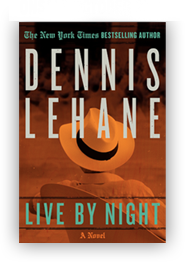
And speaking of Boston (see my last post), I want to emphasize how well Dennis Lehane’s books convey the Boston “voice,” and life in the tough, working class parts of Boston where he grew up. You may not want to actually spend your vacation in the Dorchester neighborhood, for example, but you can visit those places through Mystic River, Gone, Baby, Gone and his latest, Live by Night, which all make great reads before a trip to Boston and a nice diversion from the Freedom Trail.
I saw Lehane last week when he spoke at Pen Pals, the author series that raises funds for the Hennepin County Library system which serves the Minneapolis area. He’s one of the best speakers I’ve ever heard, mixing insightful literary observations, stories of his relationship with Clint Eastwood who directed Mystic River, writing for HBO’s The Wire, and hilarious anecdotes about his gigantic Irish American family. He learned his storytelling expertise at family gatherings (and sometimes in bars) where his dad and his uncle told “true” stories that changed with every retelling.
You can see how his skills as a raconteur translate to novel writing, which he says is a much more difficult task than screen-writing. His novels, like his storytelling, incorporate great pacing, tightly wound plots, and characters drawn from the Boston streets. That’s one reason that Lehane isn’t, in my opinion typical of the crime genre where anyone with a laptop seems able to get published. His work could better be described as well-crafted literary fiction…with a purpose. One of his comments about fiction sticks with me: fiction is “the lie that tells the truth.”
On your way to Boston? You’ll also want to pick up some of the books that Lehane suggested in a In New York Times interview, which included classics such as The Friends of Eddie Coyle, by George V. Higgins, The Last Hurrah and The Edge of Sadness, by Edwin O’Connor, and in nonfiction, Common Ground, by J. Anthony Lukas. I also have scads of other Boston books on the reading list in Off The Beaten Page: The Best Trips for Lit Lovers, Book Clubs, and Girls on Getaways.
My book, Off The Beaten Page: The Best Trips for Lit Lovers, Book Clubs, and Girls on Getaways comes out May 1. So, between now and then, I’m offering a glimpse of the 15 U.S. cities featured in the book. First up, Boston, Massachusetts where, with the help of great books, you can experience the city’s colonial heritage as well as its maritime tradition. Each chapter offers an essay relating a couple of books to the city to create a theme for your trip, an extensive reading list, and a detailed itinerary…. read the book, go see where the story takes place.
Boston itineraries include colonial sites from the perspective of the founding mothers, whose story has only recently begun to be told.
You can also experience “fish tales” such as Moby Dick
or The Perfect Storm through activities such as sailing or whale watching in the Stellwagen Banks Marine Sanctuary with the New England Aquarium.
Shades of Moby Dick…. a breaching whale in the Stellwagen Banks off the coast of Massachusetts.
Travel to the places you read about. Read about the places you travel.








 or The Perfect Storm through activities such as sailing or whale watching in the Stellwagen Banks Marine Sanctuary with the New England Aquarium.
 Off The Beaten Page Travel