Book Club When You Haven't Read the Book

I just ran across a great post from Jeff O’Neal on the blog “Book Riot.”  It’s called “7 Ways to Fake it at Book Club.”  That title cracked me up because at some point just about everyone in a book group has had the problem of not having read the book in time for the meeting.
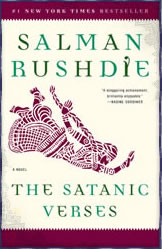
It seemed a particularly pertinent topic because my book club just read Salmon Rushdie’s The Satanic Verses, which is a slog, to say the least.  Even the person hosting the group didn’t finish it.  It’s a great book, won many awards, and Ayatollah Khomeini issued a fatwa against Rushdie (urging Muslims to kill the author) because the Ayatollah found the book blasphemous. The Satanic Verses is full of symbolism, dreams, commentary on the life of immigrants and much more, so it seemed like a great idea when we were choosing books. Still, for most people, it turned out to be a dense book that’s too easily put aside for all the activities of everyday life.

We could have used some of O’Neal’s tips, which include: read the first seven and the last seven pages, be bold and ask the first question, things like, “So, what did everyone else think of the book?” I particularly admire strategy five, “Strategic Proximal Absence,” That means,

When the conversation turns from pre-game chatter to direct discussion of the book, get up and go find something to do in the kitchen, but keep an ear out. Don’t stay in there for an hour, just wait until someone says something you can glom onto. Rush in like you didn’t want to miss this part and ask for a recap. This should give you time to come up with a quick something to say. Plus, your wine will be topped off.

To his suggestions, I’d add: think of other books with similar themes that you have read.  It always seems smart to compare and contrast; it sounds like you know what you’re talking about.

I’m in two book clubs and both are pretty serious about what we read. But, one reason we’ve been together for years and years is that we have an understanding that everyone won’t have read the entire book every time. In The Satanic Verses case, we all admitted that we hadn’t finished it. With that admission, we found common ground in discussing why it was difficult to get through.  And, with a bit of research on Rushdie, the fatwa, and some help from Spark Notes, we had a great discussion of the book without having read it–not quite as good as the real thing, but close.  …. And we all had our wine topped off.

Book Publishing and Selling May Change But the Landscape of Literature Remains

I’ve been reading a lot lately about how e-books are totally changing the world of reading, forcing bookstores out of business, panicking print publishers, and leaving authors confused about where to get their books published.  A recent article in the Los Angeles Times urges readers to visit literary sites in New York City before they disappear. The article discusses bookstores in particular, which have been struggling for quite while, first with the rise of giant chains such as Barnes & Noble and Borders (which recently bit the dust itself), then with Amazon and Internet book sales, and now with electronic books.  For example, there used to be forty-some bookstores on Book Row along Fourth Avenue in New York, a book-lover’s nirvana.

I wish I could have seen that, wandered the stacks, and talked with the owners who I imagine as eccentric, bespectacled, and just oozing knowledge about authors and what to read next.  I would have been a loyal patron. The Strand bookstore is the lone survivor of Book Row, and had moved to 12th and Broadway.  Take a look at their video. The Strand and most other bookstores seek to do things not available in the online world such as events with authors (live and in-person!), children’s activities, and other activities that make them unique.  A post on literarymanhatten.org sites the example of “another independent bookstore making the most the downfall of corporate chains. Housing Works Bookstore Café. Part Bookstore, part café, part thrift shop and part HIV/AIDS outreach program.  “Housing Works,” they say, “understands the value that creating a community can give to a bookstore.”

Birchbark Books in Minneapolis offers all sorts of community-building book/author/dinner events and the store has a special focus on Native American literature and concerns.  They’re hosting screenings of “H2Oil,” an acclaimed documentary film about the devastating effects of the Alberta Tar Sands. Marty Cobenais from the Indigenous Environmental Network will speak about the campaign to stop tar sands pipelines in the United States. Bookstore owner Louise Erdrich will be giving an introduction.   Another example, with a more light-hearted focus is Beauty and the Book in Jefferson, Texas, the world’s only combined beauty salon and bookstore.  It’s owner, Kathy Patrick, has turned turned the love and books and book clubs into an international pursuit with the many chapters of her Pulpwood Queens Book club.

Whatever huge upheavals the book business encounters, one thing won’t change—the places (real and fictional) that literature evokes. For adventurous lit-lovers, there’s nothing like visiting the places they’ve seen in their imaginations—the London of Dickens’ characters for example, the Stockholm of Steig Larsson’s The Girl Who Kicked the Hornet’s Nest or the wide open Texas spaces of Larry McMurtry’s Lonesome Dove, to name just a few.  And, I maintain there’s no better way to gain a sense of a place before you travel there than to read about it. I enjoyed seeing at good example of how reading amps up the anticipation of a trip, too, in a blog post about an upcoming trip to Spain on The Orange Barrow that features the blogger’s reading list.

So, next time I’m in New York I’ll walk by Tiffany’s with Holly Golightly, through Washington Square with Henry James or through Harlem with Langston Hughes, and rest assured that there are locales of classic literature won’t soon disappear.

Beer and Books in Wisconsin

The Bookmobile headed for Wisconsin.

Mark Twain said, “I have found out that there ain’t no surer way to find out whether you like people or hate them than to travel with them.”  One of my book clubs travels fairly often, usually on short jaunts to members’ cabins, and we’ve found out that we like each other a lot, even with the extra large dose of “togetherness” that comes with group travel.

Last week ten of us piled into a 33-foot R.V. and drove to Three Lakes, Wisconsin. That’s about five hours from Minneapolis, and not far from Rhinelander, home of a mythical creature called a Hodag.  We stayed at a member’s cabin there, using the R.V. as an extra bedroom.  We used the opportunity to plan our reading list for the coming year (check it out below) and to discuss a book that takes place, in part, in Wisconsin, Wallace Stegner’s classic, Crossing to Safety.

Though we try to retain a bookish façade, I have to admit that much of our time was

Jake's provides most of the things one needs on vacation.

spent on the activities for which Wisconsin is famous, with Jake’s Bar at the center of intellectual pursuits such as darts and pool, beer and cheese curds.  We just call it “promoting literacy.”

The List

Driftless — David Rhodes

In Caddis Wood — Mary Rockcastle

Breakfast at Tiffany’s —Truman Capote

Cutting for Stone
— Abraham Verghese

The Postmistress
—Sarah Blake

The Paris Wife —Paula McLain

The Immortal Life of Henrietta Lacks —Rebecca Skloot

The Irresistible Henry House —Lisa Grunwald

Unbroken
—Laura Hillenbrand.

The Language of Flowers —Vanessa Diffenbaugh

My Nest
Isn’t Empty, It Just Has More Closet Space —Lisa Scottoline

Ely, Minnesota, for the Wild or the Wimpy

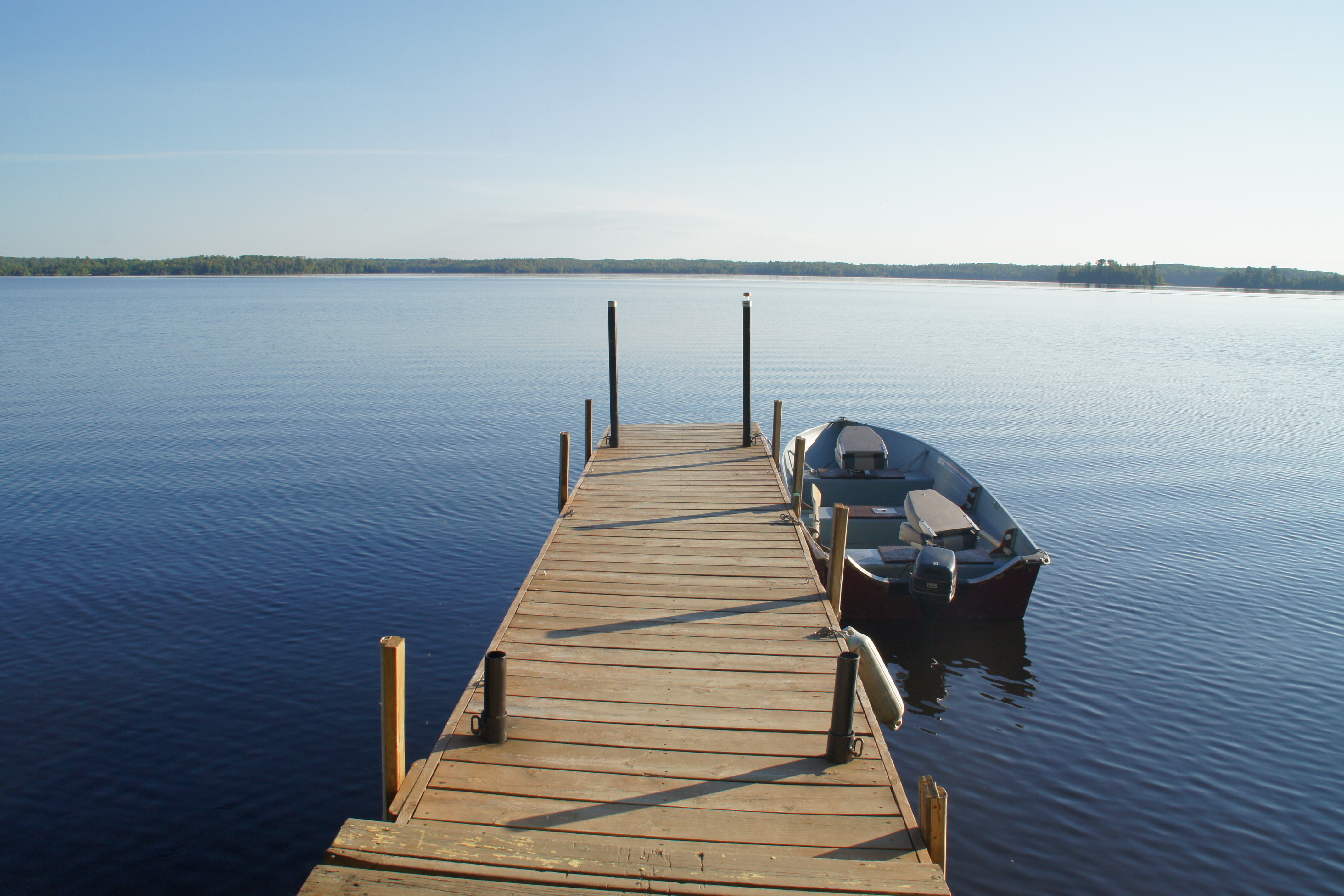
Serenity on Farm Lake near Ely, Minnesota. A portion of this lake is in the Boundary Waters Canoe Area Wilderness

Ely, Minnesota (five hours north of Minneapolis), is home to the hardest of hardcore outdoorspeople—polar explorers Will Steger, Paul Schurke and Anne Bancroft, to name a few.  From Ely, you can launch a dogsledding trip in winter or a multi-week canoe trip through the Boundary Waters Canoe Area Wilderness in summer. Budget Travel magazine named Ely “The Coolest Small Town in America” last year. They said, “It says a lot about a town when there are more wildlife centers (two) than Wal-Marts (zero), and more canoe and fishing outfitters (27) than, well, anything else. In Ely, you’re never more than a step away from the wilderness.”  But what if you’re made of less hardy stuff or you’re traveling with people for whom “wilderness” means that the mall is a 15-minute drive?

Ely offers plenty of opportunities for activity and a healthy dose of nature, even for outdoor novices or those who may not be physically able tackle portaging canoes or rugged hikes. On a trip last weekend, we hit the Harvest Moon Festival, complete with

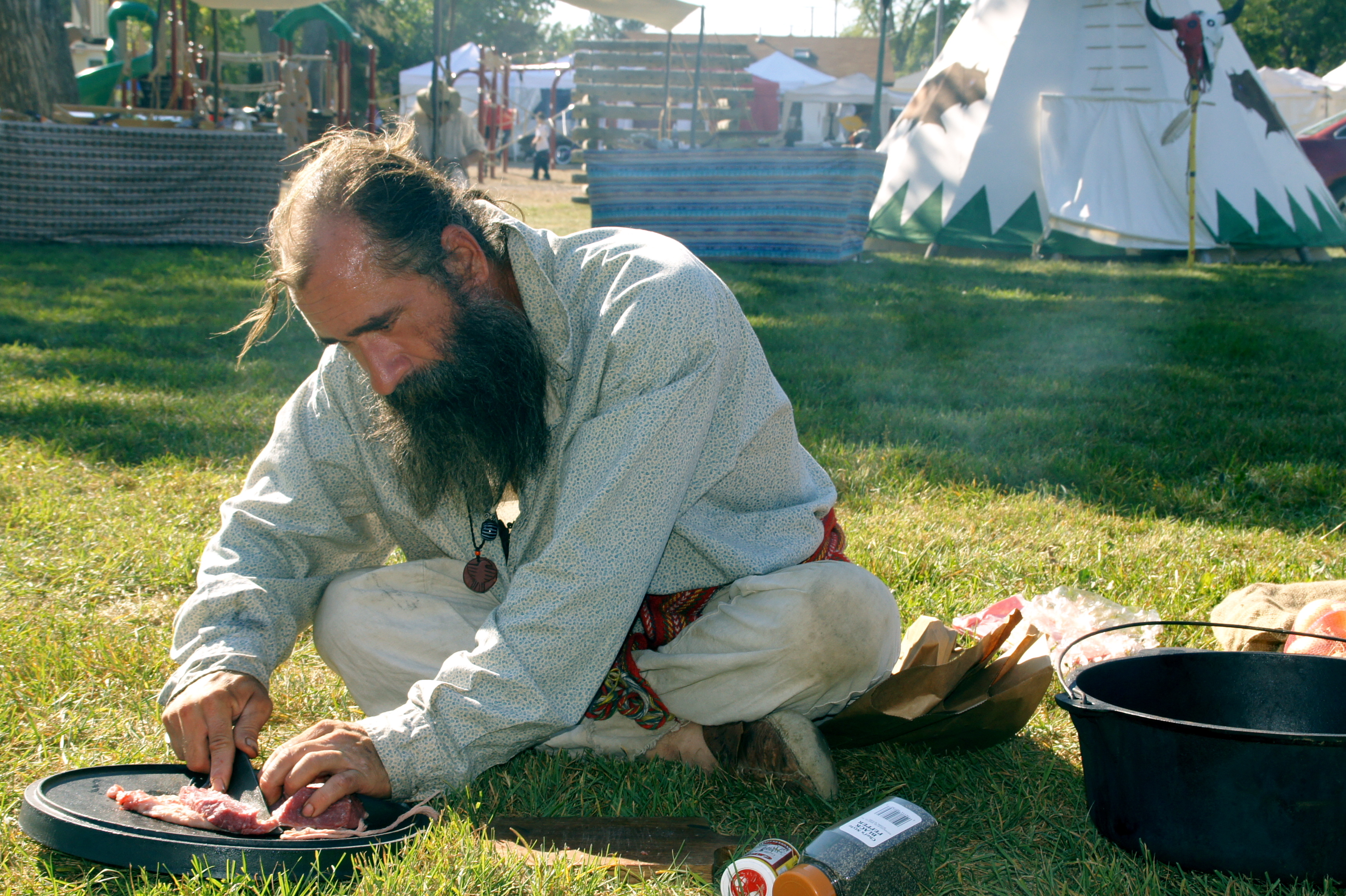
an early "voyageur"

crafty artisans; historic reenactors of the early settlers and trappers of the area, the voyageurs; and a lumberjack show—a little hokey, but entertaining.

My favorite comment came from one of the “voyageurs” who was cooking up some sort of stew in a giant cast iron post.  I asked what he was

Cooking "Camp Wander" If it wanders into camp, we cook it.

cooking and he said, “Camp Wander. If it wanders into camp, we cook it.”

Ely is home to the International Wolf Center, the North American Bear Center, and some tasty restaurants such as the Chocolate Moose.  You can buy great sweaters and of course mukluks at Steger Mukluk.  For book lovers, there’s a nice bookstore upstairs at Piragis Northwoods Company.

One of my favorite stops in town is the Brandenburg Gallery, where you can see and buy

a Jim Brandenburg poster

photos from acclaimed outdoor photographer and Ely resident, Jim Brandenburg.  His photography captures the spirit and the unusual beauty of the wilderness.  Check out his web site to see his stunning photos and a video, and click on this Minnesota Department of Natural Resources link for a video that features his fall photos.

On our recent trip, in lieu of a tent, we opted for a cozy cabin at Timber Trail Lodge where you can canoe, fish, or simply ponder the lake and its solitude from the dock. Famed environmentalist, author and Ely resident Sigurd Olson said

Wilderness is a spiritual necessity. An antidote to the high pressure of modern life, a means of regaining serenity and equilibrium. I have found that people go to the wilderness for many things, but the most important of these is perspective. They may think they go for the fishing or the scenery or companionship, but in reality it is something far deeper. They go to the wilderness for the good of their souls.

Olson was instrumental in the preservation of millions of acres of wilderness in Alaska and the Boundary Waters Canoe Area in Minnesota. He helped establish Voyageurs National Park in northern Minnesota, Alaska’s Arctic National Wildlife Refuge, and Point Reyes National Seashore in California and helped draft the Wilderness Act of 1964. Looking for a little wilderness inspiration?  Read his books The Singing WildernessListening Point, The Lonely Land and others.

Finally, talk about “budget travel”–in Ely and the surrounding wilderness, the most amazing sights are free. Lay on your back on the dock at night and you’ll see  a show of stars that you can’t see amid the lights of a city.   And, if you’re lucky, you may see an even more spectacular show—the Northern Lights. We saw another amazing, though dismaying, display of

Pagami Creek Fire

nature, the huge Pagami Creek wildfire in the Boundary Waters, which is now so big that the smoke is visible as far away as Chicago. Started by lightning two weeks ago, it has burned through over 100,000 acres. Hopefully, the frost and sleet in the next few days will slow its spread.

For more northern Minnesota-inspired reading look for:

Tim O’Brien- In the Lake of the Woods 

Will Weaver – Red Earth, White Earth, The Last Hunter: an American Family Album, and of the short story “A Gravestone Made of Wheat,” which was made into the movie Sweet Land.

Catherine Holm- My Heart is a Mountain: Tales of Magic and the Land

William Kent Krueger– Vermillion Drift

National Book Festival Podcasts

The National Book Festival takes place on Saturday, September 24 and Sunday,

If you can't make it to the National Book Festival, you can take advantage of podcasts from authors who will appear there.

September 25, 2011, on the National Mall in Washington, D.C.
 It’s a bit of readers’ heaven, with discussions and readings from authors including Toni Morrison, Sherman Alexie, David McCullough, Russell Banks, Edmund Morris, Michael Cunningham, Jennifer Egan… the list goes on and on.

But for those who can’t make it to the actual event, the Library of Congress, which sponsors the festival, is offering podcasts from some of the authors who are appearing at the event this year.  For avid readers and for book clubs the National Book Fest site is a great way to get ideas for your next reading list.  And, listening to these podcasts offers interesting insight from these authors and a way to go a bit more in depth for your next reading discussion.

Minnesota and the National Book Festival

I’ve written several times in this blog about Birchbark Books, a great indie bookstore in Minneapolis—author Louise Erdrich, proprietor.  Erdrich and her sister, Heid Erdrich, also founded Wiigwaas Press (part of the non-profit Birchbark House) in order to promote indigenous language revitalization through publications and programs. A book for young readers from Wiigwaas Press, Awesiinyensag: Dibaajimowinan Ji-gikinoo’amaageng, written totally in Ojibwe, has been named Minnesota’s Best Read for 2011 by the Center for the Book in the Library of Congress. It is Minnesota’s official selection to represent all of the publications in the state this year at the National Book Festival, Sept. 24-25, in Washington, D.C.

One of the book’s co-editors, Anton Treuer, a professor of Ojibwe language and culture at Bemidji State University in Minnesota, says, “I just love it that anyone who wants to read the best book in Minnesota this year has to read it in Ojibwe.”  That may be difficult for most of us.  Though we use many Ojibwe words such as moose and Mississippi, the language itself is at risk of disappearing.  Treuer explains his interest in preserving the language in this video. Or, you can read his highly-praised books about the Ojibwe (in English), The Assassination of Hole in the Day, and the Ojibwe in Minnesota.

Literary Tatoos

I loved a recent blog post from Amanda Rudd,  “A Permanent Relationship With Words:

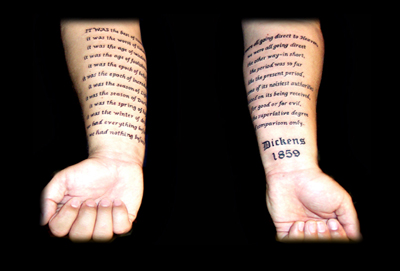
This literary tatoo is a little more extensive than I would suggest.

Literary Tatoos.”  She says she has always had a fascination with tatoos, but heeded her mother’s warning not to get any, along with a whole of of other taboos.  I as a mom I have issued the same warnings….”You’ll be sorry someday….”  But I have to agree with her that a literary tatoo holds some merit.  So much more clever than the barbed wire that basketball players have.

Rudd says,

Books that are important to me, leave an indelible mark on my thoughts, beliefs, and life.  It seems to me that have a tattoo at all gives you a permanent connection to art.  Having a literary tattoo gives you a permanent and explicit relationship with the words that have touched you, marked you.  How can could I say no to that?  So when it first occurred to me that one could get a tattoo based on a book, poem, etc., I was hooked.

If it’s a classic quote or title, it would never be passe or out of style.  If short, it could be discreetly placed and not too painful.  It would be flashed only in bookstores, libraries, book club meetings and other bookish locations where people could appreciate it.  She suggests something related to Richard Adams’ Watership Down, a rabbit-related tat. Check out the site Contarywise to see a few photos and read the Guardian article, “Ten of the Best Tatoos in Literature.” I’m thinking the phrase “And So It Goes” from Vonnegut’s Slaughterhouse Five.

And so it goes.

Guns and Book Clubs: What's the Connection?

I laughed this week when I heard a story on National Public Radio about how gun

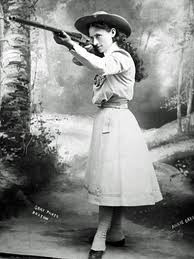
Women have been gun enthusiasts since the days of Annie Oakley, but I'm intrigued by the idea of a book club at the shooting range.

makers have “set their sights” on female buyers and that women make up a growing percentage of gun owners.  One of the women they interviewed goes to the shooting range—with her book club.  One wonders what they could be reading to inspire gun training… self –empowerment books? Violent books about women being attacked? Westerns?

I have to admit I’ve never shot a gun myself, but I don’t have any objection to gun training and I would go to a gun range if someone really wanted me to go with them, just for the experience of it. Moreover, I don’t think gun ownership certainly should be the exclusive domain of men, but that story really piqued my curiosity.  Why would a book club go to a shooting range?

That prompted me to go on line for a little investigation and of course it led me to a huge array of books on the topic of women and guns, not to mention this great photo of the Jane Austin Book and Gun Club.

My book club(s) have gone to movies, dinner, cabin weekends, spas and all sorts of jaunts together.  I spoke with one woman whose book club goes on a fishing trip every year, but I haven’t heard about shooting together.  Guns and books seem such an unlikely pairing.  I know that some book groups have difficulty keeping their discussions under control and because one or two members tend to dominate the discussion.  Or, they may disagree about what book to choose or stray from the discussion too often.  Packin’ heat might be one way to keep them in line.

Buffalo, Butterflies and Oceans of Grass on the South Dakota Prairie

The vast sky and grassland of the South Dakota Prairie

When driving “out west,” as people in my half of the country call it, the prairie is the part of the trip to be gotten through before you get to the good stuff, the mountains and national parks of the west.  Yet on a recent trip to the prairie of South Dakota, I realized that the vast ocean of grass that stretch as far as the eye can see is a fascinating destination in itself.

The grassland supports delicate butterflies....
...colorful flowers....

We went on a tour of the Nature Conservancy’s  Samuel Ordway Prairie Preserve.  Aberdeen is the closest town, if you don’t count the really tiny farm communities in between.  When the prairie was my destination, not something to be barreled through on my way somewhere else, I began to really look and found that the amazing grassland is teaming with wildlife, from tiny frogs and butterflies to birds and enormous buffalo, if you take the time to look at it. Actually, it’s hard to miss the buffalo.

... and enormous buffalo.

To people who are used to city or suburban life simply to be in such a vast uninhabited grassland is amazing.  In her memoir, Dakota: A Spiritual Geography, Kathleen Norris talks about a friend who asked her what there is to see there.  She responds, “Nothing.”  And that’s precisely the point.  So much open space—no telephone poles, buildings or trees and no people—is something rarely seen. It also struck how different one’s perspective on life would be, politically and otherwise, if you lived in such an area rather than a city.

On this 7,800-acre preserve, the Nature Conservancy staff manages a bison herd and conducts research on the plants and animals of this ecosystem, especially in relation to invasive exotic species.  However, I was most fascinated with the land itself and the size of the sky.  It would take a much tougher person than I am to live in this expanse, especially in winter.

So, on your way to the Black Hills, Mt. Rushmore, the Badlands, and on to Yellowstone or other parks, take a look at the prairie, too.  If you’re going, I recommend reading Dan O’Brien’s Buffalo for the Broken Heart: Restoring Life to a Black Hills Ranch, Dan Laskin’s The Children’s Blizzard, and O.E. Rolvag’s classic about prairie pioneers, Giants in the Earth.

Improv Everywhere: Who Says You Can't Have Cheap Fun in NYC?

Improv Everywhere Fun in New York City

Have you seen the guy in the cell phone ad that launches into a flash mob dance routine in New York’s Grand Central Station but discovers he’s the only one dancing?  Improv Everywhere is one group that organizes choreographed events where, hopefully, everyone joins the action at the same time– for their own joy and the obvious entertainment of spectators–all for free. Check out the video of the mass-scale fun in the Hudson River Park.

Travel to the places you read about. Read about the places you travel.