Tag Archives: reading

Celebrate Dad with a Literary Adventure Together

Looking for a creative Father’s Day gift? Think books-and-adventure. 

SONY DSC
Scott and Mike Smith prepare for a Father’s Day father/son skydiving adventure at West Side Skydivers. westsideskydivers.com

Say “literary travel” and people usually conjure up images of following in the footsteps of the Bronte sisters in England, visiting Ernest Hemingway’s home in Key West, or perhaps tracing the route of the fictional Robert Langdon through Florence in Dan Brown’s latest, Inferno.  Those are great ideas, but for most of us, such excursions mean a major investment of time and money.  Instead, I maintain that you can concoct a lit trip just about anywhere if you find the right book and activity combo.  A short lit trip doesn’t have to take a huge chunk of your budget or your schedule.  And it doesn’t require plowing through high-brow literature. The idea here is to have fun.

Like moms, fathers love spending time with their kids. Unlike moms, “together time” for dads may involve watching golf or ESPN. A lit trip with dad provides just the right catalyst to propel everyone away from watching sports on TV to watching events in person or better yet, participating. Reading the same book  (fiction or non-fiction) just naturally brings people together over shared stories and ideas. A literary adventure, near or far, extends the pleasure of sharing a book by adding an experience to the mix, creating an opportunity to live the book. So, it a lit trip doesn’t have to be a scholars exercise, just a way to try out new ideas, activities, and even meet new people.

At almost all of the events and appearances I do for my book Off the Beaten Page: The Best Trips for Lit Lovers, Book Clubs and Girls on Getaways, men come up to me and say I should do a book for guys.  Often, the books and itineraries in my book can be enjoyed by both men and women, so I imagine an Off The Beaten Page, Men’s Edition would offer much of the same sort of content but with a bit of fine-tuning… more NASCAR, less shopping.  Here are a few ideas for literary adventures for guys, dads and otherwise.

A Flying Leap

Is there something on dad’s bucket list that he just needs a little encouragement to try? Sky diving was on my husband’s list for ages and he finally talked one of our sons into going with him as a Father’s Day treat for himself.

Read: Above All Else: A World Champion Skydiver’s Story of Survival and What It Taught Him About Fear, Adversity, and Success by Dan Brodsky-Chenfield.  (Okay, I’m thinking you may want to go skydiving first, then read the book.)

Go: skydiving

How to Be Manly

Not so hot on extreme adventures like skydiving?

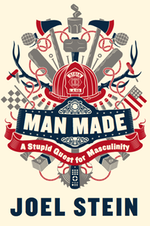
Read: Man Made: In Which a Dad Learns to Be a Man for His Son by Joel Stein. In man-made-coverhardback, this book had a title I liked better, A Stupid Quest for Masculinity. Stein confesses that he’s not a “manly man” and so undertakes an investigation of how to become one in this very funny book. Chapter One: “Surviving Outdoors”
Go:  camping or simply take a hike.

America’s Game

Baseball travel” is a favorite form of travel for many guys, with groups traveling across the country to tick off visits to both major league and minor league stadiums.  (Read my post on Major League Vacations.)

Read: Mickey and Willie: Mantle and Mays, the Parallel Lives of Baseball’s Golden Age by Allen Barra.  This new book had been well received by critics.

Go: Take in a baseball game together.

The Scene of the Crime

It’s no wonder that crime is one of the most popular literary genres.Unknown-9
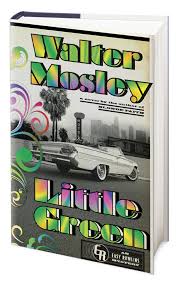
Read: Revisit the classics, books like Dashiell Hammett’s The Maltese Falcon or Raymond Chandler’s Farewell My Lovely. You just can’t beat those hard-boiled gumshoes. Or, pick up more recent classics like Michael Connelly’s The Lincoln Lawyer or Walter Mosely’s newest Easy Rawlins mystery, Little Green.

Go: visit the people in blue at your local police department.  Even small-town police departments offer some amazing behind-the-scenes tours and some even give you a look at offer their crime labs, ala CSI.

Grill n’ Chill

Cooking is a great creative outlet for just about anybody and there’s plenty of great food writing to go with it.

Read: Calvin Trillin’s The Tummy Trilogy or MFK Fisher’s classic The Art of Eating.Unknown-11

Go: take a cooking or grilling class together.

The sky’s the limit.  Just think book and “field trip.” For any dad, the memories of a literary adventure with his kids will stay with him far longer than a Hallmark card. If the kids are too young to share adventures with dad, you’ll want to check out the funny “Literature For Dads” video from The Dad Lab. They suggest avoiding Cormac McCarthy’s The Road–not an uplifting father-son travel idea.

AND–if you have any other book-and-travel pairings that a dad would like, please send them to me.  You can comment below, send links to favorite travel blogs, or email me at tsmith952@comcast.net with your ideas.  I’ll add them to this blog. But be quick.  Father’s Day is June 16.

Spoleto Fests Large and Small in Charleston

DSCN0906
A carriage ride is a great way to get your bearings in Charleston.

“We just love the way y’all talk,” a Charleston carriage driver comments on my Midwestern accent. He says it, no doubt, with a bit of irony because so many Midwesterners say the same thing to him. Our banter is all in good fun. As we roll through some of Charleston’s most historic and elegant neighborhoods, I feel the warm, humid breeze from the bay blow over me and start to settle into the friendly, genteel hospitality of Charleston. It’s clear that the city still holds the same appeal that it did for Rhett Butler in the closing lines of Gone With the Wind. He tells Scarlett O’Hara that he’s going back home to Charleston, where he can find “the calm dignity life can have when it’s lived by gentle folks, the genial grace of days that are gone. When I lived those days, I didn’t realize the slow charm of them.”

Charleston is one of America’s oldest cities and many of its old guard trace their roots to English colonists, who laid out its series of broad, elegant boulevards. But while the city works hard to preserve its colonial and antebellum historic sites, it is by no means stuck in the days of tight corsets and hoop skirts.  The city is home to charming shops (see upper and lower King Street and Broad Street) and restaurants such as Husk that I dream about long after I leave. Most notably, Charleston displays its vibrant cultural life with the Spoleto Festival USA which runs until June 9  and fills the city’s historic theaters, churches and outdoor spaces with performances by world renowned artists as well as emerging performers in opera; theater; dance; and chamber, symphonic, choral and jazz music.

Spoleto brings in artists from around the world. It’s the big boy in town. But if you’re

Piccolo Spoleto Poster

looking for a taste of regional arts and culture head for Piccolo Spoleto, which focuses primarily on artists of the Southeast region with an emphasis on events for children and families.  There’s also a piccolo literary festival. Piccolo Spoleto offers performances and event either free of charge or at prices that are more affordable than its big brother.

No matter which Spoleto you choose, or if you prefer to simply stroll Charleston’s streets or visit nearby plantations, you’ll feel as at home here as Rhett Butler did. Heading for Charleston?  Here are a few don’t-miss books to read before you go:

Pat Conroy- South of Broad, The Prince of Tides, Beach Music 

Dorothea Benton Frank – Bulls Island, Folly Beach, Lowcountry Summer

Gloria Naylor, Mama Day

Edward Ball, Slaves in the Family

Alphonso Brown- A Gullah Guide to Charleston: Walking Through Black History.

Looking for an itinerary for your visit to Charleston? The city is a featured destination in Off The Beaten Page: The Best Trips for Lit Lovers, Book Clubs and Girls on Getaways.


Weekly Photo Challenge: In the Background, South Dakota

DSC02993
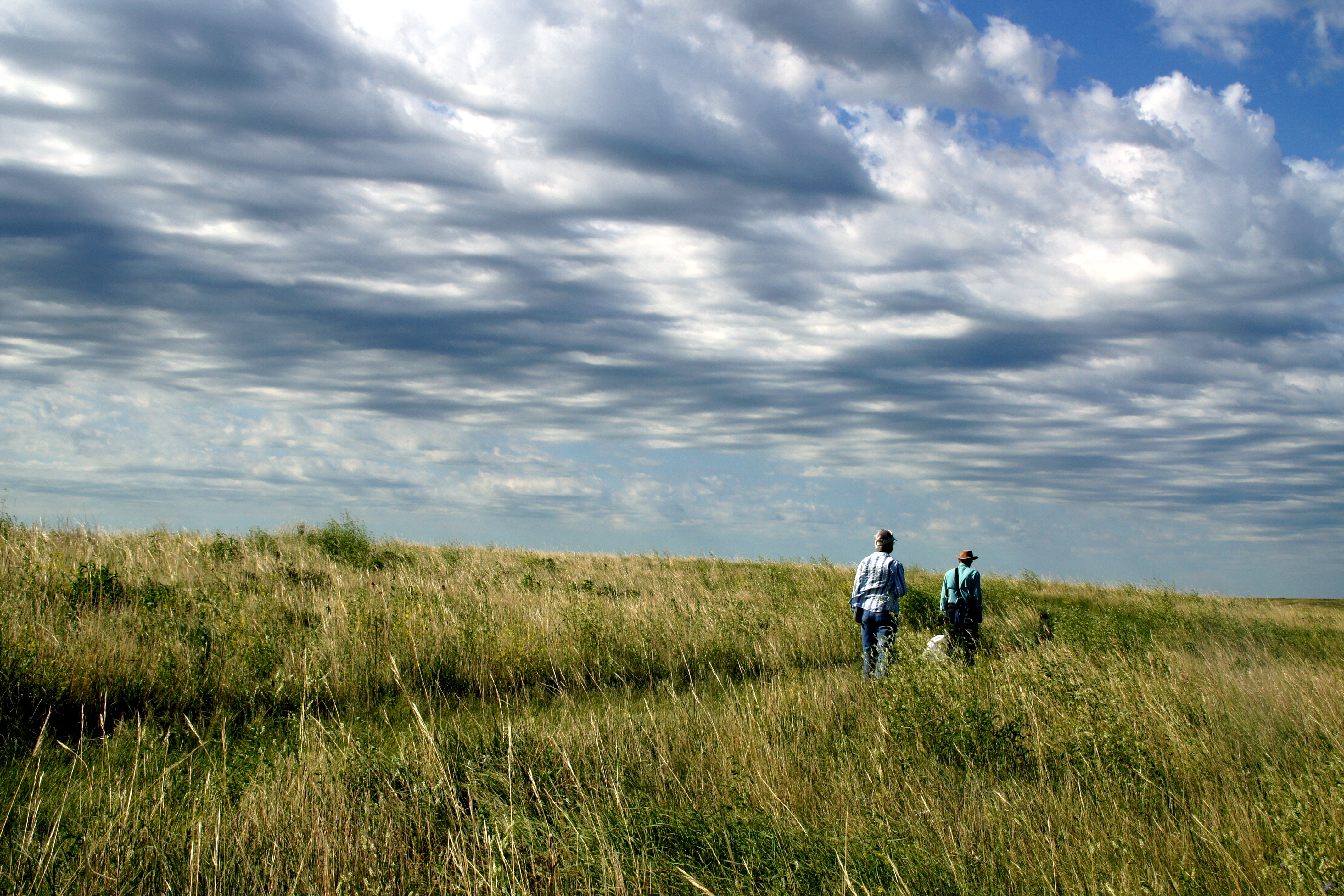
Hiking with the Nature Conservancy in the Samuel H. Ordway Memorial Preserve in South Dakota

On the prairie, the background is the story. More than most other places, the vast grasslands of the Dakotas make us stop and look for a moment at open spaces and realize that they are far from empty.

Gretel Ehrlich says in The Solace of Open Spaces, “We Americans are great on fillers, as if what we have, what we are, is not enough. We have a cultural tendency toward denial, but being affluent, we strangle ourselves with what we can buy. We gave only to look at the houses we build to see how we build “against” space, the way we drink against pain and loneliness. We fill up space as if it were a pie shell, with things whose opacity further obstructs our ability to see what is already there.”

Things To Do in Newport, Rhode Island

Newport Rhode Island, www.offthebeatenpagetravel.com

There’s plenty to do in Newport, Rhode Island, year-round, but “America’s first resort” really swings into action starting Memorial Day weekend, through Labor Day. For example, you can spend a weekend sampling great chowder in Newport any time of year, but the Great Chowder Cook Off takes place June 1. You can plan a picnic and head for Brenton Point State Park to fly kites and enjoy the fabulous scenery and the Newport Kite Festival July 13 and 14. And, there’s the world famous Newport Jazz Festival August 2, 3, and 4.  You can watch polo events and tennis tournaments, attend sailing regattas and find opportunities to go sailing yourself.

Admittedly, when you arrive in Newport,  you may feel like you somehow stepped out of your car and into a Ralph Lauren ad.  The town is a haven for hot-pink and lime-green plaid shorts, deck shoes, and monogrammed sweaters. But, as you may have seen from a few of my previous posts (see “The American Stories Behind Downton Abbey,” “Gifts for Mom“) I really love Newport, because it offers activities for just about every taste, even if you’re not part of the preppie set.  And, while modern-day events like those above abound, the town also offers a special chance to glimpse its Gilded Age history when you go “calling” at the fabulous mansions along Bellevue Avenue.  To get in the mood for your Newport trip, be sure to read Edith Wharton’s The Buccaneers, Thornton Wilder’s Theophilus North, or non-fiction works such as Lucius Beebe’s The Big Spenders or Amanda Mackenzie Stuart’s Consuelo and Alva Vanderbilt: The Story of a Daughter and a Mother in the Gilded Age. You’ll also want to check out a blog I’ve found, The American Countess, which is written by someone even more intrigued with Gilded Age Newport than I.

Newport is one of the destinations I investigate in  Off The Beaten Page: 
The Best Trips for Lit Lovers, Book Clubs and Girls on Getaways. Find out more at http://www.terripetersonsmith.com

For San Francisco Travel, Armistead Maupin’s “Tales” Are Still Relevant

Unknown-12
The first volume of Armistead Maupin’s many tales of San Francisco

Author Armistead Maupin was in the Twin Cities last week speaking at the wonderful Pen Pals, an author lecture series that raises funds for the Hennepin County Library system. I’m sure that when they booked him for the event no one knew that it would coincide with the passage of the bill that made Minnesota the twelfth state to legalize gay marriage, but his appearance last week couldn’t have been more timely.

Maupin is the author of the beloved Tales of the City series that began as a newspaper column in the 1970s, first in a Marin County paper and then in the San Francisco Chronicle.   Much the way Charles Dickens’s work appeared in serial installments, each Tales of the City column delivered a new episode in the lives of a quirky and sometimes bizarre collection of transsexual, straight, and gay characters who reside at the fictional 28 Barbary Lane, San Francisco. The series grew into eight best-selling novels, a television miniseries, a film and a musical.

Maupin was one of the first openly gay authors and his stories were ground-breaking in a time when there were no gay people in popular culture. I was thinking as he spoke about how much things have changed, particularly in light of Minnesota’s new marriage law. His conversation was peppered with a few “motherfuckers” and some colorful comments about his sexual behavior. I wondered if such in-your-face speech seemed a bit dated, unnecessary in the era of Ellen Degeneres and “Modern Family” when gay people are more part of the mainstream. That was Friday. Then Saturday night in New York’s Greenwich Village, a gay man was murdered in what was clearly a hate crime. So, that answered my question. Maupin’s attitude and his stories are as pertinent as ever. When he started writing there was the homophobic Anita Bryant.  Now we have Rep. Michelle Bachmann.

Maupin’s groundbreaking stories incorporate the politics of the 1970s but also focus on universal themes of love and longing that have made the “Tales” endure over the decades with broad appeal. Maupin says, “We read to feel less alone, to find our experience reflected in that of others.” I would add that reading opens our minds to the the experience of others even if it isn’t the same as ours. The best thing about reading: it fosters empathy.

For anyone traveling to San Francisco, the Tales are a must read and Maupin’s web site offers a great map to the real places that you read about in the books. That reading and travel combination gives insight into the city’s history not only as ground zero in the gay rights movement but also its position as the America’s foremost place for iconoclasts–the Beats, hippies, immigrants from around the world, and cultural and spiritual seekers of all sorts who have changed the way we think and influenced our culture.

Though he will forever be associated with San Francisco, Maupin and his husband Christoper Turner, have decamped for Santa Fe, for what Maupin says is a new adventure in a place that has amazing vistas, adobe homes, and wide open spaces.  But, he says, “San Francisco is still in my heart.”

Gifts for Mom: Ten Book Ideas to Inspire A Mother’s Day Adventure

Give your mom the Mother’s Day gift she really wants: time with her kids and a good book.  

SONY DSC
My 80-plus-year-old mother and I went sailing last year in Narragansett Bay while doing a Edith Wharton-related trip to Newport, Rhode Island. You can create a lit-trip just about anywhere, a great Mother’s Day gift.

It’s often a challenge to find an interesting way to celebrate Mother’s Day beyond flowers and candy, or maybe breakfast in bed.  But the gift of a good book and a book-based adventure to go with it makes a present any Mom will treasure.

Women love to bond over books. The popularity of book clubs proves that. But Moms and their kids—of any age—can also share the experience of reading a great book together.  Better yet, take reading a step further with a “lit trip,” based on the book. Meaningful time with her kids is the gift every mother wants.

My book, Off The Beaten Page: The Best Trips for Lit Lovers, Book Clubs, and Girls on Getaways offers reading lists and itineraries for three-day “lit trips” to 15 U.S. destinations. But it’s easy to create your own lit trip close to home, no matter where you live. Think “field trip” like the kind you took in school, only without the yellow bus and the sack lunch. Find a book topic that interests both you and your mother (or your kids), then think of place to go where you can experience the subject of the book in person. These don’t have to be high-brow or “girly” outings. We’re not talking reading Keats or Shelley and dancing the gavotte.  Here are a few of my ideas for Mother’s Day lit trips for readers, from young adults to the young at heart:

  1. For those who love horses or horse-racing- Read Laura Hillenbrand’s Seabiscuit
    Read Seabiscuit and head for the racetrack
    Read Seabiscuit and head for the racetrack

    and spend an afternoon at the track or visit a horse farm.

  2. For fans of “whodunits” – Read a book about an art heist such as The Gardner Heist: The True Story of the World’s Largest Unsolved Art Theft by Ulrich Boser or The Rockwell Heist by Bruce Rubenstein and visit an art museum.
  3. For history buffs – Read Assassination Vacation by Sarah Vowell (or ask a librarian for tips on great books about your local history) and visit an historical society, battlefield or landmark.
  4. For baseball fans – Read Bernard Malmud’s The Natural or Michael Lewis’s Moneyball and take in a game together.
  5. For animal lovers – Read Temple Grandin’s Animals Make Us Human or Julie Klan’s Love at First Bark: How Saving a Dog Can Sometimes Help You Save Yourself and visit or volunteer at an event at your local humane society or animal rescue group.
  6. For the outdoorsy – Read Cheryl Strayed’s memoir Wild: From Lost to Found on the Pacific Crest  Trail and go take a hike.
  7. For music fans– Read an autobiography by a favorite musician or other book about music and take in a concert. Try Cash: The Autobiography; Blues All Around Me by B.B. King; or  Girls Like Us: Carole King, Joni Mitchell, Carly Simon and the Journey of a Generation by Sheila Weller.
  8. For cooks – Read Animal Vegetable, Miracle by Barbara Kingsolver or My Life in France by Julia Child and visit a farmers’ market or take a cooking class.
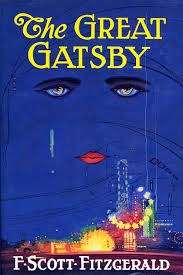
  9. For movie goers – Read F. Scott Fitzgerald’s The Great Gatsby or Therese Anne
    How does the movie compare to the book? Read the Great Gatsby and then take in the movie.  A great outing for Mother's Day.
    How does the movie compare to the book? Read the Great Gatsby and then take in the movie. A great outing for Mother’s Day.

    Fowler’s Z: A Novel of Zelda Fitzgerald and see the new Gatsby movie starring Leonardo DiCaprio.

  10. And, for moms who really do love flowers, read The Language of Flowers: A Novel, by Vanessa Diffenbaugh and go on an arboretum or garden tour.

Off The Beaten Page: The Best Trips for Lit Lovers, Book Clubs, and Girls on Getaways, published by Chicago Review Press, is available now in bookstores and online everywhere.

Are You a Travel Snob? Take this quiz and find out.

SONY DSC
Camel trekking in Morocco? Ten points!

During one of our recent “What is the world coming to?” discussions spurred by politics and other recent disasters, a friend handed me a book by David Brooks called Bobos in Paradise: The New Upper Class and How They Got There. In it, Brooks, who is a columnist for the New York Times, examines a social group that he has labeled bourgeois bohemians, or Bobos. He says a Bobo is a mix of bourgeois establishment square and bohemian artist intellectual.  Like an anthropologist studying an exotic tribe, Brooks looks at Bobo business culture, social, intellectual and spiritual life.  It’s a fun read because he seems like good-natured guy who admits he’s part of this group and doesn’t hesitate to point out its idiosyncrasies in a very humorous way.

What really caught my eye is his description of Bobo travel habits. I have to admit, to some extent, he’s describing me, many of the people I know, and almost all of the people you read about in travel magazines and and on travel blogs.  Tell me if this sounds familiar:

“There are a certain number of sophisticated travelers who wear their past destinations Unknown-9like little merit badges.”  According to Brooks, these aren’t people who simply name drop about the super luxe hotels and resorts where they stay.  “Their main joy in life comes from dropping whopping hints that everywhere you are just going they went to long ago when it still meant something.”  They’re masters of insufferable questions like “Didn’t the atabeg of Damascus stop there in 1139?” And, says Brooks, “They don’t say, ‘I know such-and-such a language.’  They say, ‘I have a little Portuguese” or ‘I have a few of the romance languages, of course,’ in that faux offhand manner that makes you want to stick the person’s head in a vise and squeeze it until the eyes pop out.”

But, we’re all travel snobs to some extent. For example, I was accused of travel snobbery when I said I didn’t really have a great desire to visit the Wisconsin Dells for vacation.  I also make snide comments about the oddly dressed tourists who pile off cruise ships and tour buses. But it’s a matter of degree. I definitely rate myself lower on the food chain of travel snootiness than the guy who rues the day electrification came to Belize, though I have told people I remember when the streets weren’t paved on Ambergris Caye.

The Quiz

Where do you rate on the travel snob-o-meter? With the help of Brooks analysis,  I’ve developed the following quiz so you can rate yourself. Give yourself 10 points if you answer yes to the following: 1. Have you ever one-upped someone in a travel conversation?

2. Do you avoid places that are “touristy” even though you’re dying to see them?

3. Do you wear outdoorsy travel gear acquired at places such as Eddie Bauer or REI even when you’re not on an expedition? Five extra points if your togs have lots of pockets.

4. Have you ever said you have a language instead of I speak a language? Or, another of  my favorites, do you use a “French” pronunciation for a word when it isn’t a French word?

5. Do you label yourself as “serious” about a travel or sporting pursuit, i.e. a “serious hiker,” or “serious kayaker?” Says Brooks, “The most accomplished are so serious they never have any fun at all.”

6. Do you seek out locales where simple peasants live in abundance farming or creating folk art?

7. Do you frequently mention using alternative modes of transportation, such as camels or tuk-tuks?

8. What’s that you say? You don’t travel because there’s no place that’s better than right where you are? If you say yes, you’re a reverse travel snob. Bam! 10 points.

Finally, does your idea of a great vacation involve pain and exertion– for example biking across a state larger than Rhode Island, or kayaking around Lake Superior or canoeing length of the Amazon? If your answer is yes, award yourself 20 points. “At the tippy top of the leisure status system are those vacations that involve endless amounts of agony and pain,” says Brooks.

Here’s how you stack up.  10 points: not a travel snob, but a little dull. 20-50 points: emerging snob, you just need to add on a few more miles, perhaps while trekking in Nepal. 60-80 points: You’re a snooty pants, and I’m sure those pants are made by Patagonia. And you’re probably a Bobo, too. 90-100 points: You’re an insufferable travel snob. We’d all like to go where you’ve been, but we don’t want you to tell us about it, so go kayak around Lac Superieur.

Dennis Lehane’s Boston

And speaking of Boston (see my last post), I want to emphasize how well Dennis Lehane’sbook books convey the Boston “voice,” and life in the tough, working class parts of Boston where he grew up. You may not want to actually spend your vacation in the Dorchester neighborhood, for example, but you can visit those places through Mystic River, Gone, Baby, Gone and his latest, Live by Night, which all make great reads before a trip to Boston and a nice diversion from the Freedom Trail.

I saw Lehane last week when he spoke at Pen Pals, the author series that raises funds for the Hennepin County Library system which serves the Minneapolis area. He’s one of the best speakers I’ve ever heard, mixing insightful literary observations, stories of his relationship with Clint Eastwood who directed Mystic River, writing for HBO’s The Wire, and hilarious anecdotes about his gigantic Irish American family.  He learned his storytelling expertise at family gatherings (and sometimes in bars) where his dad and his uncle told “true” stories that changed with every retelling.

You can see how his skills as a raconteur translate to novel writing, which he says is a much more difficult task than screen-writing. His novels, like his storytelling, incorporate great pacing, tightly wound plots, and characters drawn from the Boston streets. That’s one reason that Lehane isn’t, in my opinion typical of the crime genre where anyone with a laptop seems able to get published.  His work could better be described as well-crafted literary fiction…with a purpose.  One of his comments about fiction sticks with me: fiction is “the lie that tells the truth.”

On your way to Boston?  You’ll also want to pick up some of the books that Lehane suggested in a In  New York Times interview, which included classics such as The Friends of Eddie Coyle, by George V. Higgins, The Last Hurrah and The Edge of Sadness, by Edwin O’Connor, and in nonfiction, Common Ground, by J. Anthony Lukas. I also have scads of other Boston books on the reading list in Off The Beaten Page: The Best Trips for Lit Lovers, Book Clubs, and Girls on Getaways.


Major League Vacation: Baseball Books to Inspire Your Summer Travel

It’s 33 degrees here in Minneapolis, a might nippy for the Minnesota Twins Unknown-9home opener. I suspect there will be more hot coffee ordered in the stands than cold beer, and fans will wear hats and mittens instead of their usual sun screen.  Nonetheless, things will warm up soon and for lovers of Major League Baseball everywhere ‘tis the season to both take in a game and to check out the latest additions to the library of baseball lore.

The best baseball stories make great literature even if you’re not the most devoted baseball fan.  They’re always stories of moral crises, human foibles, victory, defeat, and ultimately the character of America. Minneapolis author John Rosengren has his own contribution on deck, just in time for the season opener, Hank Greenberg: The Hero of Heros.  Greenberg, a Hall of Famer, played in the 1930s and 40s, primarily as a first baseman for the Detroit Tigers (who incidentally, the Twins will play this afternoon). One of the great power hitters of his generation, he racked up home runs and RBIs the way Hillary Clinton has logged frequent flyer miles. But what Rosengren zeros in on, and what makes the story most interesting, is Greenberg’s integrity in the face of the intense religious and racial bigotry of the times. He was the first Jewish superstar in professional sports and played against the backdrop of the Hitler era, the anti-Semitism of Detroit’s Henry Ford, and that of his own teammates. Greenberg became the center of national attention in 1934 when he refused to play on Yom Kippur, though the Tigers needed him to win the pennant race. He was also among the first players to welcome Jackie Robinson to Major League baseball.

Rosengren will speak about his book at the National Baseball Hall of Fame  in Cooperstown, New York, on May 18, which brings me to the idea of baseball-related travel. He advocates Cooperstown as not only a must for baseball fans but also as an attractive and historic destination for those less passionate about the sport. While Cooperstown is mecca for baseball pilgrims, he also suggests a jaunt to the Louisville Slugger Museum and Factory, an iconic place in baseball history.  Of course tons of people make visiting baseball stadiums across the country a priority for their summer travel.  Check out one of the best blogs I’ve seen about baseball stadiums as travel destinations, Yards of Summer, from another Twin Citian, Tyler Sachse. He offers reviews of the parks he has visited, some great photography from his trips, and his own list of recommended baseball reads.

So, all you boys and girls of summer…. indulge your passion with a few baseball field trips. And to enhance your travel, here’s a list of baseball books, both recent and classic, to pack along.

Babe: The Legend Comes to Life, Robert W. Creamer. Our most famous baseball player ever, in the context of his times.

Bang the Drum Slowly, Mark Harris. Baseball fiction, yes, but Bang the Drum has also been called “a haunting meditation on life, death, friendship, and loyalty.”

The Catcher Was a Spy, The Mysterious Life of Moe Berg, Nicholas Dawidoff. Berg is characterized as a strange fellow who was a professional ball player, a spy during World War II, and who ended his life in poverty.

Eight Men Out: The Black Sox and the 1919 World Series, Eliot Asinof. Lance Armstrong and his USPS team were by no means the first to shock and disappoint their fans. This book covers one of all-time biggest sports scandals, set against the end of World War I and the beginning of the Roaring Twenties.

Hank Greenberg: Hero of Heros, John Rosengren. See above.

Jackie Robinson: A Biography, Arnold Rampersad. The gripping story of the first African American man to in baseball, subject of the current film 42 The Movie.

Moneyball, Michael Lewis. The book behind the movie, the story of Billy Beane, manager of the Oakland A’s, and his struggle against the conventional wisdom of baseball management.

The Natural, Bernard Malmud. The fictional story of Roy Hobbs (remember the Robert Redford movie?), considered the best baseball book of all time.

October 1964, David Halberstam.  The 1964 World Series between the Yankees and Cardinals as seen against the social and political tumult of the 1960s.

Shoeless Joe, The Iowa Baseball Confederacy, and other books by W.P. Kinsella.  This author’ books combine baseball with a rich imaginary world. (Shoeless Joe was the inspiration for the movie Field of Dreams.)

You Know Me Al: A Busher’s Letters, Ring Lardner. The hilarious fictional letters of a bush league pitcher who blames everyone but himself for his failures.

Oh Canada! You’ll Wish You Could Join This Canadian Book Club On Their Travels

IMG_3549
Boating and Books–a summer cabin in Canada is just one place where this book club meets.

Susan Jessop, a lit lover and travel enthusiast from Ottawa, Canada, contacted me to share her book club’s literary travel experiences.  Little did I know that I’d want to hop in the car and join them for their next outing. She had so much information, I’m going to share it in two posts, starting with their ideas for inviting authors to attend their meetings, and taking short “lit trips” close to home (from cottages to a penitentiary!).  You’ll find their “field trips” inspiring and you’ll want to check out the books she mentions, a nice list of Canadian authors. It’s always interesting to me how people in different regions are reading fantastic books you’ve never heard of. This is how to spread the word about your favorite authors. My next post will feature their really big book club travel tales.

Please tell me a little about your book group.

We are a group of women based in Ottawa, Ontario, Canada, our nation’s capital city. The group was established in 1996 and still has 3 founding members.The women come from many different professional backgrounds: urban planners, lawyers, museologists, a token engineer (!) and not unexpectedly, a few public servants… We share a love of literature, good food, wine and laughter! The group has always consisted of approximately 10 women, an optimal number to ensure manageable conversation. We think 10 is the ideal number.

What kinds of local trips or outings has your group enjoyed?  

The group has done a number of local expeditions that related to books we were reading. The first was to Aylmer, Quebec, just across the river from Ottawa to where the book Leaning, Leaning Over Water was set.  This book, a “novel in stories” marked the transition from short story writer to novelist for the author, Frances Itani, who went on to international recognition with her later novel Deafening.  We drove to several sites along the Ottawa River, our best guesses of the locations in the book.  We ended up at a local pub with an astounding international selection of beer, and some locals who it turned out were from the same neighbourhood as two of the book club women who had grown up in Aylmer.

One of our book club participants works at the national Museum of Civilization, and we’ve had a couple of fascinating excursions there.   The first was an evening devoted to the famous Klondike poet Robert W. Service, and featured readings of his poetry in a replica of the “Wildcat Cafe” from his adopted home town of Yellowknife, Northwest Territories.  Tracey Riley, a singer and waitress from that café, performed for us, and we were served authentic grub.  The museum later featured a fabulous exhibit on “The Bog People.” As part of its lecture series, the museum featured Kathy Reichs, (who is both a working forensic anthropologist and a crime writer) so we read her novel du jour Deja Dead and went off to hear her lecture and visit the exhibit.

For the past 9 years or so, we end our season with a weekend of merriment at one member’s cottage, about an hour and a half out of Ottawa.  It’s a great sign off to the book season (we take a summer hiatus).  Our host arranged to have a local author, Merilyn Simonds, attend our meeting to discuss her novel The Holding as well as her earlier non-fiction book The Convict Lover, which some of us also read.  Since the latter book was set in and around the Kingston Penitentiary, we took a field trip from the cottage and had a fascinating visit at Kingston’s Penitentiary Museum. We met with Merilyn a second time a few years later and visited her garden which was the subject of her book A New Leaf, a collection of anecdotes and meditations focused on that very garden.

Do you ever invite authors to attend your meetings?

We have looked for opportunities to invite local authors that we know (or through  a friend of a friend of a friend) or that someone decided to “cold call.” Surprisingly, most authors are flattered and pleased to attend. They sell a few extra books and get direct feedback. We’re always careful to get together a half hour or so before the author arrives to speak frankly about the book (and to make sure we didn’t all hate it!), and that we have a reasonable set of questions to ask. Happily, we have, for the most part, enjoyed those books. We have also welcomed authors: mystery writer R.J. Harlick (whose sister is one of the members) with The River Runs Orange, Terence Rundle West (twice)–Ripe for the Picking and Not In My Father’s Footsteps;  David Sacks, author of a history of the alphabet (!) that was issued under three different titles: Language Visible, Letter Perfect, and the less imaginative The Alphabet.   We will be hosting a new author this May, Missy Marston and her book The Love Monster and next fall, Ruth E. Walker whose book is Living Underground.

And, on many occasions, we’ve taken our “excursions” by way of the silver screen, pairing books with their filmed versions, usually on video but sometimes in theatres.  One member has a sister who’s a film-maker, so we’ve been lucky enough to view some of her films. I should mention too that we have an annual Christmas party (last year accompanied by a karaoke outing after dinner), with a secret Santa gift exchange.

Why take trips? Why not just meet in your homes and keep it at that?

The local trips or discussion with authors brought added context to the discussions and, frankly, were a lot of fun. Didn’t we all enjoy our school field trips a lot more than just the classroom discussion?! The same principle applies here, I think.