Tag Archives: travel

Book Publishing and Selling May Change But the Landscape of Literature Remains

I’ve been reading a lot lately about how e-books are totally changing the world of reading, forcing bookstores out of business, panicking print publishers, and leaving authors confused about where to get their books published.  A recent article in the Los Angeles Times urges readers to visit literary sites in New York City before they disappear. The article discusses bookstores in particular, which have been struggling for quite while, first with the rise of giant chains such as Barnes & Noble and Borders (which recently bit the dust itself), then with Amazon and Internet book sales, and now with electronic books.  For example, there used to be forty-some bookstores on Book Row along Fourth Avenue in New York, a book-lover’s nirvana.

I wish I could have seen that, wandered the stacks, and talked with the owners who I imagine as eccentric, bespectacled, and just oozing knowledge about authors and what to read next.  I would have been a loyal patron. The Strand bookstore is the lone survivor of Book Row, and had moved to 12th and Broadway.  Take a look at their video. The Strand and most other bookstores seek to do things not available in the online world such as events with authors (live and in-person!), children’s activities, and other activities that make them unique.  A post on literarymanhatten.org sites the example of “another independent bookstore making the most the downfall of corporate chains. Housing Works Bookstore Café. Part Bookstore, part café, part thrift shop and part HIV/AIDS outreach program.  “Housing Works,” they say, “understands the value that creating a community can give to a bookstore.”

Birchbark Books in Minneapolis offers all sorts of community-building book/author/dinner events and the store has a special focus on Native American literature and concerns.  They’re hosting screenings of “H2Oil,” an acclaimed documentary film about the devastating effects of the Alberta Tar Sands. Marty Cobenais from the Indigenous Environmental Network will speak about the campaign to stop tar sands pipelines in the United States. Bookstore owner Louise Erdrich will be giving an introduction.   Another example, with a more light-hearted focus is Beauty and the Book in Jefferson, Texas, the world’s only combined beauty salon and bookstore.  It’s owner, Kathy Patrick, has turned turned the love and books and book clubs into an international pursuit with the many chapters of her Pulpwood Queens Book club.

Whatever huge upheavals the book business encounters, one thing won’t change—the places (real and fictional) that literature evokes. For adventurous lit-lovers, there’s nothing like visiting the places they’ve seen in their imaginations—the London of Dickens’ characters for example, the Stockholm of Steig Larsson’s The Girl Who Kicked the Hornet’s Nest or the wide open Texas spaces of Larry McMurtry’s Lonesome Dove, to name just a few.  And, I maintain there’s no better way to gain a sense of a place before you travel there than to read about it. I enjoyed seeing at good example of how reading amps up the anticipation of a trip, too, in a blog post about an upcoming trip to Spain on The Orange Barrow that features the blogger’s reading list.

So, next time I’m in New York I’ll walk by Tiffany’s with Holly Golightly, through Washington Square with Henry James or through Harlem with Langston Hughes, and rest assured that there are locales of classic literature won’t soon disappear.

Beer and Books in Wisconsin

The Bookmobile headed for Wisconsin.

Mark Twain said, “I have found out that there ain’t no surer way to find out whether you like people or hate them than to travel with them.”  One of my book clubs travels fairly often, usually on short jaunts to members’ cabins, and we’ve found out that we like each other a lot, even with the extra large dose of “togetherness” that comes with group travel.

Last week ten of us piled into a 33-foot R.V. and drove to Three Lakes, Wisconsin. That’s about five hours from Minneapolis, and not far from Rhinelander, home of a mythical creature called a Hodag.  We stayed at a member’s cabin there, using the R.V. as an extra bedroom.  We used the opportunity to plan our reading list for the coming year (check it out below) and to discuss a book that takes place, in part, in Wisconsin, Wallace Stegner’s classic, Crossing to Safety.

Though we try to retain a bookish façade, I have to admit that much of our time was

Jake's provides most of the things one needs on vacation.

spent on the activities for which Wisconsin is famous, with Jake’s Bar at the center of intellectual pursuits such as darts and pool, beer and cheese curds.  We just call it “promoting literacy.”

The List

Driftless — David Rhodes

In Caddis Wood — Mary Rockcastle

Breakfast at Tiffany’s —Truman Capote

Cutting for Stone
— Abraham Verghese

The Postmistress
—Sarah Blake

The Paris Wife —Paula McLain

The Immortal Life of Henrietta Lacks —Rebecca Skloot

The Irresistible Henry House —Lisa Grunwald

Unbroken
—Laura Hillenbrand.

The Language of Flowers —Vanessa Diffenbaugh

My Nest
Isn’t Empty, It Just Has More Closet Space —Lisa Scottoline

Ely, Minnesota, for the Wild or the Wimpy

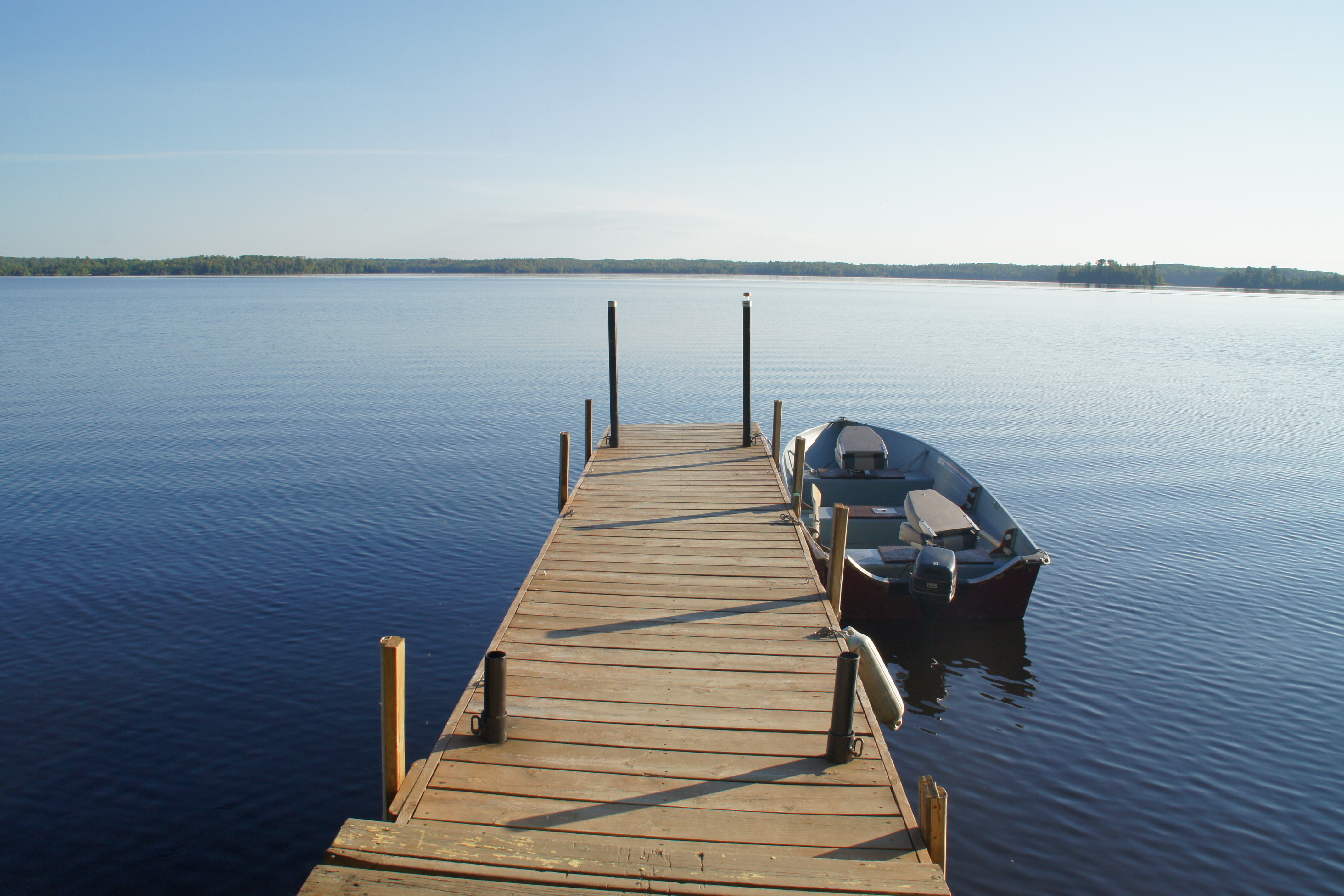
Serenity on Farm Lake near Ely, Minnesota. A portion of this lake is in the Boundary Waters Canoe Area Wilderness

Ely, Minnesota (five hours north of Minneapolis), is home to the hardest of hardcore outdoorspeople—polar explorers Will Steger, Paul Schurke and Anne Bancroft, to name a few.  From Ely, you can launch a dogsledding trip in winter or a multi-week canoe trip through the Boundary Waters Canoe Area Wilderness in summer. Budget Travel magazine named Ely “The Coolest Small Town in America” last year. They said, “It says a lot about a town when there are more wildlife centers (two) than Wal-Marts (zero), and more canoe and fishing outfitters (27) than, well, anything else. In Ely, you’re never more than a step away from the wilderness.”  But what if you’re made of less hardy stuff or you’re traveling with people for whom “wilderness” means that the mall is a 15-minute drive?

Ely offers plenty of opportunities for activity and a healthy dose of nature, even for outdoor novices or those who may not be physically able tackle portaging canoes or rugged hikes. On a trip last weekend, we hit the Harvest Moon Festival, complete with

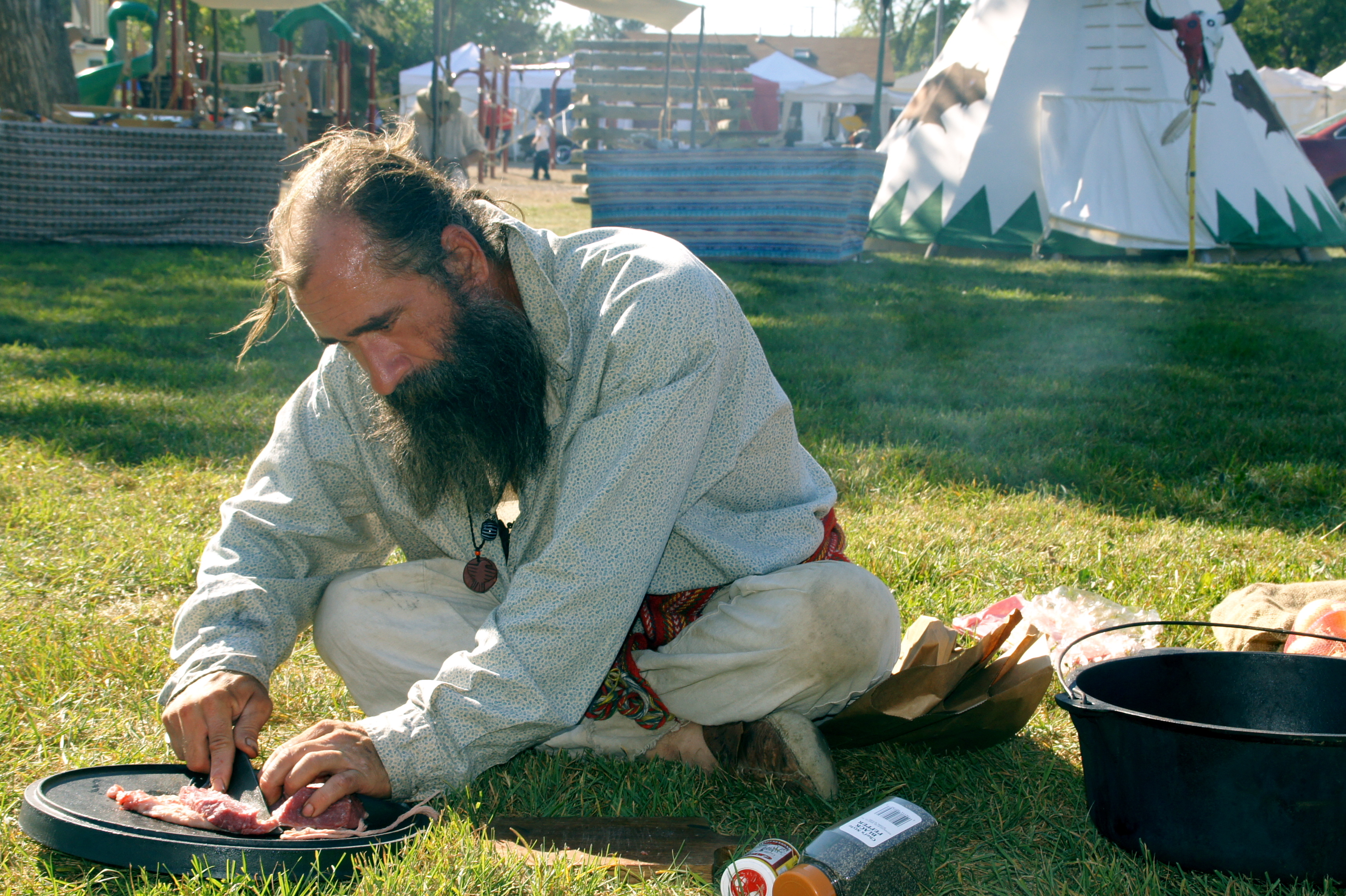
an early "voyageur"

crafty artisans; historic reenactors of the early settlers and trappers of the area, the voyageurs; and a lumberjack show—a little hokey, but entertaining.

My favorite comment came from one of the “voyageurs” who was cooking up some sort of stew in a giant cast iron post.  I asked what he was

Cooking "Camp Wander" If it wanders into camp, we cook it.

cooking and he said, “Camp Wander. If it wanders into camp, we cook it.”

Ely is home to the International Wolf Center, the North American Bear Center, and some tasty restaurants such as the Chocolate Moose.  You can buy great sweaters and of course mukluks at Steger Mukluk.  For book lovers, there’s a nice bookstore upstairs at Piragis Northwoods Company.

One of my favorite stops in town is the Brandenburg Gallery, where you can see and buy

a Jim Brandenburg poster

photos from acclaimed outdoor photographer and Ely resident, Jim Brandenburg.  His photography captures the spirit and the unusual beauty of the wilderness.  Check out his web site to see his stunning photos and a video, and click on this Minnesota Department of Natural Resources link for a video that features his fall photos.

On our recent trip, in lieu of a tent, we opted for a cozy cabin at Timber Trail Lodge where you can canoe, fish, or simply ponder the lake and its solitude from the dock. Famed environmentalist, author and Ely resident Sigurd Olson said

Wilderness is a spiritual necessity. An antidote to the high pressure of modern life, a means of regaining serenity and equilibrium. I have found that people go to the wilderness for many things, but the most important of these is perspective. They may think they go for the fishing or the scenery or companionship, but in reality it is something far deeper. They go to the wilderness for the good of their souls.

Olson was instrumental in the preservation of millions of acres of wilderness in Alaska and the Boundary Waters Canoe Area in Minnesota. He helped establish Voyageurs National Park in northern Minnesota, Alaska’s Arctic National Wildlife Refuge, and Point Reyes National Seashore in California and helped draft the Wilderness Act of 1964. Looking for a little wilderness inspiration?  Read his books The Singing WildernessListening Point, The Lonely Land and others.

Finally, talk about “budget travel”–in Ely and the surrounding wilderness, the most amazing sights are free. Lay on your back on the dock at night and you’ll see  a show of stars that you can’t see amid the lights of a city.   And, if you’re lucky, you may see an even more spectacular show—the Northern Lights. We saw another amazing, though dismaying, display of

Pagami Creek Fire

nature, the huge Pagami Creek wildfire in the Boundary Waters, which is now so big that the smoke is visible as far away as Chicago. Started by lightning two weeks ago, it has burned through over 100,000 acres. Hopefully, the frost and sleet in the next few days will slow its spread.

For more northern Minnesota-inspired reading look for:

Tim O’Brien- In the Lake of the Woods 

Will Weaver – Red Earth, White Earth, The Last Hunter: an American Family Album, and of the short story “A Gravestone Made of Wheat,” which was made into the movie Sweet Land.

Catherine Holm- My Heart is a Mountain: Tales of Magic and the Land

William Kent Krueger– Vermillion Drift

Buffalo, Butterflies and Oceans of Grass on the South Dakota Prairie

The vast sky and grassland of the South Dakota Prairie

When driving “out west,” as people in my half of the country call it, the prairie is the part of the trip to be gotten through before you get to the good stuff, the mountains and national parks of the west.  Yet on a recent trip to the prairie of South Dakota, I realized that the vast ocean of grass that stretch as far as the eye can see is a fascinating destination in itself.

The grassland supports delicate butterflies....
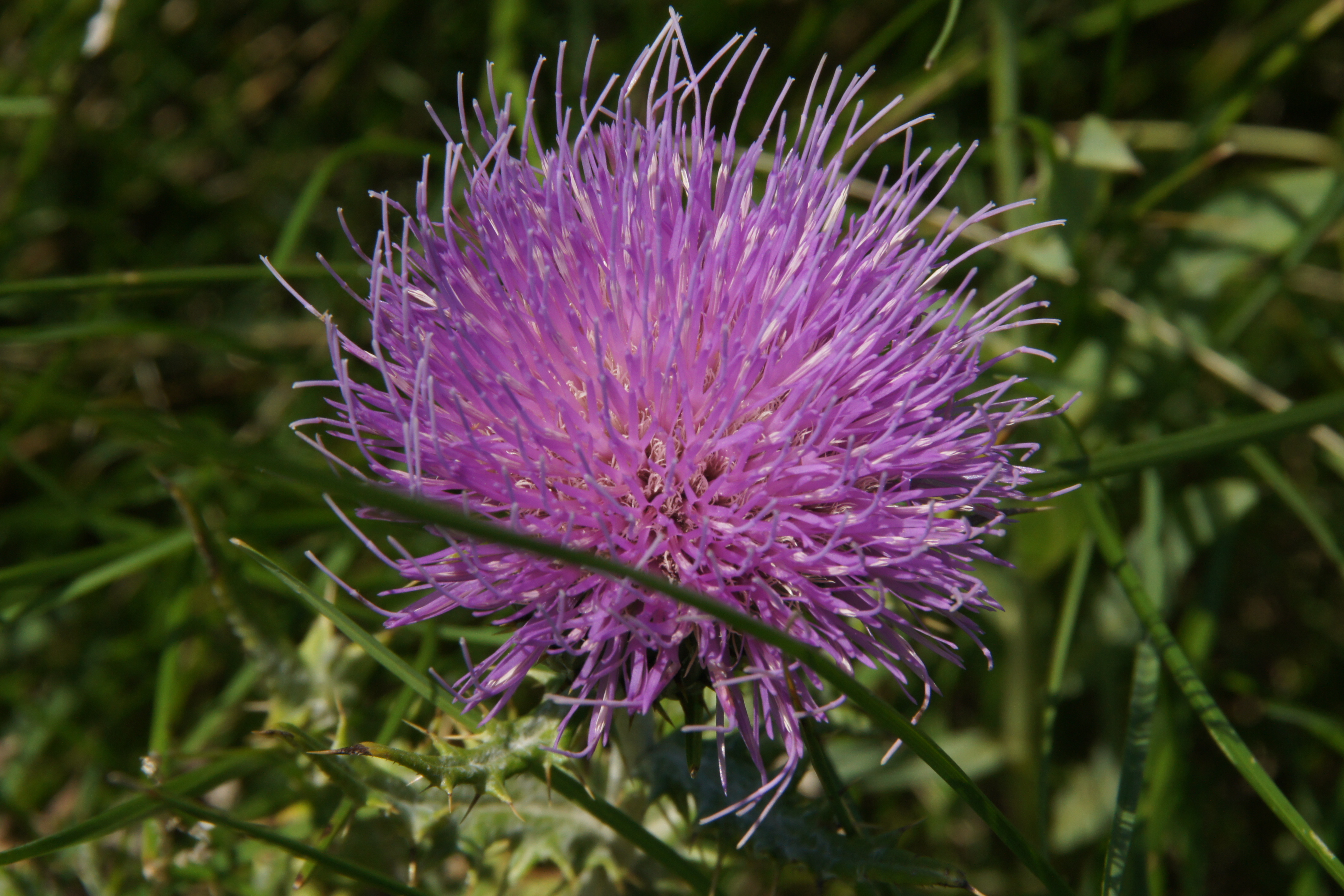
...colorful flowers....

We went on a tour of the Nature Conservancy’s  Samuel Ordway Prairie Preserve.  Aberdeen is the closest town, if you don’t count the really tiny farm communities in between.  When the prairie was my destination, not something to be barreled through on my way somewhere else, I began to really look and found that the amazing grassland is teaming with wildlife, from tiny frogs and butterflies to birds and enormous buffalo, if you take the time to look at it. Actually, it’s hard to miss the buffalo.

... and enormous buffalo.

To people who are used to city or suburban life simply to be in such a vast uninhabited grassland is amazing.  In her memoir, Dakota: A Spiritual Geography, Kathleen Norris talks about a friend who asked her what there is to see there.  She responds, “Nothing.”  And that’s precisely the point.  So much open space—no telephone poles, buildings or trees and no people—is something rarely seen. It also struck how different one’s perspective on life would be, politically and otherwise, if you lived in such an area rather than a city.

On this 7,800-acre preserve, the Nature Conservancy staff manages a bison herd and conducts research on the plants and animals of this ecosystem, especially in relation to invasive exotic species.  However, I was most fascinated with the land itself and the size of the sky.  It would take a much tougher person than I am to live in this expanse, especially in winter.

So, on your way to the Black Hills, Mt. Rushmore, the Badlands, and on to Yellowstone or other parks, take a look at the prairie, too.  If you’re going, I recommend reading Dan O’Brien’s Buffalo for the Broken Heart: Restoring Life to a Black Hills Ranch, Dan Laskin’s The Children’s Blizzard, and O.E. Rolvag’s classic about prairie pioneers, Giants in the Earth.

Improv Everywhere: Who Says You Can't Have Cheap Fun in NYC?

Improv Everywhere Fun in New York City

Have you seen the guy in the cell phone ad that launches into a flash mob dance routine in New York’s Grand Central Station but discovers he’s the only one dancing?  Improv Everywhere is one group that organizes choreographed events where, hopefully, everyone joins the action at the same time– for their own joy and the obvious entertainment of spectators–all for free. Check out the video of the mass-scale fun in the Hudson River Park.

We Always Knew It: Nellie Oleson is a Prairie B****

Laura Ingalls Wilder would be astounded at the interest people still have in her

Laura Ingalls Wilder's beloved stories live on through pageants, tours, biographies and through her arch enemy, Nellie Oleson.

books and her life and the many forms that interest has taken.  Eighty years after the publication of the first book in her Little House on the Prairie series, The Little House in the Big Woods, Laura is big business in the towns where she lived.  Wendy McClure describes these places in her great book The Wilder Life, My Adventures in the Lost World of Little House on the Prairie.

It’s good the Ingalls family kept moving, because it has given each tiny town where they lived, no matter how briefly they lit there, a chance to lure visitors to the family’s various homes, cabins and indentations in the sod. For example, tiny Pepin, Wisconsin, generally the site of the Little House in the Big Woods, holds Laura Ingalls Wilder Days annually in September. In De Smet, South Dakota (By the Shores of Silver Lake), they have a Laura Ingalls Wilder Museum, all sorts of Laura-themed shops and restaurants  and a pageant that is celebrating its the 40th anniversary this summer. Walnut Grove, Minnesota, (On the Banks of Plum Creek) also has a pageant and a Laura Ingalls Wilder museum.  Four authors appeared at the museum last weekend to promote their books about Laura.

Of course the Little House TV series made hay from the novels and it still lives on in Hallmark Channel reruns decades after it was in production. The show was super-popular in France.  I once met a woman from France…. who said all that she knew about Minnesota she learned from the Little House on the Prairie TV series. Now, so far from the prairie, Carnival Cruise lines is getting in on the Laura action, with “THE LITTLE HOUSE ON THE PRAIRIE REUNION CRUISE, a 7 Day Fan-Filled Cruise to the Mexican Riviera Mexican Riviera with the ORIGINAL Cast Aboard the Carnival Splendor, November 13 – 20 2011.”

But back on the prairie….this Saturday and Sunday, Allison Arngrim, who played Laura’s arch enemy Nellie Oleson on the TV series, will appear at the museum in Walnut Grove. An actress and stand up comedian, Arngrim pokes fun at her days as that ringlet wearing little priss, Nellie, in her book, “Confessions of a Prairie Bitch.” (I love the French title: La Petite Garce Dans La Prairie.) Check out a clip of her comedy show of the same name in which she asks, “Do you know what it means to be Nellie Olesen?  It means someone has celled me a bitch every day since I was eleven.”

Seems like it was worth it.

Pop, Soda, Coke, Mint Tea? On Being a Stranger in a Strange Land

I certainly felt like a stranger when I visited this Berber woman and her daughter in Morocco last spring. They're part of a nomad family that travels with their animals as the seasons change. While they're in this part of the Atlas Mountains, they live in a cave. We couldn't be more different, but I didn't feel like such a stranger when she offered a cup of mint tea.

I just finished reading Ann Patchett’s newest book, State of Wonder, a fictional work in which the protagonist, Marina Singh, is a research scientist who works for a pharmaceutical company in Eden Prairie, Minnesota.  The company dispatches her to the darkest reaches of Brazil to track down her former mentor, Dr. Annick Swenson. (You can read my review of the book on the online literary mag, Minnesota Reads—“they like big books and they cannot lie.”) Marina, a home-grown Minnesotan, is an outsider in the lush and chaotic jungle world of Brazil, although this weekend Minnesota will be steaming and tropical, too.

The impact of outsiders on an exotic and undeveloped environment is a common theme in literature and in the movies—think Conrad’s Heart of Darkness, H.G. Wells’ The Island of Dr. Moreau, Avatar, Indiana Jones… the list goes on.  Usually, the meeting of cultures results in conflict. Freakish animal/human combinations appear (Dr. Moreau), exploitative colonists chop down the Tree of Life (Avatar).  These fictional stories have me thinking about real-world travel and being a “foreigner.” Aside from some truly frightful bathrooms–I once used a bathroom in a Haitian jail–travel is usually far less scary and often far more fascinating than fiction.

Of course, you don’t need to sail to Borneo to feel like a stranger in a strange land.  For example, when I go to California, people seem to have no idea where Minnesota is or what Minnesotans are like except what they may have seen on Little House On the Prairie. (Update:  we no longer wear bonnets.  Nor do we “tip” cows.) I’ve had people in California say, “Oh, you’re from Minnesota, do you live near Detroit?”  One Californian asked me if Minneapolis is closer to Chicago or Boston.  Hmm, let me think about that.

I knew I was different when a wonderful tour guide in Charleston, South Carolina, told me, “We just love the way ya’ll talk.”  That surprised me because I thought he was the one who spoke with a funny accent.  But if you really want to feel like a stranger, try asking someone in the Southwestern U.S. for a pop.  You might as well be speaking Greek.  For you non-Midwesterners, I’m talking about a carbonated beverage.  See the New York Timespop, soda, coke map.

Paul Theroux says in his latest book, a great travel writing compilation, The Tao of Travel

It is hard to be a stranger.  A traveler has no power, no influence, no known identity. That’s why a traveler needs optimism and heart, because without confidence travel is misery.  Generally, the traveler is anonymous, ignorant, easy to deceive, at the mercy of the people he or she travels among. The travelers might be known as “the American” or “the Foreigner,” and there is no power in that.

But feeling strange is exhilarating, half the fun of travel.  And, despite the dangers some fictional travelers encounter, it’s usually an overwhelmingly positive experience for those of us in the real world. Theroux offers these tips as the “Essential Tao of Travel:”

1. Leave home (no problem)

2.  Go alone

3. Travel light (often a big problem)

4. Bring a map

5. Go by land

6. Walk across a national frontier

7. Keep a journal

8. Read a novel that has no relation to the place you’re in

9. If you must bring a cell phone, avoid using it

10. Make a friend (see the photo above)

A Skeptic’s Guide to Writers' Houses

I just finished reading A Skeptic’s Guide to Writers’ Houses, a tour of the homes of writers ranging from Hemingway to Poe to Langston Hughes by writer and English professor Anne TrubekIn this funny and very insightful book, Trubek examines the lure of writers’ homes for readers and for herself.  And a big draw it is; she says there are about seventy-three writers houses open to the public in the U.S. and hundred of thousands of people visit them annually, 60,000 a year to Mark Twain’s house in Hartford alone. But, such pilgrimages aren’t always very satisfying. She says

Writers’ house museums expose the heartbreaking gap between writers and readers. Part of the pull of a writer’s house is the desire to get as close as possible to the precise, generative, “Aha!” But we can never get there….Going to a writer’s house is a fool’s errand. We will never find our favorite characters or admired techniques within these houses; we can’t join Huck on the raft or experience Faulkner’s stream of consciousness. We can only walk through empty rooms full of pitchers and paintings and stoves.”

But A Skeptic’s Guide is entertaining precisely because, for Trubek the houses always come up short, which she describes in a pleasantly un-snarky way.  For example, visitors and tour guides often seem to confuse the idea that a house was where the writer lived and not where the fictional characters like Huck Finn or Jo in Little Women lived.  The furniture, papers and other items in the houses are often not those that belonged to the writer, but are things the curator added willy-nilly.  Edith Wharton’s home, The Mount, is decorated as a modern-day show house, computer and all.   Most houses seem to have the same array of merchandise in the gift shop.

I agree with her.  I’ve never really seen the lure of an author’s homes as some way to commune with the departed genius or magically attain the writer’s magic for my own use.  However, I’m fascinated with the sense of place that literature creates.  When I read about Huck Finn, it makes me want to not visit Twain’s Hannibal home but rather to hop in a boat and travel down the Mississippi. For a Yankee like me, it’s exciting to visit the Carolina lowcountry I’ve read about in books such as Pat Conroy’s Prince of Tides or The Water is Wide.  I get a better understanding of the real people who live there as well as their history and the geography that has shaped it.

Ultimately, the essence of the writer isn’t in the house, it’s in the words. Trubeck concludes, “[Langston] Hughes knew that …the world of the imagination would offer him more than the city, more than a house.”

Who Was Abe Lincoln? Lit and History Road Trips for Families

Famed historian David McCullough gave a presentation about his new book, The Greater

Ideas to plan a reading road trip

Journey: Americans in Paris, on Tuesday night in Wayzata, Minnesota, near Minneapolis.  It’s the story of American artists, writers, physicians, politicians and others who traveled to Paris between 1830 and 1900 to further their education and to excel at their work. I highly recommend it to anyone traveling to Paris.

But one of the most interesting parts of the evening was when someone asked McCullough his opinion of Americans’ knowledge of history and the way history is taught in our schools.  That’s a particularly hot topic this week because of Sarah Palin’s rewriting of history and also because the National Assessment of Educational Progress found that American students are less proficient in their nation’s history than in any other subject.  The New York Times said that, according to results of a nationwide test released on Tuesday, most fourth graders were unable to say why Abraham Lincoln was an important figure. McCullough’s suggestion:  don’t fault the teachers.  It’s our own responsibility.  Parents,  grandparents, and others must do a better job of showing an interest in history and discussing it with children.

A great way for children to learn a little U.S. colonial history

Family road trips are one of the best ways to do that.  It’s what educators call “placed-based learning” and, it ties in nicely with the idea of inspiring children to read by making stories more vivid and bringing reading to life.  I’m not talking about hard-core history books here, but rather books that are fun to read. For example, read Esther Forbes’ Johnny Tremain and visit Boston.  Pair Mark Twain’s Huckleberry Finn or Tom Sawyer with a trip to see the Mississippi River or Twain’s home in Hannibal Missouri.  Read the Little House on the Prairie series and travel to the sites where Laura Ingalls Wilder really lived.  How about Brighty of the Grand Canyon?  Remember that one? The list goes on. Not only do lit trips fuel a young reader’s imagination, they also give a sense of history and an understanding of what life was like earlier in our history.

One of the best books to inspire a reading road trip is Storybook Travels: From Eloise’s New York to Harry Potter’s London, Visits to 30 of the Best-Loved Landmarks in Children’s Literature by Susan La Tempa and Colleen Dunn Bates.  Here are a few other Web sites that offer great reading road trip ideas:

KidLit History  whose motto is “Everything I need to know about history I learned through children’s literature.”

Mommy Poppins.com

Travel Guide Through Children’s Literature

I can’t resist this one about Dr. Seuss-like places.

Parenthood.com 

Parentschoice.org

Greater Dayton Public Television 

Unputdownables

Here’s a library site, and finally,

National Geographic Traveler’s Ultimate Travel Library

So, with a tiny bit of research, you could pair a book about Abe Lincoln and a trip that would show both kids and parents why Abraham Lincoln was important… or why Paul Revere made that famous ride.

An F. Scott Fitzgerald Walk in St. Paul

I took a walk last week through the Summit Hill neighborhood of St. Paul, Minnesota,

F. Scott Fitzgerald's debut novel This Side of Paradise

where F. Scott Fitzgerald was born, grew up, wrote his first stories and made the revisions on his debut novel, This Side of Paradise. (If its original not-so-catchy title The Romantic Egoist is any indicator, I can see why they suggested revisions)

Even if you’re not a big Fitzgerald fan, even if you don’t know Amory Blaine from Jay Gatsby, this is a great neighborhood for a stroll, especially in summer. With its gorgeous Victorian homes, overarching elm trees and fun shops nearby it’s—if not this side of paradise—really, really nice.

The St. Paul Public Library (which has a special Fitzgerald reading alcove) offers a brochure called “F. Scott Fitzgerald in St. Paul—Homes and Haunts” that you can download. Start the tour at 481 Laurel Ave., where Fitzgerald was born. Park there and start the walk. The house where his parents later lived (593/599 Summit) and where he finished This Side of Paradisehe described as “A house below the average on a street above the average.”

Fitzgerald's neighborhood is still above average and has many beautifully restored Victorian homes.

Published in 1920, this work launched his career as spokesman for the Jazz Age. He chronicles the changing mores of the generation of wild children of Victorian parents, who Gertrude Stein later dubbed the “Lost Generation.”  Fitzgerald presciently wrote in the most famous passage of the novel, “Here was a new generation, . . . dedicated more than the last to the fear of poverty and the worship of success, grown up to find all Gods dead, all wars fought, all faiths in man shaken.”

F. Scott Fitzgerald's St. Paul birthplace

Be sure to make a stop at W.A. Frost (374 Selby), which has the world’s best outdoor dining, part of your tour.  Frost’s was a drug store and soda fountain during Fitzgerald’s day and retains its historic charm.  Finally, end your tour across the street from W.A. Frost at Common Good Books (downstairs at 165 Western Avenue North), whose proprietor is another St. Paul author and host of “A Prairie Home Companion,” Garrison Keillor. It’s a gem of a bookstore.  To read more of Fitzgerald’s St. Paul works, look for The St. Paul Stories of F. Scott Fitzgerald, edited by another St. Paul author, Patricia Hampl.  Read “The Ice Palace,” “Winter Dreams,” and “A Night at the Fair.”