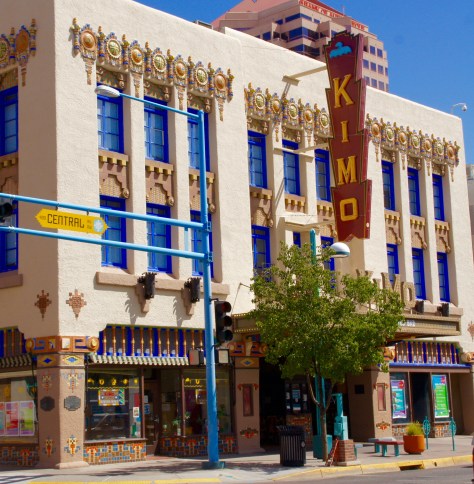
The KiMo Theater opened on what was then Route 66 (now Central Avenue) in Albuquerque in 1927. The big new theater was a source of civic pride and boosters held a contest to name the theater. The governor of Isleta Pueblo, Pablo Abeita, won a prize of $50, a huge sum for the time, for the KiMo name. According to theater history, “it is a combination of two Tiwa words meaning “mountain lion” but liberally interpreted as ‘king of its kind’.”
It certainly is king of its kind, built in the the “pueblo deco” architectural style. If you think the outside is interesting, you should see the decor on the inside. Understated it is not. Here are a few scenes from the interior.
On the U.S side of the Detroit River, statues from the International Underground Railroad Memorial look across the river to freedom in Canada.
I’m working my way through Colson Whitehead‘s best selling book, The Underground Railroad which has received raves from just about every book critic and taken home just about every award including this year’s National Book Award for fiction.
The New York Timesdescribed it as “a hallucinatory novel about the horrors of American slavery and the sinister permutations of racism, an imaginative portrayal of the routes to freedom literally on a railroad.” .…that is underground. Kinda trippy, yet an effective way to portray the issues and the experience.
It’s not hard to find real underground railroad “stations” along various routes that enslaved people traveled on the route north to freedom in the 1800s. This wasn’t some sort of subway system, but rather a dangerous trip much of it on foot, as slave hunters followed in pursuit. The stories of the people—both escaped slaves and those who sought to help them—are often as dramatic as anything an author could invent. The U.S. National Park Service offers a great list of sites across the country.
In Detroit, looking at Canada.
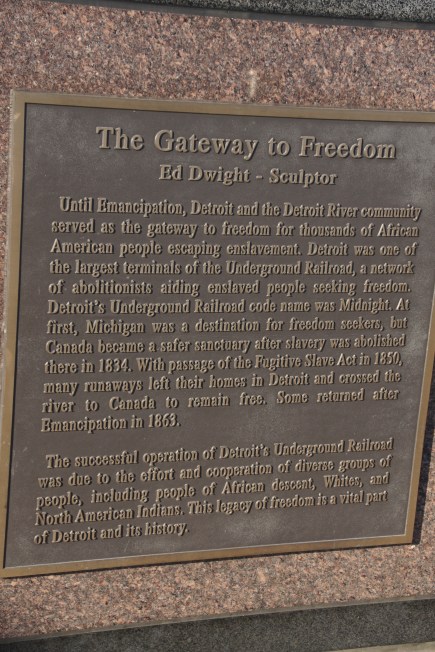
Some of my favorite of such places are in Detroit, mainly because it’s so close to Canada you can practically smell it. (Maybe it’s the Canadian Club distillery I smell over there across the Detroit River in Windsor, Ontario.) How close, yet so far, those escaping people must have felt to their freedom, less than a mile across the river. That’s particularly tangible in Detroit’s Hart Plaza where the International Underground Railroad Memorial overlooks the river. The installation features two groupings, one in Detroit with its counterpart across the river in Windsor, both by sculptor Ed Dwight.
The Detroit component features two gateway pillars that bracket a ten foot by twelve foot sculpture with nine slaves and a railroad “conductor” pointing toward Canada in anticipation of boarding a the boat across the Detroit River to safety. The Windsor installation consists of a twenty-two foot high granite Freedom Tower that also serves as a candle representing the flame of freedom, along with a male slave giving thanks and a female slave holding a baby. A female Canadian underground railroad conductor is welcoming them both to safety.
Several other Detroit destinations offer their own story of abolitionist activity. The First Congregational Church of Detroit offers a “storytelling” re-enactment of the underground railroad passage. On the tour visitors are “shackled” with wrist bands at the entrance of the tour and begin their journey by entering through the “Door of No Return,” on Goree Island in Africa. “As this journey begins,” says their web site, “visitors transform into passengers on the underground railroad and are led to freedom by a conductor. Passengers hide from bounty hunters, cross the Ohio “Deep” river, and take retreat in a safe house in Indiana which is owned by Abolitionist Levi Coffin.” Finally, they move to “Midnight,” the code name for Detroit and take safe haven at the First Congregational Church of Detroit before moving on to Canada.
Detroit’s Second Baptist Church was also a station and received some 5,000 slaves before sending them on to Canada. By giving them food, clothing, and shelter the church was in total defiance of the Fugitive Slave Laws. The church offers tours that describe it’s long service to the community as a underground railroad stop and other activities.
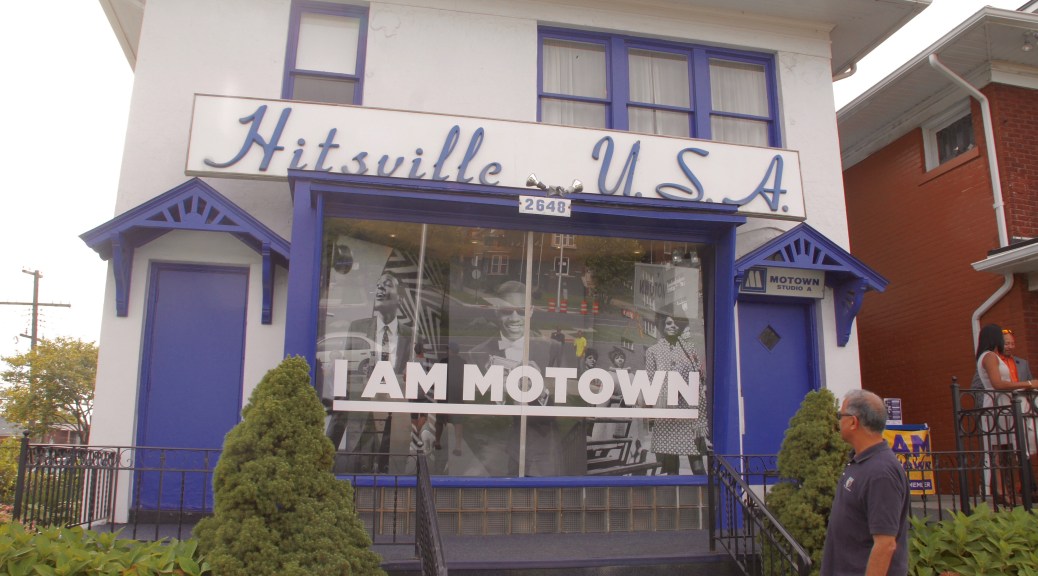
For more on Detroit, see my posts on street art there and on the Motown Museum. And for more reading on the underground railroad, see the list at Longitude Books.
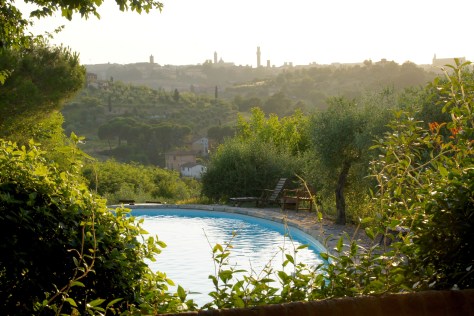
Italian cities are fascinating places to visit but they’re often crowded and hectic. So, I look for places to relax in the Italian countryside. A great example is Frances’ Lodge Relais, a rustic yet elegant old farm, just outside Sienna. Hosts Franca and Franco provide great touring tips, luxurious breakfasts in the garden and, sometimes, a picnic dinner of homemade pasta under the olive trees. Best of all, relaxing “under the Tuscan sun” with wine and a book by their beautiful pool with a view of the Sienna skyline.
This is my entry for this week’s Daily Post Weekly Photo Challenge with the topic of Relax.
The taste of Fargo pop–yes, we call it “pop”– is one of my childhood memories, especially Rock & Rye.
I love Detroit.
If you haven’t been there lately, that may sound pretty crazy. There’s been no shortage of reporting on Detroit’s hard times. But I grew up near “the D” and as a kid, a trip to Detroit meant something special–a Detroit Tigers game or a speedboat race on the Detroit River with my dad, shopping at Hudson’s with my mom, Broadway shows at the Fisher Theater, field trips to the Detroit Institute of Arts, all accompanied by the rhythm of Motown.
A portion of the famous murals by Diego Rivera at the Detroit Institute of Arts.
I live in Minnesota now, but returned to the city last week and once again felt how special it is–its history, it’s people, and a general vibe of grit and coolness found in few other places. Best of all, many of the things from my memory are still there, though sometimes in altered form.
The Tigers have moved to Comerica Park.
Partly because of those qualities, the city is making a huge comeback. I was there for five days and could have stayed longer, partly enjoying the memories, partly seeing what’s vital and new, and feeling nostalgia with a positive spin.
The Detroit riverfront has changed dramatically, with old industrial land converted to parks. Windsor, Canada, is on the opposite shore.
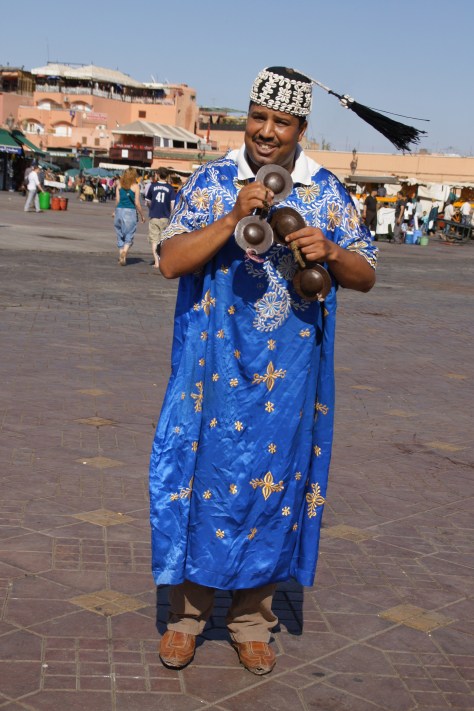
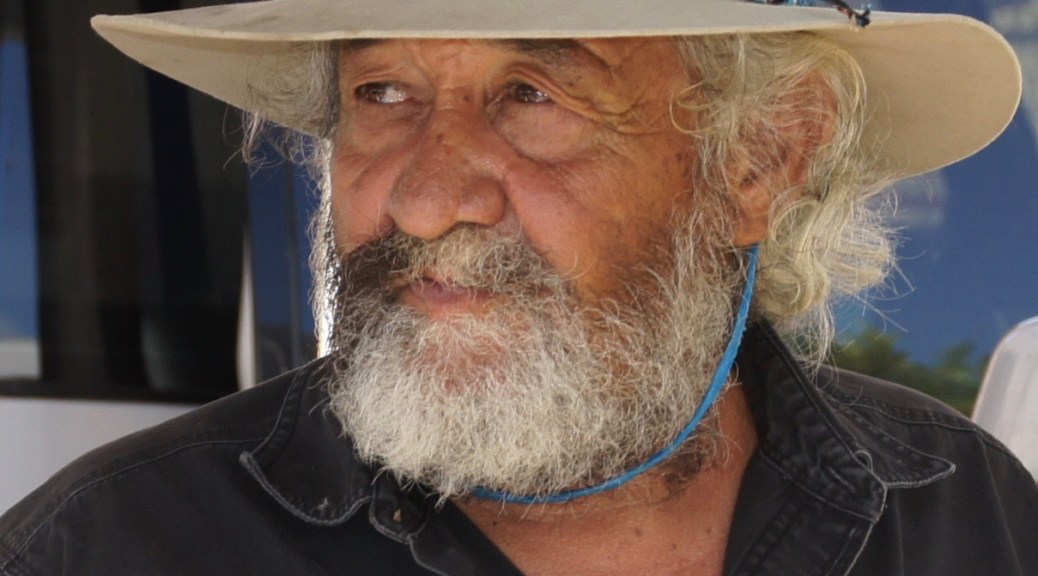
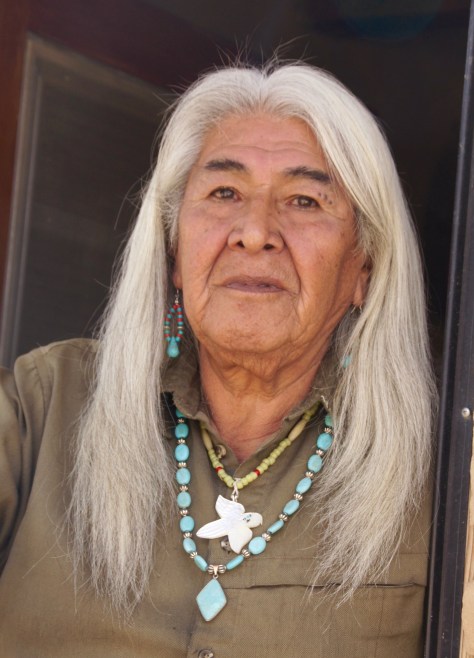
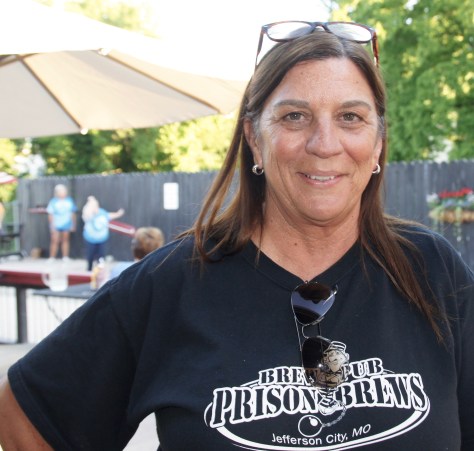
While I’m on the topic of travel photography….Portraits–don’t even get me going on what a challenge I have getting good portraits of people I meet while traveling. Yet, there’s nothing more interesting than faces. Portraits are worth the effort because photography lacks a greater sense of place without them. Sure there are beautiful landscapes, artistic still lifes—food!—and some fun shots of people from a distance but those close-up photos of faces are what really tell a story and give an impression of the folks who inhabit any place—from Minneapolis to Morocco.
A resident of the Acoma Pueblo, “Sky City” in New Mexico. This face tells a thousand Native American stories.The concentration on Chuck Berry’s face shows what a challenge it was for the aging rock n’ roller to play his famous tunes.
I’m kind of chicken. It’s hard to get right up close to people you don’t know, but that’s what it takes for a good portrait. Up close, the subject may become more stiff and self-conscious so sometimes I take the photo from a distance, maybe when they’re not looking, and just crop the heck out of it later. If I’m lucky it won’t be blurry. Ultimately, it just takes a few extra seconds–and a little bravery–to get a better shot.
Not the best portrait, but I want everyone to know I really was this close to Girard Butler.
Also, there’s the etiquette and ethics of portraiture. I’m getting better, but it’s a challenge to ask people that may not speak my language if I can take their picture. Some people just hate to have their picture taken, sometimes for religious reasons. Often, the more exotic looking (or sometimes the more downtrodden looking) the person, the more dramatic the photo. Am I taking advantage of them or invading their privacy? In Morocco, I was told not to pay children for their pictures because it encourages them to forego school for money-making photo opps.
Happy schoolgirls in Guatemala.
This young man was slightly suspicious of the photographer at the Walker Art Center in Minneapolis
I like taking pictures of people through windows or sculptures.
One way I’ve found to get good portraits is to buy something the person is selling or simply put a few coins in a street entertainer’s music case. And, if my potential photo subject is in business, like a bartender or shopkeeper, they’re usually happy to cooperate.
The folks at Lake Drum Brewing in Geneva, New York, were happy to show off their bar and their beer.The owner at Prison Brews in Jefferson City, a delightful brewpub right next door to the infamous Missouri State Penitentiary.I always question how much of a person’s environment to show….
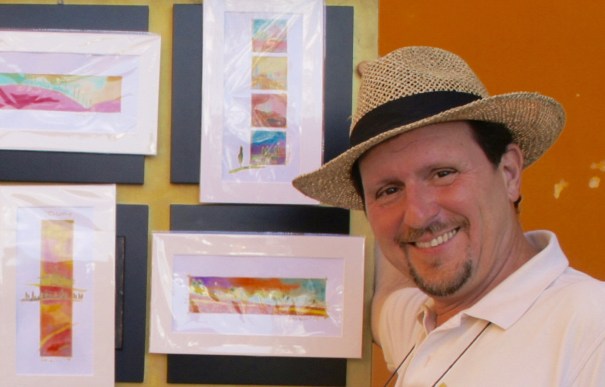
…more or less? as with the case with Giuseppe, an artist from whom I purchased a little Leaning Tower painting in Pisa, Italy.
When all else fails, animals are usually very eager to pose for a portrait, no questions asked.
I’ve been traveling a lot lately and have many stories and pictures to share since I last posted. I’ve had adventures in quite varied places including the backroads of Missouri on the Katy Bike Trail, around central Italy, and a few spots right here in Minneapolis (more on those soon). Every time I return from a trip, I pour over my photos, delete the junk, crop and perfect the good pics and relive my experiences in the process.
I use these photos in my blog and sell them as part of article packages or slide shows, but I take pictures on the fly, more like a tourist than a professional photographer who camps out for several days to get the best light. I’m too small to lug all that equipment–several cameras, lenses and a tripod and more. Plus, I’d rather pay attention to the experience than gadgetry.
That’s why I try to keep a few basic ideas in mind to elevate my photos several notches above “snapshot.” Sherry Ott, a photographer and travel writer who as far as I can tell is completely nomadic, which fascinates me, just posted a great summary of what to keep in mind while taking pictures as a traveler. On her blog, Ottsworld, she says, it’s not about the equipment, its about composition. In fact, many of the travel writers I know take great pictures with their iPhones, though I have to say a good digital SLR makes a difference.
I’m sharing a link from her blog, my fellow travelers, for your own use and inspiration: How to Take Better Vacation Pictures. No matter what your skill level, her tips are a great reminder that it just takes a little extra thought to compose more satisfying photos.
And please share any tips you have with the rest of us by commenting here.
Cartoons and funny articles in a style that is spare and gentle.
James Thurber was one of the most beloved humorists of the last century and his cartoons were regularly featured in The New Yorker for over 30 years. I recently visited his boyhood home in Columbus, Ohio, where the stories about Thurber’s childhood explained a lot about his gentle and quirky humor, particularly the tales about his delightfully cooky mother and his love of dogs.
Thurber’s drawings are spare, simple black lines and experts speculate that it may be due in part to an eye injury he received as a child. If your knowledge of Thurber’s work is limited to “The Secret Life of Walter Mitty” and its recent movie incarnation, I suggest reading The Thurber Carnival, a collection of his short stories and drawings for a better look at the author/illustrator. For example, one of my favorite of Thurber’s canine characters is Muggs, in “The Dog That Bit People.” Muggs, a really crabby Airedale, was one of the family dogs (Thurber owned 53 during his life). Muggs bit everyone except Mrs. Thurber who always defended him. Thurber writes, “Mother used to send a box of candy every Christmas to the people the Airedale bit. The list finally contained forty or more names.” Like most authors’ homes, Thurber’s house offers a view of life in a slower, though with Muggs around, not necessarily a safer era.
James Thurber’s home in Columbus, Ohio.
Apart from the stories and drawings, one of Thurber’s most important legacies is the Thurber Prize for American Humor that is now awarded in his name from the non-profit that runs the house and the many Thurber House programs for writers. Winners have included Jon Stewart, David Sedaris,Calvin Trillin and most recently Minnesotan Julie Schumaker for her hilarious book Dear Committee Members. See my article in the Minnesota Women’s Press on Julie Schumacher.
The warm yeasty smell of Swedish rye bread fills the bakery where Tom Campbell and his crew are baking bread, Swedish Tea Rings and rhubarb pies. Down the street Lou Hanson is throwing clay to make colorful mugs and dishes at the Hantverk Galleri, and kids are playing ball in the town park. An energetic group of volunteers dressed as Pippi Longstocking, bright orange pigtails and all, greets visiting school children learning about the beloved Astrid Lindgren character and Swedish history. Entering Bishop Hill, Ill. seems like driving back to another, more idyllic, time.
“It’s like Brigadoon,” says Deni Menken, one of the Pippis who recently moved to Bishop Hill, “like the village in the musical that appears one day every 100 years.” Yet, charming Bishop Hill, a National Historic Landmark about 150 miles southwest of Chicago, has been solidly here since Swedish settlers founded this utopian community in 1846.
Swedish baked goods are on display in the Bishop Hill Bakery.
A Swedish Promised Land
Those intrepid Swedes, like so many immigrants who settled this country, came for religious freedom. After being jailed for his beliefs, the group’s charismatic leader, Eric Janson, predicted a fiery doom for Sweden and fled to America with 1000 of his followers. After sailing the Atlantic, they made their way west through the Erie Canal, crossed the Great Lakes, and walked the final 150 miles from Chicago.
Eventually, Janson and his followers erected twenty communal buildings, amassed 15,000 acres of farmland, and made Bishop Hill an important industrial and farming center for the entire area. Founded on the principles of shared property, hard work, and simple living, the colony thrived and traded heavily with the surrounding communities. Despite Janson’s murder in 1850, they prospered until the Civil War drained away both men and commerce. The community was eventually dissolved, the land divided among its inhabitants and, like Brigadoon, Bishop Hill essentially went to sleep for a hundred years. Its buildings and population gradually declined until the 1960’s when, with help from the State of Illinois, the Swedish royal family and many others, preservationists formed the Bishop Hill Heritage Association to restore and preserve the colony.
Town Tour
Swedish simplicity in architecture–Bishop Hill.
Bishop Hill architecture is a study in Scandinavian simplicity—solid and serious like its builders—and a refreshing change from the elaborate Victorian construction so prominent in communities of the era. Start your tour with the Steeple Building which houses the Bishop Hill Heritage museum featuring exhibits, archives, furniture and tools from the colony. Visit the Colony Church, the village’s first building, lovingly restored with its original walnut pews and a divider down the middle to separate the sexes.
Stop for treats at the Colony Store, a general store in operation since the colony’s inception, and at Annie’s Primitives which offers a bit of heaven for lovers of primitive antiques and folk art. For an amazing trove of folk art, don’t miss the Bishop Hill Museum, home to the world’s largest collection of paintings by the famed folk artist Olaf Krans that document life in the colony as he saw it growing up there. Even if you’re only a bit Swedish, stop by the VASA National Archives Museum for immigration and genealogy research to discover your own heritage.
Let Your Swede Flag Fly
An elaborate needlework project.
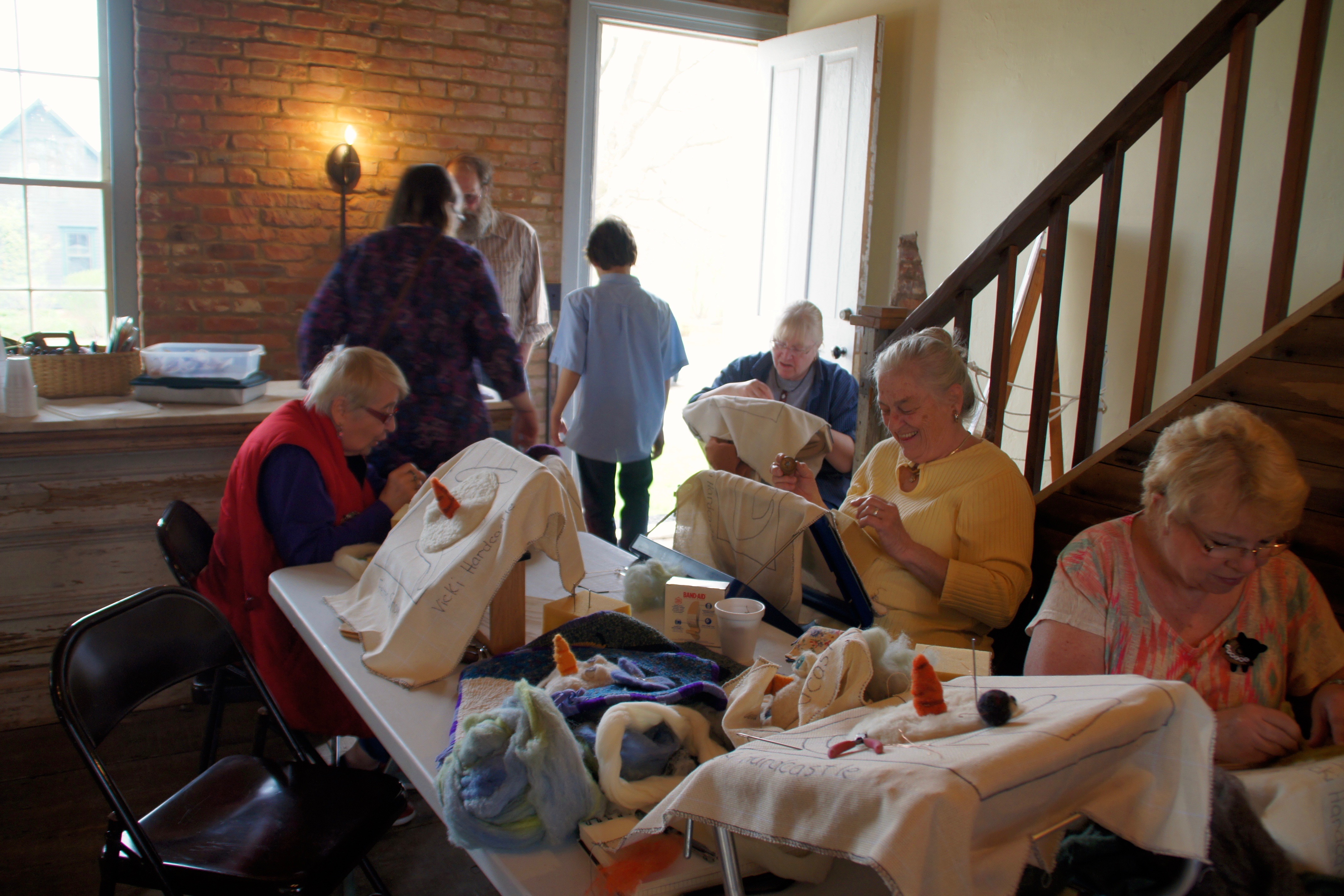
Women of the Bishop Hill area gather for a rug-hooking workshop and plenty of camaraderie.
Whether or not you’re Swedish, Bishop Hill’s appeal lies not as much with the historic buildings as with the people who live there today. Unlike most historic villages where the “residents” are employees who dress in period costume and leave town at day’s end, Bishop Hill folk really live here and many are descendants of the original colonists. They stroll to the geranium-filled post office to collect their mail, work in the shops and on local farms, and gather for rug-hooking workshops. They enthusiastically volunteer for the many projects that keep Bishop Hill’s buildings maintained, its history vital and alive and that foster their own sense of community. For visitors, that translates to a surprisingly light-hearted “valkommen” given the stern faces of their relatives in the museum photos.
They’re an artsy bunch, too, who turn out an amazing array of art, handcrafts, music and musical instruments. Be sure to stop in at Prairie Arts Center where weavers, potters and broom makers demonstrate their crafts.
Bishop Hill especially comes alive from the early spring Valborg Bonfire to “burn away the old and welcome the new” to the sparkling Lucia Nights at Christmas. In between, the colony hosts antiques and quilt shows, a dulcimer and roots music fest, and Agriculture Days in September.
Getting There
Bishop Hill is about 400 miles from the Twin Cities via I-35 and I-80, about an hour southeast of the Quad Cities, and makes a great stop on your way to Chicago.
Checking In
Bishop Hill offers two lodging options. The Gallery Inn is in the old Colony Administration Building overlooking the park.
109 W. Main Street (309) 926-3080 http://www.bishiophillgalleryinn.com
The Twinflower Inn, is the Colony Hospital.
110 Olsen St., 309-696-0833 http://www.twinflowerinn.com
Nearby Kewanee also offers a range of modern motels; or, a little further away, book a room and a gourmet meal at the fantastic Chestnut Street Inn, 301 East Chestnut Street, Sheffield, 800-537-1304, http://www.chestnut-inn.com
Dining Out
Hours vary at Bishop Hill restaurants, but the food is delicious and homemade, no lutefisk
Read up on utopian communities in the U.S. with books such as Chris Jennings’s “Paradise Now.”
in sight.
The Bishop Hill Bakery & Eatery is open Wednesday through Sunday with a full array of baked goods and treats, soups, sandwiches and daily specials.
The Filling Station Restaurant serves breakfast Saturdays & Sundays, including their special Swedish Pancakes with lingonberries, lunch daily and dinner only on Friday nights with a different special each week.
P.L. Johnson’s Dining Room serves lunch every day and dinner on Saturdays from May to August.
Join Off the Beaten Path in welcoming Terri Peterson Smith, author of Off the Beaten Page: The Best Trips for Lit Lovers, Book Clubs, and Girls on Getaways. Smith will take us on a tour of America’s most fascinating literary destinations and will provide inspiration and suggestions to plan your own literary getaway.
Travel to the places you read about. Read about the places you travel.


















 Off The Beaten Page Travel