Category Archives: United States

Half Moon Bay, The Ganges and Reading in Minnesota

Hi fellow readers and travelers:

I’ve done a lot of traveling this summer, but I’ve been on a bit of a blogging hiatus, so I have plenty stored up to tell you about.

The winner of the 2014 pumpkin weigh off in Half Moon Bay, California. Photo courtesy of Miramar events.

I’ll start by sharing my new article on the USA Today travel web site. It’s about the pulchritudinous pumpkins of Half Moon Bay, California, and all the food-related activities there are to do there even after all the orange orbs have been made into pie.

Ann Bancroft (right) and Liv Arneson are know for their adventure in cold climates, but on their next trip, they navigate the Ganges.
Ann Bancroft (right) and Liv Arnesen are know for their adventure in cold climates, but on their next trip, they navigate the Ganges.

Speaking of travel, I also had a great time interviewing Ann Bancroft, the famous polar explorer, for the Minnesota Women’s Press. She’s off on a new adventure in October, this time to India where she and Liv Arnesen and their team will navigate the length of the Ganges River. This hot, dirty, overpopulated trip seems an unlikely choice for someone who is used to the isolation and the pure, crisp air of the frozen poles. Yet, the more we discussed the perils of such a trip, the more her eyes lit up with anticipation of the challenge. The trip is part of a series she plans to undertake that will bring attention to the crisis of fresh water around the world. Find out more about the expedition at yourexpedition.com

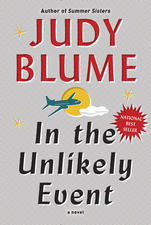
Last week was a big one for literary events here in Minneapolis. I attended Pen Pals, an author series presented by the Friends of the cover225x225Hennepin County Library, in which famed librarian Nancy Pearl interviewed Judy Blume about her new novel, In the Unlikely Event. Blume is chiefly known for her middle grade girls’ novels such as Are You There God? It’s Me, Margaret. The new book for adults is fiction based on the true story of the series of three commercial plane crashes that occurred in her home town in 1952. I haven’t read the book yet, but it sounds like it could put me off air travel for a while.
Finally, Faith Sullivan launched her new book, Goodnight Mr. Wodehouse at the Loft Literary Center in Minneapolis. I aspire to be like Faith, not just for her literary expertise, but for her vivacious goodnight-dpipersonality, humor and grace. She alternated reading from her book with short pieces of music from the time played by her friend Michael Anthony.

Set in Minnesota around the turn of the last century, the book is the story of a woman who has more than her share of tragedy in life, but keeps on going, buoyed by the diversion and humor of British author P.G. Wodehouse. Readers will love her comments about the joys and life-saving aspects of reading:

“Life could toss your sanity about like a glass ball; books were a cushion. How on earth did nonreaders cope when they had nowhere to turn? How lonely such a nonreading world must be.”

And, on retiring from teaching, the heroine hopes she “left her charges with a love of reading, one of the few things they could count on in life. The years could rob them of friends and farms, of youth and health, but books would endure. She eased deeper into the chair and turned the page.”

When I’m done reading Faith Sullivan’s book, I’m stocking up on a few volumes by P.G. Wodehouse.

Visiting the Mankato Minnesota Houses Where Betsy and Tacy Lived

Fiction Meets Reality in Maude Hart Lovelace’s “Deep Valley”

Betsy's House, the real-life home of Maud Hart Lovelace in Mankato, Minnesota
Betsy’s House, the real-life home of Maud Hart Lovelace in Mankato, Minnesota

It’s hard to believe that a series of novels can still be popular with a heroine who neither Tweets nor Snapchats, a girl who lacks magical powers, a vampire boyfriend, or a fabulous assortment of weaponry. Yet, the beloved Betsy-Tacy series by Mankato, Minnesota, author Maud Hart Lovelace have been in continuous publication since the 1940s and inspire an almost fanatical devotion, even among readers who are used to consuming racier fare such as “Gossip Girl” or “The Vampire Diaries.”

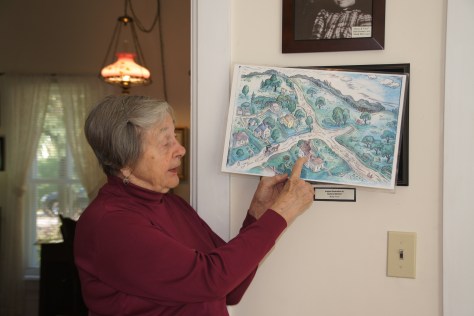
Docent Kathryn Hansen shows a Lois Lenski illustration of the Betsy-Tacy books and compares it to the neighborhood today.

If you need proof, you need only show up in Mankato on a Friday or Saturday afternoon in summer. You’ll find Betsy-Tacy fans who’ve come from around the world to visit the trim little Victorian houses on Center Street, “Betsy’s House” and “Tacy’s House,” where Hart Lovelace and her real best friend, Frances Kenney, grew up right across the street from each other. Little girls and their grandmothers, mother and daughters, and adult “gals on getaways” line up for a tour of the real-life houses that are the setting of the beloved book series. The houses have been lovingly restored and designated as national literary landmarks.

A Calming Oasis
A step into Betsy-Tacy world is a step back into a slower, more peaceful era.The first of the series’ 10 books, Betsy-Tacy, begins in 1897, when Betsy is about to turn five, and the series continues through Betsy’s Wedding during World War I, all based on Hart Lovelace’s own girlhood.  The lack of technology, fighting and fast-paced action may be the secret for the books’ enduring appeal. Linda Lee, an adult Betsy-Tacy fan visiting from Claremont, California, says of the books, “I re-read them even now. They’re about family, friendship and fun in doing simple things.  Reading them brings a sense of calm to my frenzied life.”

The houses are open on weekends year-round but Betsy-Tacy fans DVHborder2015_0show up en masse each June for the Deep Valley Homecoming—this year from June 26-30— like a children’s book Coachella. (Deep Valley is the name Hart Lovelace gave her hometown in the books.) Activities include Betsy & Tacy home and neighborhood tours, narrated horse-drawn trolley rides, a Victorian Tea, Deep Valley Book Festival*, fashion show, living history actors, speakers and re-enactments, a vintage car show and more.

The old fashioned kitchen at Betsy's house offers a view of life in the early 1900s.
The old fashioned kitchen at Betsy’s house offers a view of life in the early 1900s, straight from the Betsy-Tacy books.

Inspiration for Modern Girls
Enthusiastic docents regularly lead tours of the houses and point out how the homes and the neighborhood compare to the books’ illustrations by Lois Lenski. From the old-fashioned kitchen, to the lace curtains and fine china, to the books and Maude Hart Lovelace memorabilia, tours furnish a cultural snapshot of the era, a chance to experience what it was like to live in a Midwestern town when the first automobile arrived and homes got their first telephones.

But beyond a nostalgic connection to a fictional world or a look at old houses with creaky floors and Victorian furniture, a visit to the Betsy-Tacy houses offers a look at the lives and friendships children, the aspirations of women at the turn of the last century, and celebrates girls who are, while old-fashioned, strikingly independent and adventurous.

While old telephones may be the highest tech you’ll experience on the tour, Betsy and Tacy aren’t totally off the grid. You’ll find constant discussion about them on Twitter and Pinterest.

*I’ll be at the Deep Valley Book Festival this year, signing copies of Off The Beaten Page: The Best Trips for Lit Lovers, Book Clubs and Girls on Getaways.

If you go:
Mankato is about an hour and a half south of the Twin Cities via I-169. The houses are open this summer on Friday and Saturday from 1:00 p.m. to 4:00 p.m. Admission is $5 for adults, $2 for children (under 5 free).

Download the Discover Deep Valley brochure for a walking tour of the area.

We picked up bagels at Tandem Bagels, 200 E Walnut St., for a picnic in Lincoln Park, which figures in the books and is set amidst a gorgeous grouping of Victorian homes.

Bainbridge Island, The Island That Inspired Snow Falling on Cedars

From Seattle’s busy waterfront along Alaskan Way, it’s only a forty-minute ferry ride across Puget Sound to Bainbridge Island but it’s a voyage to another world and a slower time.

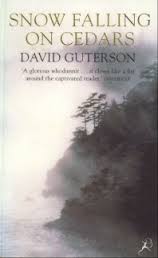
The island was the inspiration for David Guterson’s bestseller, Snow UnknownFalling on Cedars, called San Piedro Island in the book. Guterson makes his home on the island and used to teach school here. We hop off the boat in Winslow, a cozy seaside town located on Eagle Harbor. It’s a great place to explore on foot. For those who want to go further afield, bikes are available to rent between June 1st and the end of September right by the ferry terminal at Bike Barn rentals.

Winslow began as a timber and shipbuilding center and was, for a time, larger than Seattle. Today it’s a bedroom community for Seattle and the picturesque harbor, the trees, the greenery, and the misty hills give it just the right rich ambiance for romance and drama, like that in Snow Falling on Cedars, but it certainly isn’t “downtrodden and mildewed,” like Amity Harbor in in the book.

Eagle Harbor, Bainbridge Island, Washington

We wandered the charming shops on Winslow Way including Eagle Harbor Book Co. (where they’re happy to tell you about local authors), The Traveler and Bainbridge Arts and Crafts.  We ate a tasty lunch at Cafe Nola.

Yet, fans of Snow Falling on Cedars or anyone who wants to understand the history of the island will find the most satisfaction in exploring the island’s history so head to The Bainbridge Island Historical Museum.  Housed in a red 1908 schoolhouse, the museum tells the story of the island’s history, particularly the Japanese internment as it really played out on the island, the true story at the heart of Guterson’s book. BI-MUSEUM-Tjossem-1024x685After the bombing of Pearl Harbor, Japanese Americans became the focus of suspicion, even though many were second-generation citizens. They were rounded up and sent into exile in military-style camps such as Heart Mountain  in Wyoming and Manzanar  in California.

It’s a half-hour bike ride or a ten-minute cab ride to the Bainbridge Island Japanese American Exclusion Memorial, around the bay from the ferry landing. This is the site from which Japanese Americans were removed from their homes and sent to Seattle and then to internment camps on March 30, 1942.

For more on Seattle, see my previous post, All Is Not Grey in Seattle.

Read more: Seattle and Bainbridge Island are featured destinations in Off The Beaten Page: The Best Trips for Lit Lovers, Book Clubs,and Girls on Getaways.

And, In Defense of Our Neighbors: The Walt and Milly Woodward Story, about how the publishers of Bainbridge Island’s community newspaper fought the internment of their Japanese neighbors.

Explore Jack London State Park With My New Article

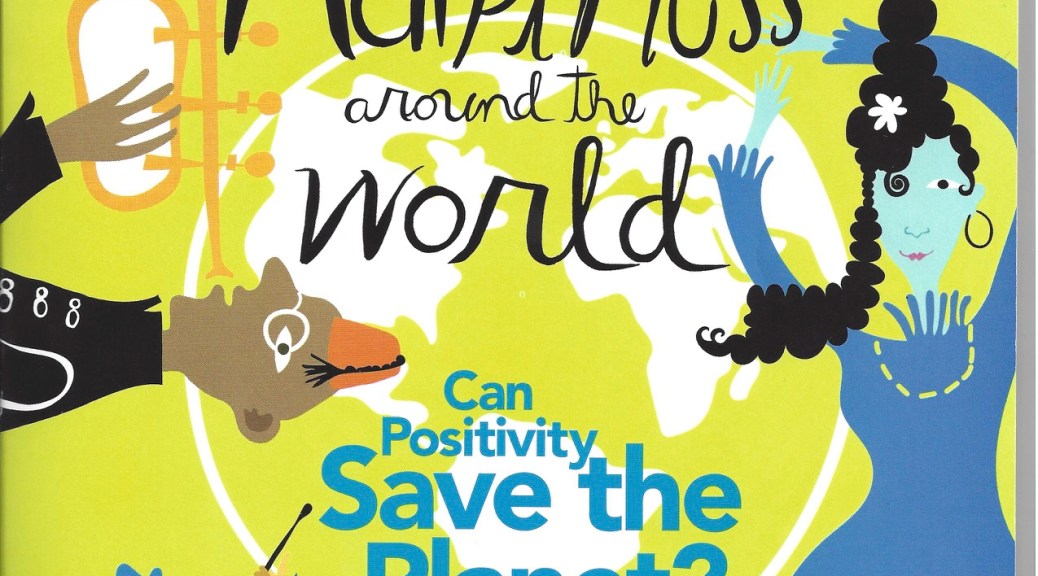
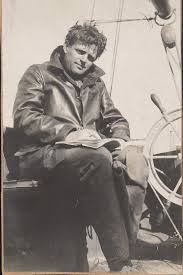
images-3I have a new article, The Wild Still Calls,  in this month’s issue of a fun magazine, “Live Happy.”   It’s about Jack London State Park and how the volunteers there are keeping the park and the memory of author Jack London alive.

London, author of The Call of the Wild, White Fang and many other adventure stories, was the most famous author of his time.  Most people don’t know he was also a world traveler, sustainable farmer and oyster pirate. His own life was as adventurous as his stories.

#boycottindiana What’s the individual traveler’s responsibility?

images-2What a week for the Hoosiers! Thanks to Indiana’s Religious Freedom Restoration Act, which appears designed to allow businesses to refuse service to LGBT people, and the verbal bumbling of Governor Mike Pence, Indiana hasn’t had this much attention since Bobby Knight’s chair-throwing days at Indiana University. In fact, the issue prompted David Letterman to say he’d prefer to have Bobby Knight as Indiana governor. Unknown-3

I’ve watched with amusement as the right wingers in the Indiana state legislature and other areas of Hoosier life have back-pedaled and beeped like as garbage truck backing up, “Who us? No way do we mean to discriminate against the LGBT community. No, no, you misunderstand.”

Tell me what you think

And, in what is surely an April Fool’s joke, the Arkansas legislature has shown spectacular inability to learn from the mistakes of others by  passing a similar bill, despite the dustup in Indiana. Also amusing: cities and states are capitalizing on Indiana’s infamy, encouraging Indiana businesses to set up shop in their jurisdictions where they’re business- and gay-friendly. Similarly, many government entities have declared Indiana off limits for employee travel. Businesses and sports organizations are making it known that such attitudes are bad for business, business being a huge priority in Indiana— maybe even trumping “Christian” family values.

It’s funny to watch Indiana bureaucrats bumbling, but discrimination isn’t funny. For me it brings up a serious question: I’m planning to go to Indiana in a few weeks to visit friends. Should I go? Surely an individual should take a stand and be as moral as say, Emily’s List or the state of Virginia, or the mayor of Palm Beach and just say “no.” It makes me wonder what is the responsibility of individuals to protest discriminatory policies and “vote with their feet” by not going. I see I’m not the only one with this question as #banindiana and #boycottindiana are trending on Twitter.

I used to live in Indianapolis, a LONG time ago, so I know that everyone in Indiana isn’t a bigot. I have no doubt that the state will rectify its RFRA mistake by the time I get there, though Mike Pence can kiss any thought about a presidential run goodbye. Good. And the Indianapolis Convention and Visitors Bureau folks are working overtime to recover from this PR fiasco. Their web site is covered with rainbows, “All Are Welcome in Indy” banners, and they’re rolling out the rainbow carpet with a guide to LGBT Indy. Still, I’m curious what you think is the individual traveler’s obligation to stand up for what’s right? Tell me what you think.

All is Not Grey in Seattle: Best Books Set in Seattle by Local Writers

SONY DSC
Seattle isn’t always grey. When the clouds thin you just can’t beat the city’s combination of ocean and mountains.

Seattle is famous for its grey skies and currently, for another Unknown-4
grey, Fifty Shades of Grey, that is. Crowds of Shades fans are driving by the Escala condominiums in Seattle, the home of the fictional Christian Grey, among other sites in the books and movie. And, tour operators now offer travel packages that incorporate  Fifty Shades sites, hopefully with a little more romance and a little less S and M.

One writer called the trilogy “Fifty Shades of Bad Writing,” but darn, I wish I wrote those books; that woman has struck it rich.  The movie has received equally stinky reviews, but it will probably do well financially, too.

A little mommy porn can be fun if you’re into, um, pain and bondage, but I’m here to tell you that whether it’s weather or reading, Seattle isn’t just about Grey. If you’re looking for books with a little more literary merit to inform and inspire a trip to the Emerald City, the folks at one of my favorite bookstores, Elliott Bay Books in Seattle have a reading list for you. Here’s a list they sent with some great and pretty recent fiction and nonfiction books set in Seattle, by local authors.

A Sudden Light by Garth Stein (fiction). He also wrote the Art of Racing Unknown-1in the Rain

Where’d You Go, Bernadette by Maria Semple (fiction)

The Lone Ranger & Tonto Fistfight in Heaven by Sherman Alexie (fiction) See my other post about Sherman Alexie and banned books.

Blueprints of the Afterlife by Ryan Boudinot (fiction)

Love, Water, Memory by Jennie Shortridge (fiction)

Ceremony for the Choking Ghost by Karen Finneyfrock (poetry)

The Good Rain by Timothy Egan (nonfiction)Unknown-5

Nisei Daughter by Monica Sone (nonfiction)

Pacific Northwest: Land of Light and Water by Art Wolfe (nonfiction – pictorial)

Mary Randlett Portraits by Frances McCue and Mary Randlett (nonfiction – pictorial)

Stay tuned for an upcoming post on Bainbridge Island.

Wonder Woman in Her Many Forms

 Wonder Woman Katy a super-size painting by artist Barbara Porwit on display at the University of Minnesota's Nash Gallery, part of the  WonderWomen exhibit. (photo by Doug Webb connectartists.com)
Wonder Woman Katy a super-size painting by artist Barbara Porwit on display at the University of Minnesota’s Nash Gallery, part of the “WonderWomen” exhibit. (photo by Doug Webb connectartists.com)

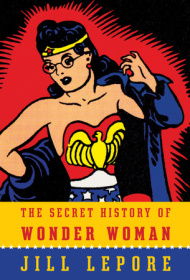
I love it when events and my reading coincide. WonderWomen, an art exhibit at the University of Minnesota’s Nash Gallery  in Minneapolis runs from now until February 14. Though they didn’t plan it that way, the exhibit came on the heels of the release of Harvard historian Jill Lapore’s new book, The Secret History of Wonder Woman, which details the weird life of William Moulton Marston, Wonder Woman’s creator and also the inventor of the lie detector test.

Wonder Woman—part superhero, part kinky-booted pinup girl—9780385354042flew into American culture in 1941 and has been part of our pop culture ever since. Along with the biography of Wonder Woman and her creator, Lepore’s book is analysis of women’s history and feminism. The WonderWomen exhibit examines that topic from the pop-art perspective. It features works by women artists inspired or influenced by comics, animation or popular culture, and related screenings of work by women filmmakers presented by the Film Society of Minneapolis St. Paul. Read my article about the show in the Minnesota Women’s Press.

One of my favorite works in the show, “Wonder Woman Katy” dominates the room at the Nash Gallery. She wears a red cape and she’s seven feet tall. Don’t mess with her. That’s the image Minneapolis artist Barbara Porwit wants to convey in her Breast Cancer Superhero Portrait Project,  a series of larger-than-life paintings of real women battling the disease, of which “Wonder Woman Katy” is a part. Porwit’s works celebrate the heroic nature of women affected by breast cancer

Frenchy Lunning, a professor of liberal arts at Minneapolis College of Art and Design and an internationally known expert in manga, anime (Japanese comics and animation) and popular culture, is co-curator of the exhibit. She says, ”The takeaway for viewers is to become aware of the magnitude of feminine culture and how feminist art, with all of its potentially subversively qualities, is entering mainstream culture.”

Even if you can’t make it to the WonderWomen exhibit, you’ll want
to read The Secret History of Wonder Woman.    A New York Times review of the book called Wonder Woman’s creator “….a huckster, a polyamorist (one and sometimes two other women lived with him and his wife), a serial liar and a bondage super-enthusiast. As Wonder Woman would say, “Suffering Sappho!” How can we resist?

Graffiti at 5 Pointz New York City

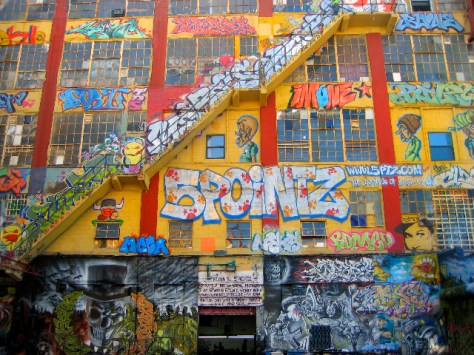
The ultimate in self-expression: Graffiti in the Five Points section of New York City.
Vandalism or self expression? Graffiti in Queens, NYC

This week’s photo challenge is express yourself.  While some call it vandalism, there’s no more in-your-face, larger than life form of self-expression than graffiti.  For the past 20 years, the mecca of that gritty urban art form has been 5 Pointz, a dilapidated  factory complex in Queens, New York City.

Founded as the Phun Phactory in 1993, it was designed as a place for street artists to legally practice their craft. Here, aerosol-can Picassos made the derelict buildings beautiful and gained worldwide fame.

Sadly, the buildings were recently demolished to make way for yet more shiny high-rise apartment buildings.

New: From the Ashes of the World Trade Center


The new One World Trade Center rises over lower Manhattan.
The new One World Trade Center rises over lower Manhattan. The final component of the skyscraper, its glowing spire, made the building’s height 1,776 feet, tallest in the Western Hemisphere.

Who doesn’t feel like they know just about everything there is to know about 9/11? We’ve seen the video tapes of planes crashing into the World Trade Center on September, 2001 countless times and viewed special reports and documentaries without end. Yet, when I stepped into the new National September 11 Memorial Museum I found that there actually was more to learn, but more importantly, to remember.

Located underground in the heart of the World Trade Center site, the museum tells the story of what happened on 9/11, including the events at the World Trade Center, the Pentagon and the story of Flight 93 that crashed in Pennsylvania. The exhibition explores the background leading up to the events and examines their aftermath and continuing implications.

In Foundation Hall,  the "Last Column," stands 36-feet high and is covered with mementos, memorial inscriptions, and missing posters placed there by ironworkers, rescue workers and others.
In Foundation Hall, the “Last Column,” stands 36-feet high and is covered with mementos, memorial inscriptions, and missing posters placed there by ironworkers, rescue workers and others.

Even though we’ve seen them so many times, when those video clips and films of what led up to the attack played in the museum the people watching them with me all had the same reaction: “Oh my God.” There are video taped stories from people who were there, displays of artifacts ranging from fire trucks and twisted metal beams to personal objects of people working in the towers that day (really personal things like shoes and purses), papers that rained down, and a portion of one of the stairways from which survivors escaped the building.

The National 9/11 Museum at ground zero in New York City is underground with entry adjacent to a portion of staircase from one of the World Trade Center towers.

As one would expect in such an emotionally and politically charged situation, many parts of the museum have been controversial. Some people object to the the way one exhibit connects Islam and terrorism and the simple fact of tourists gawking at what is essentially hallowed ground offends some of the families. Nonetheless, I felt like the curators struck the right balance.

Many survivors of the attack on the World Trade Center and their families are very involved with the museum and give tours and talks at the complex. I felt lucky to be there for a presentation by an NYPD officer who was on site that day and a young woman whose father died trying to get people out of one of the towers. Their stories made it all very personal. Not a dry eye in the house.

I left the museum to stroll around the 9/11 Memorial outside with its two square waterfalls surrounded by the names of those lost in the attacks. The newly opened One World Trade Center–the tallest skyscraper in the Western Hemisphere and the fourth tallest building in the world–towers, symbolically, over it all.  I’m sappy enough to feel proud of the way the city and the country has moved on, but still remembers.

If you go: Admission, $24 for adults. Go to 911memorial.org to reserve tickets, download the free 9/11 app to enhance your tour and for directions. images-1

Unknown-4


Read up: As usual, I recommend a bit of reading before you go which adds immensely to enhance your experience. And, as usual, I recommend fiction books for their ability to layer events and emotions to create a story that is almost more real than non-fiction. Extremely Loud and Incredibly Close– Jonathan Safran Foer, Falling Man, Don DeLillo. For nonfiction, check out an anthology of New Yorker articles,  After 9/11– edited by David Remnick.

https://dailypost.wordpress.com/dp_photo_challenge/new/

A Riverfront Tour in Minneapolis: Where History Flows With the Mississippi

PicMonkey CollageSince the beginning, Minnesota’s lakes and rivers have been the engine of the region’s development and the focus of recreation, not to mention the source of a whole lot of  fish. The Twin Cities, for example, have their roots on the Mississippi River, which has transported timber and grain from the Midwest to markets in the east and powered the four mills of the Pillsbury family, among others, since the early 1800s. That made the riverfront in Minneapolis primarily an industrial area. Interesting, but not particularly scenic.

SONY DSCAll of that is changing as the city rediscovers and redevelops its waterfront. The mills and warehouses have been converted to trendy apartments and condominiums now and that section of the riverfront is part of an expanding Mill Ruins Park. It’s the sight of the Mill City Farmers Market in summer, where you can eat and buy great organic produce under the watchful gaze of some of the world’s great playwrights who look down from the Guthrie Theater next door.

Though the new version of the riverfront is more vibrant, it’s the 18777967 unusual history here that makes it so intriguing. You can revisit the city’s early days in several ways. First, pick up a copy of Mary Relindes Ellis’s novel Bohemian Flats, which is named after the area slightly downriver from the mills which was home to the city’s poorest immigrants, mainly from Germany and eastern Europe (or Bohemia) who are the subject of the story. Set after World War I, the book traces the progress of a German immigrant family who settled in the ramshackle village that grew up along a low point along the river, many of whom worked in the flour mills.

Next, start a riverfront tour at the Mill City Museum, which offers an in-depth look at the flour industry and the early days of Minneapolis. It’s built into the ruins of what was once the world’s largest flour mill. Wander the across the Stone Arch bridge for a terrific view of the river and St. Anthony Falls, which powered the mills and check out the paths and ruins along the water. Grab some grub at the Farmer’s Market and watch the river roll by as you eat.

Book lovers will want to wander down Washington Avenue to explore the Minnesota Center for Book Arts at Open Book. You can view the artistic assembly of the pages, covers, and spines, then peruse the shop at MCBA, which is a reader’s delight of books, gifts, handmade paper, and journals.

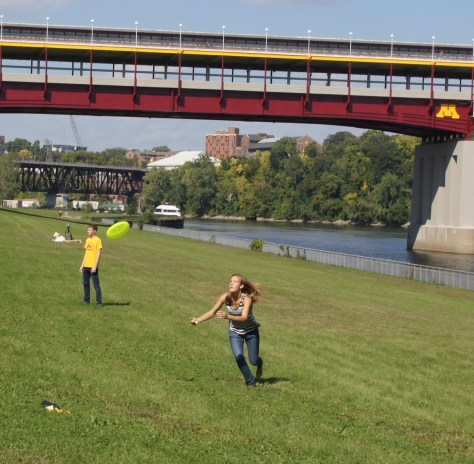
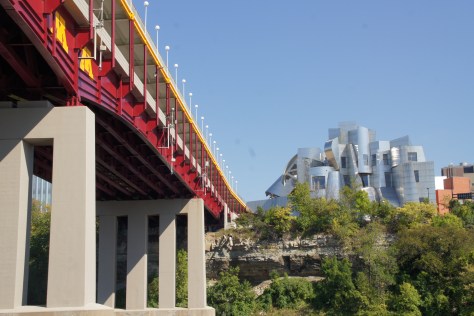
Rent one of the green bikes from one of the Nice Ride Minnesota stations near the museum and head downriver for a scenic tour. Make a stop at Izzy’s gourmet ice cream to fuel your trip. You’ll arrive at Bohemian Flats, which is no longer a wild collection of shacks, but rather a lovely park inhabited mainly by University of Minnesota students throwing frisbees. It’s a great pastoral place to enjoy the view of the river, the university campus and, in particular, the futuristic Frank Gehry-designed Weisman Art Museum. It makes quite a contrast to the image of the old Bohemian Flats on the cover of Ellis’s novel.

Bohemian Flats in Minneapolis is now a pastoral play area across from the University of Minnesota.
The view from Bohemian Flats is quite a contrast to the site's 19th Century origins with the futuristic Weisman Art Museum, designed by Frank Gehry, atop the river bluff.
The view from Bohemian Flats is quite a contrast to the site’s 19th Century origins with the futuristic Weisman Art Museum, designed by Frank Gehry, atop the river bluff.