Sometimes you need to set your own boundaries, know your limitations. That’s especially the case with chilis.
They may merely add flavor to cooking or set your mouth ablaze in a manner that will send you running for the icewater (and have other repercussions, too, if you know what I mean.)
I was in New Mexico a couple of weeks ago where chilis–red and green–are in just about everything you eat. Fall is the height of chili season there and you’ll find them piled in farmers’ markets and smell them roasting, “New Mexico aromatherapy,” at the market or on the roadside. You’ll find them in restaurants any time of year. When ordering, your server may ask, “Red or green?” By that she means the color of chilis you want. If the answer in both, it’s common to say “Christmas.”
Some chilis hot, some not. In some cases it’s like playing roulette–one in ten is hot, you just don’t know until you eat it. Either way, they’re beautiful to look at.
I’ve done a lot of traveling this summer, but I’ve been on a bit of a blogging hiatus, so I have plenty stored up to tell you about.
The winner of the 2014 pumpkin weigh off in Half Moon Bay, California. Photo courtesy of Miramar events.
I’ll start by sharing my new article on the USA Today travel web site. It’s about the pulchritudinous pumpkins of Half Moon Bay, California, and all the food-related activities there are to do there even after all the orange orbs have been made into pie.
Ann Bancroft (right) and Liv Arnesen are know for their adventure in cold climates, but on their next trip, they navigate the Ganges.
Speaking of travel, I also had a great time interviewing Ann Bancroft, the famous polar explorer, for the Minnesota Women’s Press. She’s off on a new adventure in October, this time to India where she and Liv Arnesen and their team will navigate the length of the Ganges River. This hot, dirty, overpopulated trip seems an unlikely choice for someone who is used to the isolation and the pure, crisp air of the frozen poles. Yet, the more we discussed the perils of such a trip, the more her eyes lit up with anticipation of the challenge. The trip is part of a series she plans to undertake that will bring attention to the crisis of fresh water around the world. Find out more about the expedition at yourexpedition.com
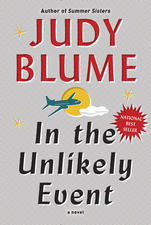
Last week was a big one for literary events here in Minneapolis. I attended Pen Pals, an author series presented by the Friends of the Hennepin County Library, in which famed librarian Nancy Pearl interviewed Judy Blume about her new novel, In the Unlikely Event. Blume is chiefly known for her middle grade girls’ novels such as Are You There God? It’s Me, Margaret. The new book for adults is fiction based on the true story of the series of three commercial plane crashes that occurred in her home town in 1952. I haven’t read the book yet, but it sounds like it could put me off air travel for a while.
Finally, Faith Sullivan launched her new book, Goodnight Mr. Wodehouse at the Loft Literary Center in Minneapolis. I aspire to be like Faith, not just for her literary expertise, but for her vivacious personality, humor and grace. She alternated reading from her book with short pieces of music from the time played by her friend Michael Anthony.
Set in Minnesota around the turn of the last century, the book is the story of a woman who has more than her share of tragedy in life, but keeps on going, buoyed by the diversion and humor of British author P.G. Wodehouse. Readers will love her comments about the joys and life-saving aspects of reading:
“Life could toss your sanity about like a glass ball; books were a cushion. How on earth did nonreaders cope when they had nowhere to turn? How lonely such a nonreading world must be.”
And, on retiring from teaching, the heroine hopes she “left her charges with a love of reading, one of the few things they could count on in life. The years could rob them of friends and farms, of youth and health, but books would endure. She eased deeper into the chair and turned the page.”
When I’m done reading Faith Sullivan’s book, I’m stocking up on a few volumes by P.G. Wodehouse.
One of the best things about blogging is interaction with readers who share their stories, comments and their own travel experiences with me. Of course, I especially love hearing stories of their literature-inspired travel. Sometimes authors send books they’ve written that fit into that category for a review or a mention.
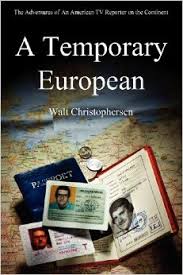
I recently received a couple of volumes from a former TV journalist and travel writer, Walt Christophersen. In A Temporary European and By Ship, Train, Bus, Plane and Sometimes Hitchhiking he recounts his adventures as a journalist in the 1960s and 70s and includes some of his articles from that period.
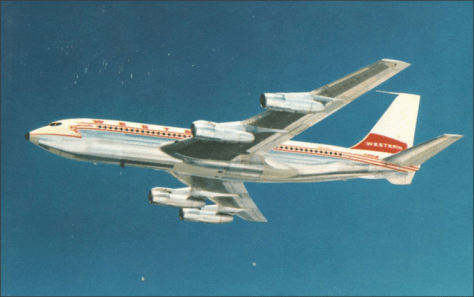
What I enjoyed most about Walt’s books is the look back they provide to a time when traveling seemed much simpler. Remember what traveling was like before 9/11, TSA screening and all the other hassles we now endure? The books made me think back to the days when flying was actually glamorous. I remember traveling as a child with my parents to visit my grandparents in Florida. I wore a spiffy little knit suit, my dad wore a suit and tie, and mom was glamorous in her mink stole, which was much more useful on the return trip to Michigan than trotting around Florida’s east coast. We had actual meals served to us—with cloth napkins and silverware! We had leg room! We checked our luggage—for free!
Walt’s books are a refresher on the days when adventurous travelers could go to places such as Afghanistan and Syria without too much danger, though as he reports, not without discomfort. (If you’re a freelance writer, the really depressing part is that from his account it appears that the wages for writers, particularly freelance travel writers, haven’t changed much since the 70s.) Still, his stories remind us of the lure and fascination of travel to exotic places.
In a lot of ways, those days of air travel weren’t as idyllic as they seem in my memory. People travel all over the world now, much more than in the 60s and 70s, despite the hassle. I ran across a fun article in Fast Company that compares travel in the 50s and 60s with the present. As it turns out, the skies weren’t quite as friendly as I remember.
For example, airfares were 40 percent higher, adjusted for inflation, with the average person in the 1950s paying up to five percent of his or her yearly salary for a chance to fly. There were no movies on long flights, but plenty of smoking, drinking and, ultimately quite a bit more vomiting en route. Stewardesses looked great but had to retire when they got married. I never saw a female pilot.
Despite the ups and downs of air travel, Walt certainly enjoyed the adventure and his readers do, too.
He says, “To borrow a modern cliche, it was a great ride.”
Fiction Meets Reality in Maude Hart Lovelace’s “Deep Valley”
Betsy’s House, the real-life home of Maud Hart Lovelace in Mankato, Minnesota
It’s hard to believe that a series of novels can still be popular with a heroine who neither Tweets nor Snapchats, a girl who lacks magical powers, a vampire boyfriend, or a fabulous assortment of weaponry. Yet, the beloved Betsy-Tacy series by Mankato, Minnesota, author Maud Hart Lovelace have been in continuous publication since the 1940s and inspire an almost fanatical devotion, even among readers who are used to consuming racier fare such as “Gossip Girl” or “The Vampire Diaries.”
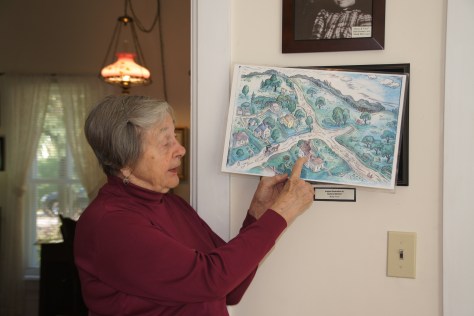
Docent Kathryn Hansen shows a Lois Lenski illustration of the Betsy-Tacy books and compares it to the neighborhood today.
If you need proof, you need only show up in Mankato on a Friday or Saturday afternoon in summer. You’ll find Betsy-Tacy fans who’ve come from around the world to visit the trim little Victorian houses on Center Street, “Betsy’s House” and “Tacy’s House,” where Hart Lovelace and her real best friend, Frances Kenney, grew up right across the street from each other. Little girls and their grandmothers, mother and daughters, and adult “gals on getaways” line up for a tour of the real-life houses that are the setting of the beloved book series. The houses have been lovingly restored and designated as national literary landmarks.
A Calming Oasis
A step into Betsy-Tacy world is a step back into a slower, more peaceful era.The first of the series’ 10 books, Betsy-Tacy, begins in 1897, when Betsy is about to turn five, and the series continues through Betsy’s Wedding during World War I, all based on Hart Lovelace’s own girlhood. The lack of technology, fighting and fast-paced action may be the secret for the books’ enduring appeal. Linda Lee, an adult Betsy-Tacy fan visiting from Claremont, California, says of the books, “I re-read them even now. They’re about family, friendship and fun in doing simple things. Reading them brings a sense of calm to my frenzied life.”
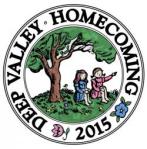
The houses are open on weekends year-round but Betsy-Tacy fans show up en masse each June for the Deep Valley Homecoming—this year from June 26-30— like a children’s book Coachella. (Deep Valley is the name Hart Lovelace gave her hometown in the books.) Activities include Betsy & Tacy home and neighborhood tours, narrated horse-drawn trolley rides, a Victorian Tea, Deep Valley Book Festival*, fashion show, living history actors, speakers and re-enactments, a vintage car show and more.
The old fashioned kitchen at Betsy’s house offers a view of life in the early 1900s, straight from the Betsy-Tacy books.
Inspiration for Modern Girls
Enthusiastic docents regularly lead tours of the houses and point out how the homes and the neighborhood compare to the books’ illustrations by Lois Lenski. From the old-fashioned kitchen, to the lace curtains and fine china, to the books and Maude Hart Lovelace memorabilia, tours furnish a cultural snapshot of the era, a chance to experience what it was like to live in a Midwestern town when the first automobile arrived and homes got their first telephones.
But beyond a nostalgic connection to a fictional world or a look at old houses with creaky floors and Victorian furniture, a visit to the Betsy-Tacy houses offers a look at the lives and friendships children, the aspirations of women at the turn of the last century, and celebrates girls who are, while old-fashioned, strikingly independent and adventurous.
While old telephones may be the highest tech you’ll experience on the tour, Betsy and Tacy aren’t totally off the grid. You’ll find constant discussion about them on Twitter and Pinterest.
*I’ll be at the Deep Valley Book Festival this year, signing copies of Off The Beaten Page: The Best Trips for Lit Lovers, Book Clubs and Girls on Getaways.
If you go:
Mankato is about an hour and a half south of the Twin Cities via I-169. The houses are open this summer on Friday and Saturday from 1:00 p.m. to 4:00 p.m. Admission is $5 for adults, $2 for children (under 5 free).
We picked up bagels at Tandem Bagels, 200 E Walnut St., for a picnic in Lincoln Park, which figures in the books and is set amidst a gorgeous grouping of Victorian homes.
From Seattle’s busy waterfront along Alaskan Way, it’s only a forty-minute ferry ride across Puget Sound to Bainbridge Island but it’s a voyage to another world and a slower time.
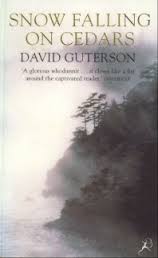
The island was the inspiration for David Guterson’s bestseller, Snow Falling on Cedars, called San Piedro Island in the book. Guterson makes his home on the island and used to teach school here. We hop off the boat in Winslow, a cozy seaside town located on Eagle Harbor. It’s a great place to explore on foot. For those who want to go further afield, bikes are available to rent between June 1st and the end of September right by the ferry terminal at Bike Barn rentals.
Winslow began as a timber and shipbuilding center and was, for a time, larger than Seattle. Today it’s a bedroom community for Seattle and the picturesque harbor, the trees, the greenery, and the misty hills give it just the right rich ambiance for romance and drama, like that in Snow Falling on Cedars, but it certainly isn’t “downtrodden and mildewed,” like Amity Harbor in in the book.
Yet, fans of Snow Falling on Cedars or anyone who wants to understand the history of the island will find the most satisfaction in exploring the island’s history so head to The Bainbridge Island Historical Museum. Housed in a red 1908 schoolhouse, the museum tells the story of the island’s history, particularly the Japanese internment as it really played out on the island, the true story at the heart of Guterson’s book. After the bombing of Pearl Harbor, Japanese Americans became the focus of suspicion, even though many were second-generation citizens. They were rounded up and sent into exile in military-style camps such as Heart Mountain in Wyoming and Manzanar in California.
It’s a half-hour bike ride or a ten-minute cab ride to the Bainbridge Island Japanese American Exclusion Memorial, around the bay from the ferry landing. This is the site from which Japanese Americans were removed from their homes and sent to Seattle and then to internment camps on March 30, 1942.
And, In Defense of Our Neighbors: The Walt and Milly Woodward Story, about how the publishers of Bainbridge Island’s community newspaper fought the internment of their Japanese neighbors.
As a planner of family vacations, it took me a long time to reconcile my list of all the great things I wanted to show and teach my sons with the list of what might really interest them.
That was especially tough when it came to cities. At one point, as we dragged our kids through the British Museum, one of the boys declared that he had “reached maximum cultural saturation.” He just couldn’t visit one more museum, cathedral or fancy garden. Truth be told, the adults felt the same way.
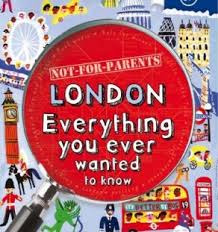
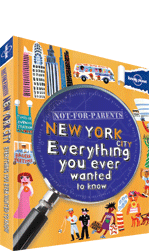
Lonely Planet (the people who publish all those guidebooks for adults) offers a terrific series of “Not-For-Parents” guidebooks that can help avoid a case of MCS on your next family vacation. The company sent me several copies to review and I’m now ready to gather up a few kids and take a trip.
One of my favorite things about travel is anticipating the trip. It’s a holdover from when I was a kids my mom took me to the library to load up on books that took place in the areas where we were going. Reading ahead of time offers a preview of coming attractions— what the food is like, historic things that happened there, what the buildings look like, animals you might see— things like that.
The series is a perfect way to to encourage such anticipation and to help children and families get the most from their trips. The books, as the company says, “open up a world of intriguing stories and fascinating facts about the people, places, history and culture of the world’s most exciting cities,” but they do it in a way that’s energetic and appealing, even for adults.
The three books I have cover “Everything You Ever Wanted to Know” about Europe, Paris and New York. They feature the inside scoop on each city with bright colors, crazy pictures and cartoons, and a combination of information that ranges from history and fashion, to scenes from movies and gross food that people may eat there—like snails in Paris. In the New York book, you’ll find Andy Warhol, rats and musicians in the subways, a look at Ellis Island and favorite NYC sports teams, and a lot of other fun stuff.
So, no more MCS. And, even if you’re not planning a major trip, these books make great summer reading and armchair travel for kids.
Lonely Planet also offers a helpful page on How to Travel Like a Kid that adults will want to read, just to remind themselves how to keep family trips kid friendly.
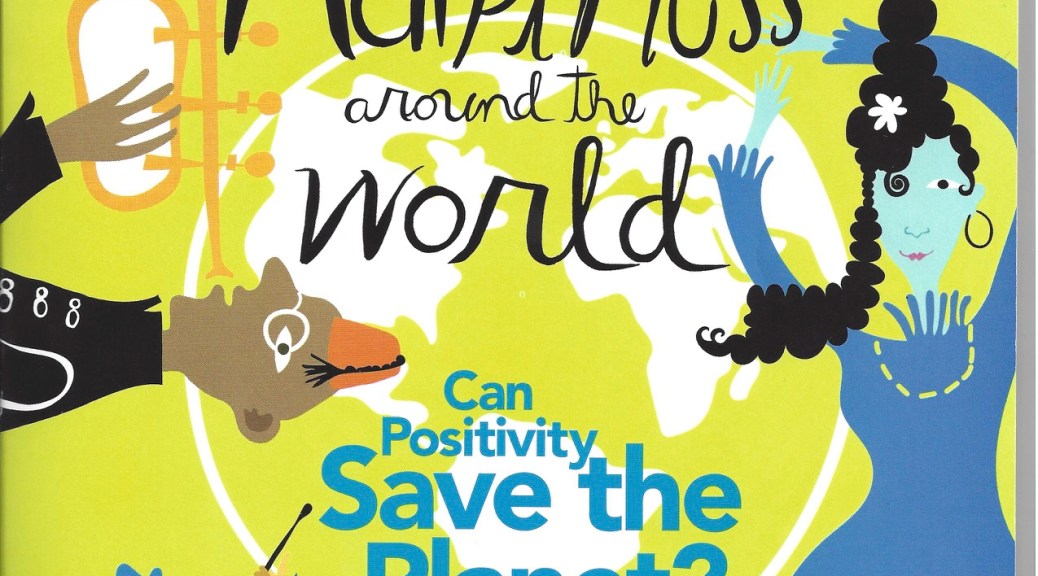
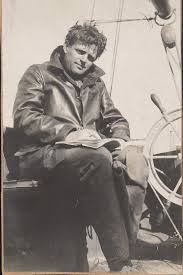
I have a new article, The Wild Still Calls, in this month’s issue of a fun magazine, “Live Happy.” It’s about Jack London State Park and how the volunteers there are keeping the park and the memory of author Jack London alive.
London, author of The Call of the Wild, White Fang and many other adventure stories, was the most famous author of his time. Most people don’t know he was also a world traveler, sustainable farmer and oyster pirate. His own life was as adventurous as his stories.
What a week for the Hoosiers! Thanks to Indiana’s Religious Freedom Restoration Act, which appears designed to allow businesses to refuse service to LGBT people, and the verbal bumbling of Governor Mike Pence, Indiana hasn’t had this much attention since Bobby Knight’s chair-throwing days at Indiana University. In fact, the issue prompted David Letterman to say he’d prefer to have Bobby Knight as Indiana governor.
I’ve watched with amusement as the right wingers in the Indiana state legislature and other areas of Hoosier life have back-pedaled and beeped like as garbage truck backing up, “Who us? No way do we mean to discriminate against the LGBT community. No, no, you misunderstand.”
Tell me what you think
And, in what is surely an April Fool’s joke, the Arkansas legislature has shown spectacular inability to learn from the mistakes of others by passing a similar bill, despite the dustup in Indiana. Also amusing: cities and states are capitalizing on Indiana’s infamy, encouraging Indiana businesses to set up shop in their jurisdictions where they’re business- and gay-friendly. Similarly, many government entities have declared Indiana off limits for employee travel. Businesses and sports organizations are making it known that such attitudes are bad for business, business being a huge priority in Indiana— maybe even trumping “Christian” family values.
It’s funny to watch Indiana bureaucrats bumbling, but discrimination isn’t funny. For me it brings up a serious question: I’m planning to go to Indiana in a few weeks to visit friends. Should I go? Surely an individual should take a stand and be as moral as say, Emily’s List or the state of Virginia, or the mayor of Palm Beach and just say “no.” It makes me wonder what is the responsibility of individuals to protest discriminatory policies and “vote with their feet” by not going. I see I’m not the only one with this question as #banindiana and #boycottindiana are trending on Twitter.
I used to live in Indianapolis, a LONG time ago, so I know that everyone in Indiana isn’t a bigot. I have no doubt that the state will rectify its RFRA mistake by the time I get there, though Mike Pence can kiss any thought about a presidential run goodbye. Good. And the Indianapolis Convention and Visitors Bureau folks are working overtime to recover from this PR fiasco. Their web site is covered with rainbows, “All Are Welcome in Indy” banners, and they’re rolling out the rainbow carpet with a guide to LGBT Indy. Still, I’m curious what you think is the individual traveler’s obligation to stand up for what’s right? Tell me what you think.
Seattle isn’t always grey. When the clouds thin you just can’t beat the city’s combination of ocean and mountains.
Seattle is famous for its grey skies and currently, for another grey, Fifty Shades of Grey, that is. Crowds of Shades fans are driving by the Escala condominiums in Seattle, the home of the fictional Christian Grey, among other sites in the books and movie. And, tour operators now offer travel packages that incorporate Fifty Shades sites, hopefully with a little more romance and a little less S and M.
One writer called the trilogy “Fifty Shades of Bad Writing,” but darn, I wish I wrote those books; that woman has struck it rich. The movie has received equally stinky reviews, but it will probably do well financially, too.
A little mommy porn can be fun if you’re into, um, pain and bondage, but I’m here to tell you that whether it’s weather or reading, Seattle isn’t just about Grey. If you’re looking for books with a little more literary merit to inform and inspire a trip to the Emerald City, the folks at one of my favorite bookstores, Elliott Bay Books in Seattle have a reading list for you. Here’s a list they sent with some great and pretty recent fiction and nonfiction books set in Seattle, by local authors.
A Sudden Light by Garth Stein (fiction). He also wrote the Art of Racing in the Rain
Where’d You Go, Bernadette by Maria Semple (fiction)
The Lone Ranger & Tonto Fistfight in Heaven by Sherman Alexie (fiction) See my other post about Sherman Alexie and banned books.
Blueprints of the Afterlife by Ryan Boudinot (fiction)
Love, Water, Memory by Jennie Shortridge (fiction)
Ceremony for the Choking Ghost by Karen Finneyfrock (poetry)
The Good Rain by Timothy Egan (nonfiction)
Nisei Daughter by Monica Sone (nonfiction)
Pacific Northwest: Land of Light and Water by Art Wolfe (nonfiction – pictorial)
Mary Randlett Portraits by Frances McCue and Mary Randlett (nonfiction – pictorial)
Stay tuned for an upcoming post on Bainbridge Island.
Wonder Woman Katy a super-size painting by artist Barbara Porwit on display at the University of Minnesota’s Nash Gallery, part of the “WonderWomen” exhibit. (photo by Doug Webb connectartists.com)
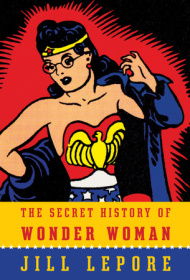
I love it when events and my reading coincide. WonderWomen, an art exhibit at the University of Minnesota’s Nash Gallery in Minneapolis runs from now until February 14. Though they didn’t plan it that way, the exhibit came on the heels of the release of Harvard historian Jill Lapore’s new book, The Secret History of Wonder Woman, which details the weird life of William Moulton Marston, Wonder Woman’s creator and also the inventor of the lie detector test.
Wonder Woman—part superhero, part kinky-booted pinup girl—flew into American culture in 1941 and has been part of our pop culture ever since. Along with the biography of Wonder Woman and her creator, Lepore’s book is analysis of women’s history and feminism. The WonderWomen exhibit examines that topic from the pop-art perspective. It features works by women artists inspired or influenced by comics, animation or popular culture, and related screenings of work by women filmmakers presented by the Film Society of Minneapolis St. Paul. Read my article about the show in the Minnesota Women’s Press.
One of my favorite works in the show, “Wonder Woman Katy” dominates the room at the Nash Gallery. She wears a red cape and she’s seven feet tall. Don’t mess with her. That’s the image Minneapolis artist Barbara Porwit wants to convey in her Breast Cancer Superhero Portrait Project, a series of larger-than-life paintings of real women battling the disease, of which “Wonder Woman Katy” is a part. Porwit’s works celebrate the heroic nature of women affected by breast cancer
Frenchy Lunning, a professor of liberal arts at Minneapolis College of Art and Design and an internationally known expert in manga, anime (Japanese comics and animation) and popular culture, is co-curator of the exhibit. She says, ”The takeaway for viewers is to become aware of the magnitude of feminine culture and how feminist art, with all of its potentially subversively qualities, is entering mainstream culture.”
Even if you can’t make it to the WonderWomen exhibit, you’ll want to read The Secret History of Wonder Woman. A New York Times review of the book called Wonder Woman’s creator “….a huckster, a polyamorist (one and sometimes two other women lived with him and his wife), a serial liar and a bondage super-enthusiast. As Wonder Woman would say, “Suffering Sappho!” How can we resist?
Travel to the places you read about. Read about the places you travel.
















 Off The Beaten Page Travel