Tag Archives: travel

#boycottindiana What’s the individual traveler’s responsibility?

images-2What a week for the Hoosiers! Thanks to Indiana’s Religious Freedom Restoration Act, which appears designed to allow businesses to refuse service to LGBT people, and the verbal bumbling of Governor Mike Pence, Indiana hasn’t had this much attention since Bobby Knight’s chair-throwing days at Indiana University. In fact, the issue prompted David Letterman to say he’d prefer to have Bobby Knight as Indiana governor. Unknown-3

I’ve watched with amusement as the right wingers in the Indiana state legislature and other areas of Hoosier life have back-pedaled and beeped like as garbage truck backing up, “Who us? No way do we mean to discriminate against the LGBT community. No, no, you misunderstand.”

Tell me what you think

And, in what is surely an April Fool’s joke, the Arkansas legislature has shown spectacular inability to learn from the mistakes of others by  passing a similar bill, despite the dustup in Indiana. Also amusing: cities and states are capitalizing on Indiana’s infamy, encouraging Indiana businesses to set up shop in their jurisdictions where they’re business- and gay-friendly. Similarly, many government entities have declared Indiana off limits for employee travel. Businesses and sports organizations are making it known that such attitudes are bad for business, business being a huge priority in Indiana— maybe even trumping “Christian” family values.

It’s funny to watch Indiana bureaucrats bumbling, but discrimination isn’t funny. For me it brings up a serious question: I’m planning to go to Indiana in a few weeks to visit friends. Should I go? Surely an individual should take a stand and be as moral as say, Emily’s List or the state of Virginia, or the mayor of Palm Beach and just say “no.” It makes me wonder what is the responsibility of individuals to protest discriminatory policies and “vote with their feet” by not going. I see I’m not the only one with this question as #banindiana and #boycottindiana are trending on Twitter.

I used to live in Indianapolis, a LONG time ago, so I know that everyone in Indiana isn’t a bigot. I have no doubt that the state will rectify its RFRA mistake by the time I get there, though Mike Pence can kiss any thought about a presidential run goodbye. Good. And the Indianapolis Convention and Visitors Bureau folks are working overtime to recover from this PR fiasco. Their web site is covered with rainbows, “All Are Welcome in Indy” banners, and they’re rolling out the rainbow carpet with a guide to LGBT Indy. Still, I’m curious what you think is the individual traveler’s obligation to stand up for what’s right? Tell me what you think.

All is Not Grey in Seattle: Best Books Set in Seattle by Local Writers

SONY DSC
Seattle isn’t always grey. When the clouds thin you just can’t beat the city’s combination of ocean and mountains.

Seattle is famous for its grey skies and currently, for another Unknown-4
grey, Fifty Shades of Grey, that is. Crowds of Shades fans are driving by the Escala condominiums in Seattle, the home of the fictional Christian Grey, among other sites in the books and movie. And, tour operators now offer travel packages that incorporate  Fifty Shades sites, hopefully with a little more romance and a little less S and M.

One writer called the trilogy “Fifty Shades of Bad Writing,” but darn, I wish I wrote those books; that woman has struck it rich.  The movie has received equally stinky reviews, but it will probably do well financially, too.

A little mommy porn can be fun if you’re into, um, pain and bondage, but I’m here to tell you that whether it’s weather or reading, Seattle isn’t just about Grey. If you’re looking for books with a little more literary merit to inform and inspire a trip to the Emerald City, the folks at one of my favorite bookstores, Elliott Bay Books in Seattle have a reading list for you. Here’s a list they sent with some great and pretty recent fiction and nonfiction books set in Seattle, by local authors.

A Sudden Light by Garth Stein (fiction). He also wrote the Art of Racing Unknown-1in the Rain

Where’d You Go, Bernadette by Maria Semple (fiction)

The Lone Ranger & Tonto Fistfight in Heaven by Sherman Alexie (fiction) See my other post about Sherman Alexie and banned books.

Blueprints of the Afterlife by Ryan Boudinot (fiction)

Love, Water, Memory by Jennie Shortridge (fiction)

Ceremony for the Choking Ghost by Karen Finneyfrock (poetry)

The Good Rain by Timothy Egan (nonfiction)Unknown-5

Nisei Daughter by Monica Sone (nonfiction)

Pacific Northwest: Land of Light and Water by Art Wolfe (nonfiction – pictorial)

Mary Randlett Portraits by Frances McCue and Mary Randlett (nonfiction – pictorial)

Stay tuned for an upcoming post on Bainbridge Island.

Wonder Woman in Her Many Forms

 Wonder Woman Katy a super-size painting by artist Barbara Porwit on display at the University of Minnesota's Nash Gallery, part of the  WonderWomen exhibit. (photo by Doug Webb connectartists.com)
Wonder Woman Katy a super-size painting by artist Barbara Porwit on display at the University of Minnesota’s Nash Gallery, part of the “WonderWomen” exhibit. (photo by Doug Webb connectartists.com)

I love it when events and my reading coincide. WonderWomen, an art exhibit at the University of Minnesota’s Nash Gallery  in Minneapolis runs from now until February 14. Though they didn’t plan it that way, the exhibit came on the heels of the release of Harvard historian Jill Lapore’s new book, The Secret History of Wonder Woman, which details the weird life of William Moulton Marston, Wonder Woman’s creator and also the inventor of the lie detector test.

Wonder Woman—part superhero, part kinky-booted pinup girl—9780385354042flew into American culture in 1941 and has been part of our pop culture ever since. Along with the biography of Wonder Woman and her creator, Lepore’s book is analysis of women’s history and feminism. The WonderWomen exhibit examines that topic from the pop-art perspective. It features works by women artists inspired or influenced by comics, animation or popular culture, and related screenings of work by women filmmakers presented by the Film Society of Minneapolis St. Paul. Read my article about the show in the Minnesota Women’s Press.

One of my favorite works in the show, “Wonder Woman Katy” dominates the room at the Nash Gallery. She wears a red cape and she’s seven feet tall. Don’t mess with her. That’s the image Minneapolis artist Barbara Porwit wants to convey in her Breast Cancer Superhero Portrait Project,  a series of larger-than-life paintings of real women battling the disease, of which “Wonder Woman Katy” is a part. Porwit’s works celebrate the heroic nature of women affected by breast cancer

Frenchy Lunning, a professor of liberal arts at Minneapolis College of Art and Design and an internationally known expert in manga, anime (Japanese comics and animation) and popular culture, is co-curator of the exhibit. She says, ”The takeaway for viewers is to become aware of the magnitude of feminine culture and how feminist art, with all of its potentially subversively qualities, is entering mainstream culture.”

Even if you can’t make it to the WonderWomen exhibit, you’ll want
to read The Secret History of Wonder Woman.    A New York Times review of the book called Wonder Woman’s creator “….a huckster, a polyamorist (one and sometimes two other women lived with him and his wife), a serial liar and a bondage super-enthusiast. As Wonder Woman would say, “Suffering Sappho!” How can we resist?

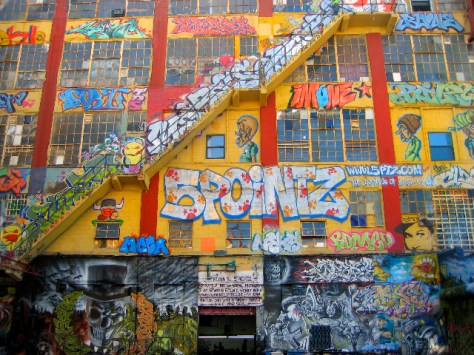
Graffiti at 5 Pointz New York City

The ultimate in self-expression: Graffiti in the Five Points section of New York City.
Vandalism or self expression? Graffiti in Queens, NYC

This week’s photo challenge is express yourself.  While some call it vandalism, there’s no more in-your-face, larger than life form of self-expression than graffiti.  For the past 20 years, the mecca of that gritty urban art form has been 5 Pointz, a dilapidated  factory complex in Queens, New York City.

Founded as the Phun Phactory in 1993, it was designed as a place for street artists to legally practice their craft. Here, aerosol-can Picassos made the derelict buildings beautiful and gained worldwide fame.

Sadly, the buildings were recently demolished to make way for yet more shiny high-rise apartment buildings.

New: From the Ashes of the World Trade Center


The new One World Trade Center rises over lower Manhattan.
The new One World Trade Center rises over lower Manhattan. The final component of the skyscraper, its glowing spire, made the building’s height 1,776 feet, tallest in the Western Hemisphere.

Who doesn’t feel like they know just about everything there is to know about 9/11? We’ve seen the video tapes of planes crashing into the World Trade Center on September, 2001 countless times and viewed special reports and documentaries without end. Yet, when I stepped into the new National September 11 Memorial Museum I found that there actually was more to learn, but more importantly, to remember.

Located underground in the heart of the World Trade Center site, the museum tells the story of what happened on 9/11, including the events at the World Trade Center, the Pentagon and the story of Flight 93 that crashed in Pennsylvania. The exhibition explores the background leading up to the events and examines their aftermath and continuing implications.

In Foundation Hall,  the "Last Column," stands 36-feet high and is covered with mementos, memorial inscriptions, and missing posters placed there by ironworkers, rescue workers and others.
In Foundation Hall, the “Last Column,” stands 36-feet high and is covered with mementos, memorial inscriptions, and missing posters placed there by ironworkers, rescue workers and others.

Even though we’ve seen them so many times, when those video clips and films of what led up to the attack played in the museum the people watching them with me all had the same reaction: “Oh my God.” There are video taped stories from people who were there, displays of artifacts ranging from fire trucks and twisted metal beams to personal objects of people working in the towers that day (really personal things like shoes and purses), papers that rained down, and a portion of one of the stairways from which survivors escaped the building.

The National 9/11 Museum at ground zero in New York City is underground with entry adjacent to a portion of staircase from one of the World Trade Center towers.

As one would expect in such an emotionally and politically charged situation, many parts of the museum have been controversial. Some people object to the the way one exhibit connects Islam and terrorism and the simple fact of tourists gawking at what is essentially hallowed ground offends some of the families. Nonetheless, I felt like the curators struck the right balance.

Many survivors of the attack on the World Trade Center and their families are very involved with the museum and give tours and talks at the complex. I felt lucky to be there for a presentation by an NYPD officer who was on site that day and a young woman whose father died trying to get people out of one of the towers. Their stories made it all very personal. Not a dry eye in the house.

I left the museum to stroll around the 9/11 Memorial outside with its two square waterfalls surrounded by the names of those lost in the attacks. The newly opened One World Trade Center–the tallest skyscraper in the Western Hemisphere and the fourth tallest building in the world–towers, symbolically, over it all.  I’m sappy enough to feel proud of the way the city and the country has moved on, but still remembers.

If you go: Admission, $24 for adults. Go to 911memorial.org to reserve tickets, download the free 9/11 app to enhance your tour and for directions. images-1

Unknown-4


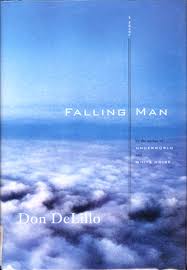
Read up: As usual, I recommend a bit of reading before you go which adds immensely to enhance your experience. And, as usual, I recommend fiction books for their ability to layer events and emotions to create a story that is almost more real than non-fiction. Extremely Loud and Incredibly Close– Jonathan Safran Foer, Falling Man, Don DeLillo. For nonfiction, check out an anthology of New Yorker articles,  After 9/11– edited by David Remnick.

https://dailypost.wordpress.com/dp_photo_challenge/new/

A Riverfront Tour in Minneapolis: Where History Flows With the Mississippi

PicMonkey CollageSince the beginning, Minnesota’s lakes and rivers have been the engine of the region’s development and the focus of recreation, not to mention the source of a whole lot of  fish. The Twin Cities, for example, have their roots on the Mississippi River, which has transported timber and grain from the Midwest to markets in the east and powered the four mills of the Pillsbury family, among others, since the early 1800s. That made the riverfront in Minneapolis primarily an industrial area. Interesting, but not particularly scenic.

SONY DSCAll of that is changing as the city rediscovers and redevelops its waterfront. The mills and warehouses have been converted to trendy apartments and condominiums now and that section of the riverfront is part of an expanding Mill Ruins Park. It’s the sight of the Mill City Farmers Market in summer, where you can eat and buy great organic produce under the watchful gaze of some of the world’s great playwrights who look down from the Guthrie Theater next door.

Though the new version of the riverfront is more vibrant, it’s the 18777967 unusual history here that makes it so intriguing. You can revisit the city’s early days in several ways. First, pick up a copy of Mary Relindes Ellis’s novel Bohemian Flats, which is named after the area slightly downriver from the mills which was home to the city’s poorest immigrants, mainly from Germany and eastern Europe (or Bohemia) who are the subject of the story. Set after World War I, the book traces the progress of a German immigrant family who settled in the ramshackle village that grew up along a low point along the river, many of whom worked in the flour mills.

Next, start a riverfront tour at the Mill City Museum, which offers an in-depth look at the flour industry and the early days of Minneapolis. It’s built into the ruins of what was once the world’s largest flour mill. Wander the across the Stone Arch bridge for a terrific view of the river and St. Anthony Falls, which powered the mills and check out the paths and ruins along the water. Grab some grub at the Farmer’s Market and watch the river roll by as you eat.

Book lovers will want to wander down Washington Avenue to explore the Minnesota Center for Book Arts at Open Book. You can view the artistic assembly of the pages, covers, and spines, then peruse the shop at MCBA, which is a reader’s delight of books, gifts, handmade paper, and journals.

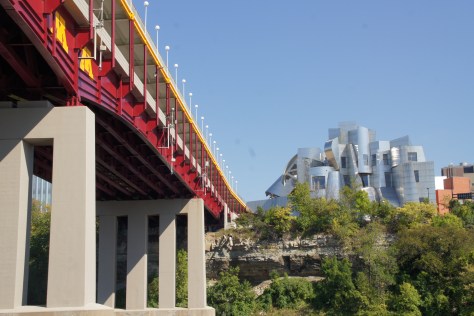
Rent one of the green bikes from one of the Nice Ride Minnesota stations near the museum and head downriver for a scenic tour. Make a stop at Izzy’s gourmet ice cream to fuel your trip. You’ll arrive at Bohemian Flats, which is no longer a wild collection of shacks, but rather a lovely park inhabited mainly by University of Minnesota students throwing frisbees. It’s a great pastoral place to enjoy the view of the river, the university campus and, in particular, the futuristic Frank Gehry-designed Weisman Art Museum. It makes quite a contrast to the image of the old Bohemian Flats on the cover of Ellis’s novel.

Bohemian Flats in Minneapolis is now a pastoral play area across from the University of Minnesota.
The view from Bohemian Flats is quite a contrast to the site's 19th Century origins with the futuristic Weisman Art Museum, designed by Frank Gehry, atop the river bluff.
The view from Bohemian Flats is quite a contrast to the site’s 19th Century origins with the futuristic Weisman Art Museum, designed by Frank Gehry, atop the river bluff.

Eat, Read, Cheer: Ann Arbor, Michigan

University of Michigan Stadium, "the Big House" in Ann Arbor
University of Michigan Stadium, “the Big House,” in Ann Arbor

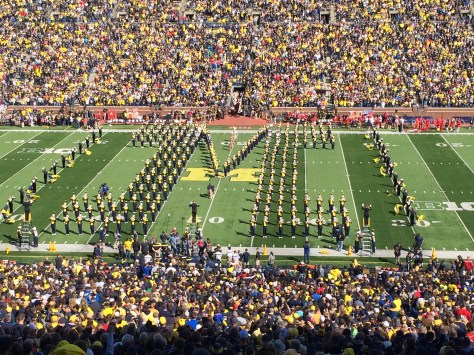
Whether you’re a died-in-the-wool Wolverine or not, fall is a fantastic time to visit Ann Arbor, Michigan.  Even without football tickets, you can tour the “Big House,” the University of Michigan’s football stadium which is the largest stadium in the United States, the third largest stadium in the world and the 36th largest sports venue. Its official capacity is 109,901, but it seems like whenever I’m there they have at least 110,000.  No matter how well the team plays, there’s nothing like walking into this stadium on game day and I always enjoy walking to the stadium behind the marching band.

The University of Michigan Marching Band.
The University of Michigan Marching Band

As long as you’re on the campus of my alma mater, be sure to stroll

University of Michigan Law School's beloved Reading Room
University of Michigan Law School’s beloved Reading Room

the “Diag,” the heart of the central campus for some great people watching, pop into the law school’s Hogwarts-like reading room, and spend some time in the terrific art museum on campus. The  museum’s new modern wing, with its Tisch Gallery of Modern and Contemporary Art, offers a look at some very important works by Picasso, Marcel Duchamp, Alberto Giacometti and Max Beckman, to name a few.

Hungry?  Head to an Ann Arbor classic,  Angelo’s, for a breakfast that will fill you up for the rest of the day.  Calorie counts don’t usually slow me down, so despite my gigantic breakfast, I like to stop by Dominick’s for beer, sangria, pizza or subs.  Need something to wash all the down?  I’ve always been partial to the milkshakes at Pizza Bob’s.  Finally, you’ll want to round out your Ann Arbor pig-out weekend with a stop at  Zingerman’s Deli or Zingerman’s Roadhouse, or both.

Wait!  Don’t pick up another pastrami sandwich or you’ll burst.  feast of loveInstead, pick up a feast that will be easier on your arteries, Charles Baxter’s novel, The Feast of Love.  It’s set set in Ann Arbor where Baxter was an English professor (he’s now at the University of Minnesota).  This terrific book as nominated for the National Book Award.

Finding “Gone Girl” in Cape Girardeau, Missouri

The Bar from the movie “Gone Girl.”

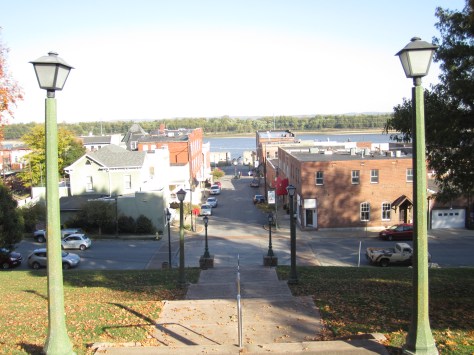
The bar, the courthouse, the house on the Mississippi river where “I could step right in the sucker, an easy three-foot drop, and be on my way to Tennessee.”  For authors such as Gillian Flynn in her huge fiction bestseller Gone Girl, the setting of a novel plays as crucial a role as the characters themselves.  It creates atmosphere, foreshadows what is to come, and sets the pace.  But when director David Fincher and his location scouts set out to make a movie based on the novel, it was a challenge to find real world places to match those of Flynn’s imagination. They found them in Cape Girardeau, Missouri.

The movie, released today, has received some pretty great reviews. So, between the book and the movie, I’m betting that plenty of Gone Girl fans will be looking for her in Cape Girardeau, a lovely river town in southeast Missouri, where the movie was filmed.

imgres

In case you’ve missed it all, in Gone Girl, Amy Dunne (played by Rosamund Pike) disappears from the North Carthage, Missouri, home she shares with her philandering husband Nick (Ben Affleck) on their fifth anniversary, leading him to be investigated for her (maybe) murder. “If there are married couples here, maybe you should change seats” rather than sit together, said Ann Tenenbaum, the chairman of the Film Society of Lincoln Center, when the film premiered in New York. “Abraham Lincoln said, ‘Marriage is neither heaven nor hell, it is simply purgatory.’ David Fincher will personally escort us there.” As the story progresses, we learn that this is one crazy couple and we find that the narrator isn’t necessarily giving us the straight story. (To see a fun discussion among readers of the book, see Book Journey‘s spoiler page.) The realistic setting adds to the tension.

"Gone Girl" director David Fincher said that the view from the Common Pleas Courthouse stairs overlooking the river is what sold him on Cape Girardeau, Missouri, as North Carthage in his movie.
“Gone Girl” director David Fincher said that the view from the Common Pleas Courthouse stairs overlooking the river is what sold him on Cape Girardeau, Missouri, as North Carthage in his movie.

Stacy Dohogne Lane of the Cape Girardeau Convention and Visitors Bureau told me, “North Carthage doesn’t actually exist, though there is a Carthage, Missouri.  The Mississippi River plays such a big part in the book that they wanted to capture a true Missouri river town. Steve Mapel, the film’s location scout, came to Cape Girardeau in the Spring of 2013 and spent quite a bit of time here doing a very intensive search for specific locations.  We had such a good time sitting around our conference table with Steve…he’d say ‘I’m looking for a place that has x, y and z’ and we’d all brainstorm a variety of places that fit within those parameters.”  David Fincher has said that the view from the Common Pleas Courthouse stairs overlooking the river is what sold him on Cape Girardeau as North Carthage.  Gillian Flynn later told Fincher that Cape Girardeau was the place she had in mind while she was writing the book, and he joked in an article that he wish she’d told him that sooner and saved him some time.

Alas, Gone Girl fans probably won’t find Ben Affleck or Rosmund Pike on the streets of Cape Girardeau but the river town makes a great weekend getaway (about two hours from St. Louis).  Beyond Cape Girardeau’s movie role as North Carthage, you’ll find intriguing historic and outdoor sites, antiques and shopping, and it makes a great spot for a girls getaway weekend with wineries, spas and more.

A Civil War Battle in Your Backyard: The Carter House and the Battle of Franklin, Tennessee

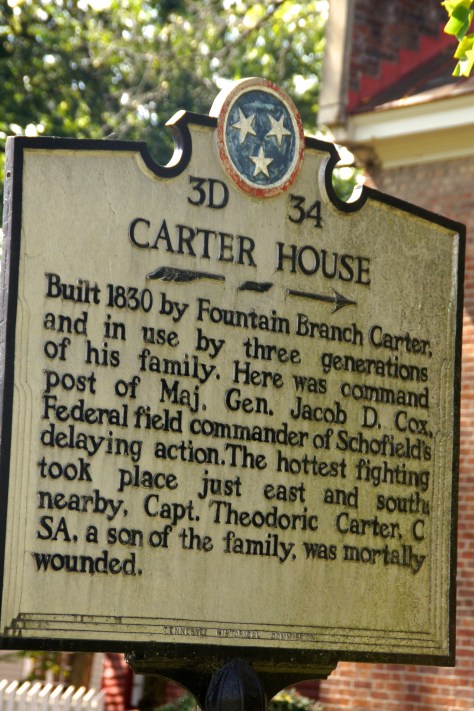
At first glance, visitors to the lovely Carter House in Franklin, Tennessee  would never guess that it was the scene of one of the Civil War's bloodiest battles.
At first glance, visitors to the lovely Carter House in Franklin, Tennessee would never guess that it was the scene of one of the Civil War’s bloodiest battles.

We’re standing in the dimly-lit cellar of the Carter House in Franklin, Tennessee, about half an hour south of Nashville. Our guide holds us in rapt attention as he paints a mental picture of the battle that raged outside.  We begin to imagine being in this very spot 150 years ago when one of the biggest clashes of the American Civil War blasted away just outside the cellar doors.

This is where, on November 30, 1864, Union forces commandeered the Carter family’s house to be used as the Federal command post.  images-1The Carters and one other family huddled for hours during the night while roughly 60,000 soldiers from the Union and Confederate armies came together in perhaps “the bloodiest five hours” of the Civil War, the Battle of Franklin.

Most people are familiar with the Battle of Gettysburg, but the not-so-well-known Battle of Franklin was larger, longer, and deadlier than Pickett’s Charge at Gettysburg. In the biggest Civil War battle you’ve never heard of, John Bell Hood’s Army of Tennessee faced off with John M. Schofield’s Army of the Ohio and the Cumberland, much of the time in hand-to-hand combat.  The battle resulted in around 9,500 casualties with 2,000 dead, 6,500 wounded and about 1,000 missing. (As a comparison, the number of casualties at Franklin was roughly comparable to those of the allies during the D-Day invasion of Normandy.) When the smoke cleared the next morning, the family emerged to find dead and dying men literarily heaped in piles.  Fourteen Confederate generals (six killed or mortally wounded, seven wounded, and one captured) and 55 regimental commanders were casualties.The Army of Tennessee never fought again as an effective force and Hood’s career was ruined.

See a related Battle of Franklin post about Carnton Plantation and the “Widow of the South.”

Visiting the Carter House is particularly impressive because it’s Carter House, Franklin TNdifferent from what one sees visiting most other Civil War battlefields.  In Gettysburg, for example, one sees wide open farm fields and wooded areas like the famous Little Round Top.  Here in Franklin, visitors see the bullet holes in the buildings and get a sense

The far office is the site's most bullet damaged building.
The farm office is the site’s most bullet damaged building.

of what is was like as the armies came up the pike to fight in a more settled area. Beyond the battle, it’s interesting to get a glimpse of the Carter house, its furnishings and the farm buildings where life of that era took place.

Unfortunately, modern life has crept into this historic site to the detriment of the story of this battle. Our guide had to describe the armies moving up from down by Domino’s Pizza, which doesn’t exactly enhance the visitor experience. Unlike more well-preserved battlefields like Shiloh and Gettysburg, the trench lines and places of savage combat here in Franklin were, over the years, covered over with homes, industrial sites, shops, and parking lots. Whether through ignorance or a desire to forget, the places where hundreds lay dead or dying became places to buy pizza or cold beer.  Yet a determined group of preservationists (including the Heritage Foundation of Franklin, Save the Franklin Battlefield, the Battle of Franklin Trust, and the Civil War Trust) are fighting their own battle—to reclaim the Franklin battlefield, often acre by acre, tract by tract.

Coming Events to Mark the 150 Anniversary of the Battle of Franklin

November 14-15, 2014 – Blue & Gray Days
Blue & Gray Days draws hundreds of school children and adult spectators every year. Hosted by both The Carter House and Carnton Plantation, guests will meet Civil War re-enactors and get hands-on experience with clothes, trades, and weapons of the past. This living history experience is the perfect field trip and great for families. For additional details or to make field trip reservations, please contact Angell Roberts at (615) 794-0903 or angell@battleoffranklintrust.org.
November 15-16, 2014 – The 150th Anniversary Battle of Franklin Re-enactment
Re-enactors from all over the country will come together to bring the Battle of Franklin to life. Camps will be open for visitors to walk-through and experience civilian and soldier life in the 1860s.