Category Archives: United States

Finding “Gone Girl” in Cape Girardeau, Missouri

The Bar from the movie “Gone Girl.”

The bar, the courthouse, the house on the Mississippi river where “I could step right in the sucker, an easy three-foot drop, and be on my way to Tennessee.”  For authors such as Gillian Flynn in her huge fiction bestseller Gone Girl, the setting of a novel plays as crucial a role as the characters themselves.  It creates atmosphere, foreshadows what is to come, and sets the pace.  But when director David Fincher and his location scouts set out to make a movie based on the novel, it was a challenge to find real world places to match those of Flynn’s imagination. They found them in Cape Girardeau, Missouri.

The movie, released today, has received some pretty great reviews. So, between the book and the movie, I’m betting that plenty of Gone Girl fans will be looking for her in Cape Girardeau, a lovely river town in southeast Missouri, where the movie was filmed.

imgres

In case you’ve missed it all, in Gone Girl, Amy Dunne (played by Rosamund Pike) disappears from the North Carthage, Missouri, home she shares with her philandering husband Nick (Ben Affleck) on their fifth anniversary, leading him to be investigated for her (maybe) murder. “If there are married couples here, maybe you should change seats” rather than sit together, said Ann Tenenbaum, the chairman of the Film Society of Lincoln Center, when the film premiered in New York. “Abraham Lincoln said, ‘Marriage is neither heaven nor hell, it is simply purgatory.’ David Fincher will personally escort us there.” As the story progresses, we learn that this is one crazy couple and we find that the narrator isn’t necessarily giving us the straight story. (To see a fun discussion among readers of the book, see Book Journey‘s spoiler page.) The realistic setting adds to the tension.
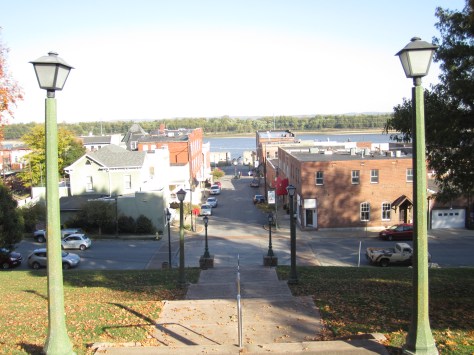
"Gone Girl" director David Fincher said that the view from the Common Pleas Courthouse stairs overlooking the river is what sold him on Cape Girardeau, Missouri, as North Carthage in his movie.
“Gone Girl” director David Fincher said that the view from the Common Pleas Courthouse stairs overlooking the river is what sold him on Cape Girardeau, Missouri, as North Carthage in his movie.

Stacy Dohogne Lane of the Cape Girardeau Convention and Visitors Bureau told me, “North Carthage doesn’t actually exist, though there is a Carthage, Missouri.  The Mississippi River plays such a big part in the book that they wanted to capture a true Missouri river town. Steve Mapel, the film’s location scout, came to Cape Girardeau in the Spring of 2013 and spent quite a bit of time here doing a very intensive search for specific locations.  We had such a good time sitting around our conference table with Steve…he’d say ‘I’m looking for a place that has x, y and z’ and we’d all brainstorm a variety of places that fit within those parameters.”  David Fincher has said that the view from the Common Pleas Courthouse stairs overlooking the river is what sold him on Cape Girardeau as North Carthage.  Gillian Flynn later told Fincher that Cape Girardeau was the place she had in mind while she was writing the book, and he joked in an article that he wish she’d told him that sooner and saved him some time.

Alas, Gone Girl fans probably won’t find Ben Affleck or Rosmund Pike on the streets of Cape Girardeau but the river town makes a great weekend getaway (about two hours from St. Louis).  Beyond Cape Girardeau’s movie role as North Carthage, you’ll find intriguing historic and outdoor sites, antiques and shopping, and it makes a great spot for a girls getaway weekend with wineries, spas and more.

A Civil War Battle in Your Backyard: The Carter House and the Battle of Franklin, Tennessee

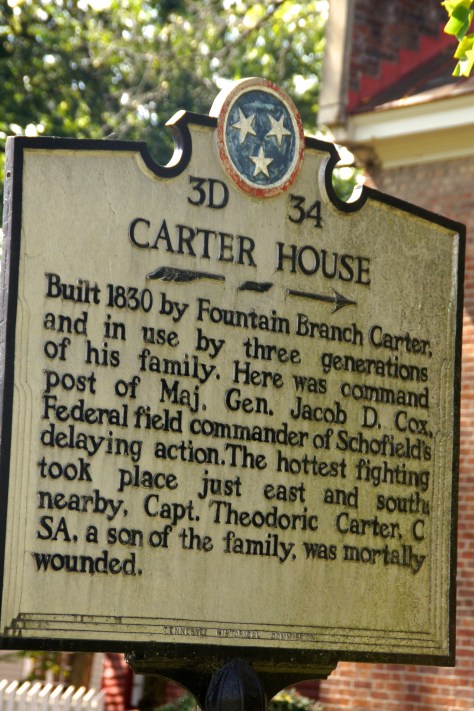
At first glance, visitors to the lovely Carter House in Franklin, Tennessee  would never guess that it was the scene of one of the Civil War's bloodiest battles.
At first glance, visitors to the lovely Carter House in Franklin, Tennessee would never guess that it was the scene of one of the Civil War’s bloodiest battles.

We’re standing in the dimly-lit cellar of the Carter House in Franklin, Tennessee, about half an hour south of Nashville. Our guide holds us in rapt attention as he paints a mental picture of the battle that raged outside.  We begin to imagine being in this very spot 150 years ago when one of the biggest clashes of the American Civil War blasted away just outside the cellar doors.

This is where, on November 30, 1864, Union forces commandeered the Carter family’s house to be used as the Federal command post.  images-1The Carters and one other family huddled for hours during the night while roughly 60,000 soldiers from the Union and Confederate armies came together in perhaps “the bloodiest five hours” of the Civil War, the Battle of Franklin.

Most people are familiar with the Battle of Gettysburg, but the not-so-well-known Battle of Franklin was larger, longer, and deadlier than Pickett’s Charge at Gettysburg. In the biggest Civil War battle you’ve never heard of, John Bell Hood’s Army of Tennessee faced off with John M. Schofield’s Army of the Ohio and the Cumberland, much of the time in hand-to-hand combat.  The battle resulted in around 9,500 casualties with 2,000 dead, 6,500 wounded and about 1,000 missing. (As a comparison, the number of casualties at Franklin was roughly comparable to those of the allies during the D-Day invasion of Normandy.) When the smoke cleared the next morning, the family emerged to find dead and dying men literarily heaped in piles.  Fourteen Confederate generals (six killed or mortally wounded, seven wounded, and one captured) and 55 regimental commanders were casualties.The Army of Tennessee never fought again as an effective force and Hood’s career was ruined.

See a related Battle of Franklin post about Carnton Plantation and the “Widow of the South.”

Visiting the Carter House is particularly impressive because it’s Carter House, Franklin TNdifferent from what one sees visiting most other Civil War battlefields.  In Gettysburg, for example, one sees wide open farm fields and wooded areas like the famous Little Round Top.  Here in Franklin, visitors see the bullet holes in the buildings and get a sense

The far office is the site's most bullet damaged building.
The farm office is the site’s most bullet damaged building.

of what is was like as the armies came up the pike to fight in a more settled area. Beyond the battle, it’s interesting to get a glimpse of the Carter house, its furnishings and the farm buildings where life of that era took place.

Unfortunately, modern life has crept into this historic site to the detriment of the story of this battle. Our guide had to describe the armies moving up from down by Domino’s Pizza, which doesn’t exactly enhance the visitor experience. Unlike more well-preserved battlefields like Shiloh and Gettysburg, the trench lines and places of savage combat here in Franklin were, over the years, covered over with homes, industrial sites, shops, and parking lots. Whether through ignorance or a desire to forget, the places where hundreds lay dead or dying became places to buy pizza or cold beer.  Yet a determined group of preservationists (including the Heritage Foundation of Franklin, Save the Franklin Battlefield, the Battle of Franklin Trust, and the Civil War Trust) are fighting their own battle—to reclaim the Franklin battlefield, often acre by acre, tract by tract.

Coming Events to Mark the 150 Anniversary of the Battle of Franklin

November 14-15, 2014 – Blue & Gray Days
Blue & Gray Days draws hundreds of school children and adult spectators every year. Hosted by both The Carter House and Carnton Plantation, guests will meet Civil War re-enactors and get hands-on experience with clothes, trades, and weapons of the past. This living history experience is the perfect field trip and great for families. For additional details or to make field trip reservations, please contact Angell Roberts at (615) 794-0903 or angell@battleoffranklintrust.org.
November 15-16, 2014 – The 150th Anniversary Battle of Franklin Re-enactment
Re-enactors from all over the country will come together to bring the Battle of Franklin to life. Camps will be open for visitors to walk-through and experience civilian and soldier life in the 1860s.

Raymond Chandler and a Noir View of Santa Monica

There was a desert wind blowing that night. It was one of those hot dry Santa Anas that come down through the mountain passes and curl your hair and make your nerves jump and your skin itch.  On nights like that every booze party ends in a fight.  Meek little wives feel the edge of the carving knife and study their husbands’ necks.–Raymond Chandler, “Red Wind”

Unknown-3
Raymond Chandler

I’ve never been a huge fan of crime fiction, but I’ve found I can’t resist Raymond Chandler, the king of the detective novel, because he can turn a phrase like no one else.  Sit down with one of his classics–Farewell, My Lovely or The Long Goodbye, for example–and you’ll soon find yourself on the hunt for “Chandlerisms” like “as conspicuous as a tarantula on a slice of angel food.” His dialogue and similes are so crazy and over the top I want to memorize them and use them in my own conversation.

imagesBeyond the similes, you start to recognize in Chandler’s work all of the hallmarks of “hard-boiled” and “noir” detective fiction–the shadowy scenery, the sleazy criminals, and Phillip Marlowe, the epitome of the tough and surprisingly idealistic private eye. The dialogue, the setting, and the characters are all as familiar as the nose on a washed-up boxer’s ugly mug, but it was Chandler who created them and, in the process (along with fellow crime writers Dashiell Hammett  and James M. Cain), pioneered a uniquely American literary genre and style.

Bogie and Bacall brought his hard-boiled characters to life on the big screen and his stories have been the subject of parody by everyone from Woody Allen to Steve Martin to Garrison Keillor.  As Paul Auster, a modern crime writer, says, “Raymond Chandler invited a new way of talking about America, and America has never looked the same to us since.”

In Raymond Chandler's day, an infamous fleet of gambling ships anchored just far enough offshore to be beyond the jurisdiction of California state law.
In Raymond Chandler’s day, an infamous fleet of gambling ships anchored just far enough offshore to be beyond the jurisdiction of California state law.

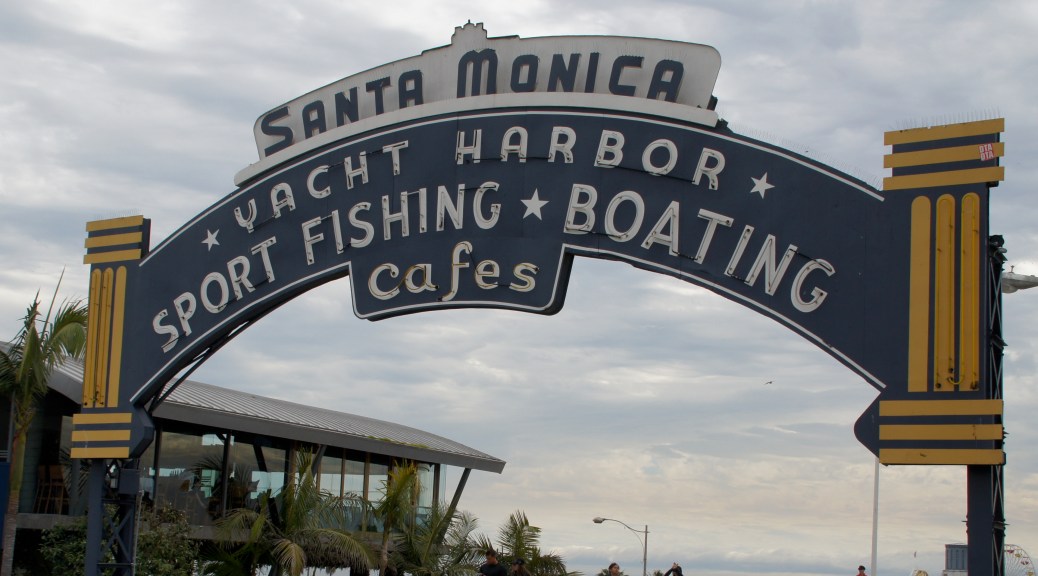
The Los Angeles area of the 1930s and 1940s was rife with organized crime, greed, and celebrity scandals.  In particular, daily life in Santa Monica, the beachfront town on the western edge of Los Angeles where Chandler lived for a time and which appears as Bay City in his books, offered plenty of material from which to draw his stories.

If you visit Santa Monica and the Los Angeles area, it’s fun to read Chandler’s books and those of his crime fiction contemporaries and picture the area as it was then.  He described it as a place with “lots of churches and almost as many bars.”  It’ll add a little depth to your understanding of the area, beyond Hollywood and UCLA/USC football.  Esotouric offers literary tours of Los Angeles including one focused on Raymond Chandler and another on James M. Cain. You might also enjoy their podcasts.  In addition, the Santa Monica Conservancy offers walking tours that cover Santa Monica history.

Santa Monica’s “mean streets” have been replaced by glamorous shopping streets such as Montana Avenue and the Third Street Promenade.  Yet, enough of the old Bay City remains today to get your imagination moving, including the famous Santa Monica Pier and Main Street’s deco-era City Hall, the scene of many of Phillip Marlowe’s coming and goings. Of course, there’s still the harbor and “beyond it the huge emptiness of the Pacific, purple-gray, that trudges into shore like a scrubwomen going home.”


The House of Seven Gables and Other Things to Do in Salem, MA


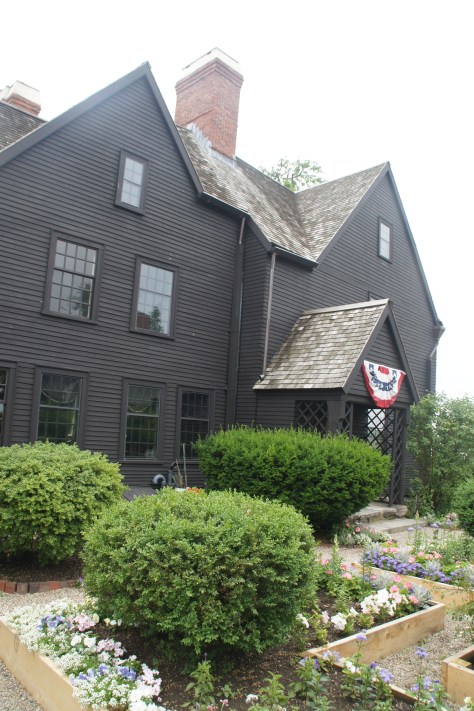
The mysterious House of Seven Gables in Salem, Massachusetts

Salem, Massachusetts, makes a nice day trip from Boston and if you’re there, a stop at the House of Seven Gables is a natural for lit 9780451527912_p0_v1_s260x420lovers or anyone who likes the occasional glimpse of really old colonial homes.  Author Nathaniel Hawthorne’s cousin, Susanna Ingersoll (and other ancestors who played a part in the Salem Witch Trials of 1692), lived in the house and he visited there frequently. He stated that his book, The House of Seven Gables, was a complete work of fiction, based on no particular house.  Nonetheless, as you tour the tiny, dark rooms typical of the era in which it was built (the late 1600s), it’s easy to see how such a house could set the author’s imagination rolling.  The site also offers a chance to tour the house in which Hawthorne was born (which was moved to this site) along with several other buildings of that period.

If you haven’t read The House of Seven Gables, the novel follows a New England family and explores themes of guilt, retribution, and atonement, with overtones of the supernatural and witchcraft.  For me, the book doesn’t compare to Hawthorne’s classic, The Scarlet Letter.  However, it was an inspiration for the horror fiction writer H.P. Lovecraft who called it “New England’s greatest contribution to weird literature.” That seems a backhanded complement to me.

You can tour this tall ship at the Salem National Maritime Historic Site.
You can tour this tall ship at the Salem Maritime National Historic Site.

While you’re in Salem, I also recommend stopping at the Salem Maritime National Historic Site, a short walk from the House of Seven Gables. The National Park Service operates it and you can wander through old wharf buildings, the Custom House where Hawthorne worked when he wasn’t penning famous novels, and other buildings of the colonial era.

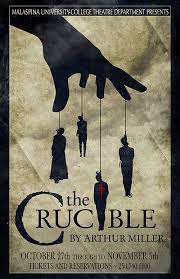
Salem was, of course, the home of the famous Salem Witch Trials Unknown-3which were the focus of Arthur Miller’s classic play, The Crucible.  The National Park Service Visitor Center (2 Liberty Street) is a great place to get quality background on that incident.  It’s ironic that Salem has made a cottage industry out of the witch trials when our puritan ancestors were so thoroughly opposed to witches. Unless you’re a fan of super-tacky witch paraphernalia and occult museums, stick with the Park Service displays on the subject and skip the other witchy tourist traps.

The LBJ Library and Museum in Austin, Texas: See the History of Issues That Are Still Playing Out

So you think the idea of visiting a presidential library sounds about Unknown-7as interesting as watching paint dry. I was in your camp until I visited the LBJ Presidential Library in Austin Texas. I expected lots of yellowed documents, some photos, and “Mad Men” era tchotchkes. What I got was a tour of some of the most dramatic events of American history, in which Lyndon Baines Johnson was intimately involved. They include the civil rights movement, the Vietnam War, the space program, and his transition to the office of President after the assassination of John F. Kennedy, to name a few.

The signing of the Civil Rights Act 50 years ago puts LBJ’s role in that issue at the imagesforefront this year. Johnson “pushed for legislation to fix societal problems, signing bill after bill, act after act. From theUnknown-3 War on Poverty to Civil Rights, Medicaid to Medicare, he knew a better society wasn’t enough — we needed a Great Society. Put simply, he got things done.”

His legacy in this area is only now being recognized because it was previously overshadowed by his administration’s handling of the Vietnam War. At the museum, one sees a portrait of a man tortured by his responsibilities as commander-in-chief during that unpopular war. But the library informs visitors on the other sides of Johnson, who was often a funny guy and a savvy politician, who twisted plenty of congressional arms to further his legislation. Most importantly, the museum gives visitors historical context for so many of issues with which Americans struggle today.

If you have time, head for the hills….Texas Hill Country, that is…to see the LBJ ranch.

Read up:
Doris Kearns Goodwin’s Lyndon Johnson and the American DreamUnknown-2

Robert Caro’s many volumes of work about LBJ includingThe Path to Power and The Master of the Senate

Robert Califano’s The Triumph and Tragedy of Lyndon Johnson: The White House Years

Two newer books, The Bill of the Century by Clay Risen and An Idea Whose Time Has Come By Todd S. Purdum

And, see The Wall Street Journal’s review of the latter two books.

Getting Cozy With Clydesdales in St. Louis

On April 7, 1933 brothers August A. Busch, Jr. and Adolphus Busch III decided to surprise their father, August A. Busch, Sr., with a six-horse Clydesdale team pulling a bright red beer wagon to commemorate the repeal of Prohibition. They couldn’t have known at the time that they were setting in motion one of the world’s most recognizable corporate icons. Now, the “gentle giants” are beloved and recognized well beyond the beer brand they represent.

Children and adults can cozy up to these big guys at the Anheuser-Busch brewery in St.

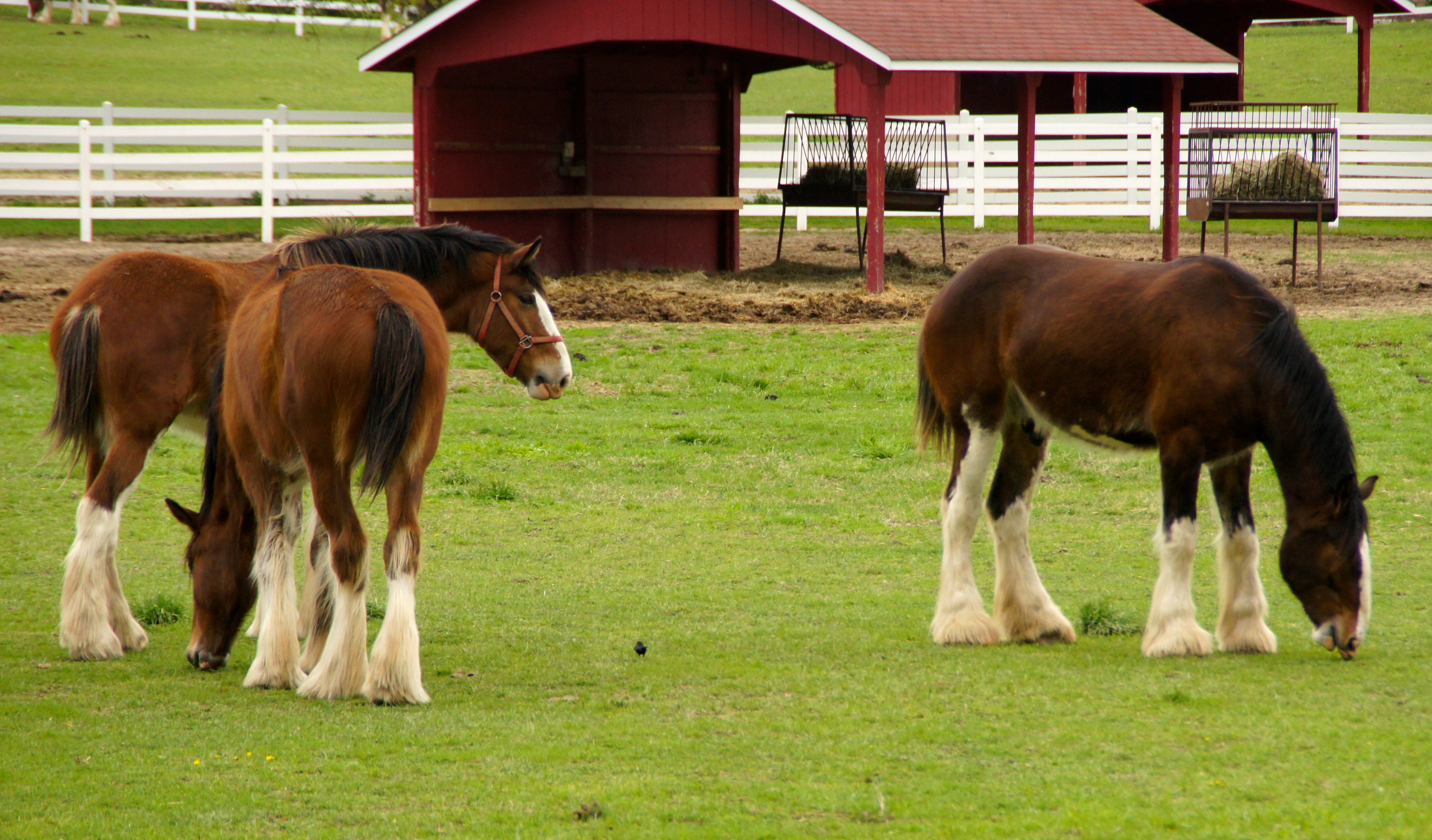
Gentle giants relax at the Clydesdale "prep school," Grants Farm in St. Louis.
Gentle giants relax at the Clydesdale “prep school,” Grants Farm in St. Louis.

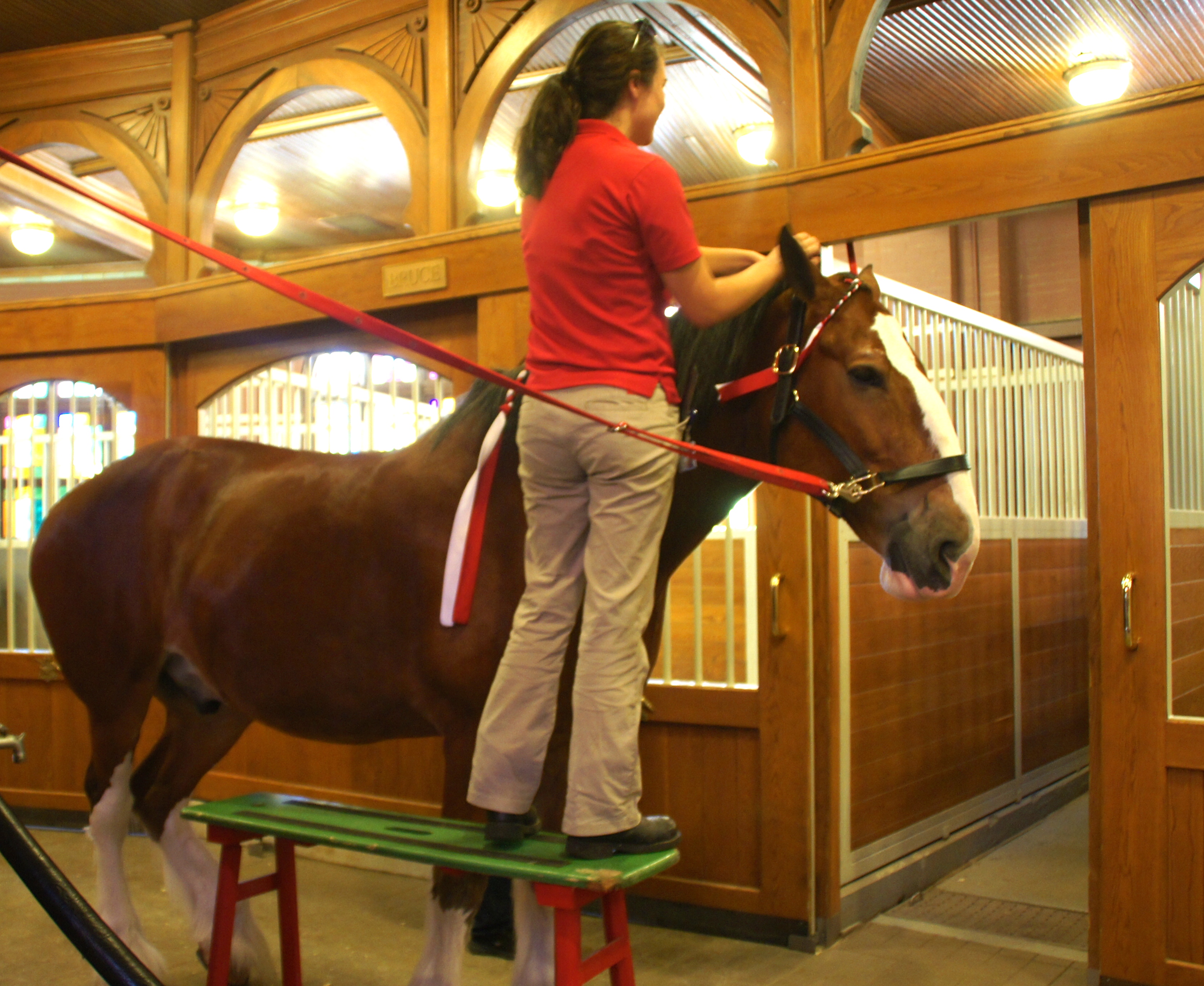
Louis, Mo. which offers family friendly tours. Check out St. Louis Mom for her take on the tour. The horses also frolic in the fields at Grant’s Farm in St. Louis, the Clydesdale “prep school.” Grant Farm’s behind-the-scenes “Clydesdale Experience” tour provides an in-depth look at what it takes for a young Clyde to become an official Budweiser Clydesdale.  Guests tour the stables while gaining an inside look into the operations, the training process, and daily horse maintenance. Heaven for horse-loving kids. Reserve ahead! Warm Springs Ranch,  the 300-plus acre Clydesdale breeding farm located near Boonville, Mo., also offers tours.

Not just any Clydesdales qualifies for one of the traveling teams or “hitches.” A Budweiser Clydesdale must be a gelding at least four years of age, stand 72 inches at the shoulder when fully mature, weigh between 1,800 and 2,300 pounds, have a bay coat, four white legs, a white blaze (that big stripe on his nose), and a black mane and tail, so not all the horses make the team.

A Clydesdale mani-pedi and mane braiding

Ah, to be a Clydesdale! (aside from the gelding part.) The official home of the Budweiser Clydesdales is an ornate brick, stained-glass, and chandelier-festooned stable, built in 1885 on the historic 100-acre lAnheuser-Busch St. Louis brewery complex. The building is one of three located on the brewery grounds that are registered as historic landmarks by the federal government. It’s much nicer and cleaner than most people’s homes.

There, the horses are brushed, curried, trimmed and shod like movie stars. When relaxing they wear stunning red coats sporting an embroidered “A” monogram.  At work they wear hand-crafted patent leather and brass harnesses that weigh in at 130 pounds, a mere speck if you weigh 1800 pounds yourself, and fancy plumes on their heads.

The horses and the brewer have come a long way since the dark days of Prohibition from 1920 to 1933. Rather than close its doors, as more than half of the nation’s breweries did, Anheuser-Busch diversified and marketed more than 25 different non-alcohol products such as soft drinks, truck bodies and ice cream, among them Bevo, a non-alcohol cereal beverage. Yum. It’s no wonder the Busch family was as happy as Clydesdales in clover when the twenty-first amendment to the U.S. Constitution ended Prohibition.

But they wouldn’t have made it through Prohibition without ingenuity and savvy marketing skills and they soon realized the marketing potential of that horse-drawn beer wagon. So, the company also arranged to have a second six-horse Clydesdale hitch sent to New York on April to celebrate the event. The Clydesdales drew a crowd of thousands as they clattered down the streets of New York City to the Empire State Building. After a small ceremony, a case of Budweiser was presented to former Governor Alfred E. Smith in appreciation of his years of service in the fight against Prohibition.

Recognizing that they had a pretty good thing going with the Clydesdales the company extended their tour through New England and the Middle Atlantic States, drawing giant crowds along the way. That included a stop in Washington D.C. in to reenact the delivery of one of the first cases of Budweiser to President Franklin Delano Roosevelt.

Still, the brewers couldn’t have imagined the horses they harnessed as a publicity stunt would turn into a brand icon and the annual stars of the Superbowl.

Read Up!:
Unknown-3All the King’s Horses: The Story of The Budweiser Clydesdales by Steven D. Price.

For Kids:
9781616638696medRuby, the Diva Clydesdale 
by Ramona Lampe

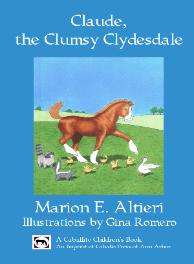
Claude The Clumsy Clydesdale by Marion E. Altieri
Claude_Cover2-194x264

Unknown-2The Clydesdale Horse by John Diedrich

Seeing Red: How to Fly With the Cardinals in St. Louis

Embed from Getty ImagesIt’s a sea of red.

Walk anywhere around beautiful Busch Stadium in St. Louis before a Cardinals game and you can’t help but be caught up in the tide of red-clad baseball fans. Even if you lack dyed-in-the-(red)-wool citizenship in Cardinals Nation, their enthusiasm for the team is infectious. You, too, will become a fan, if only for a night.

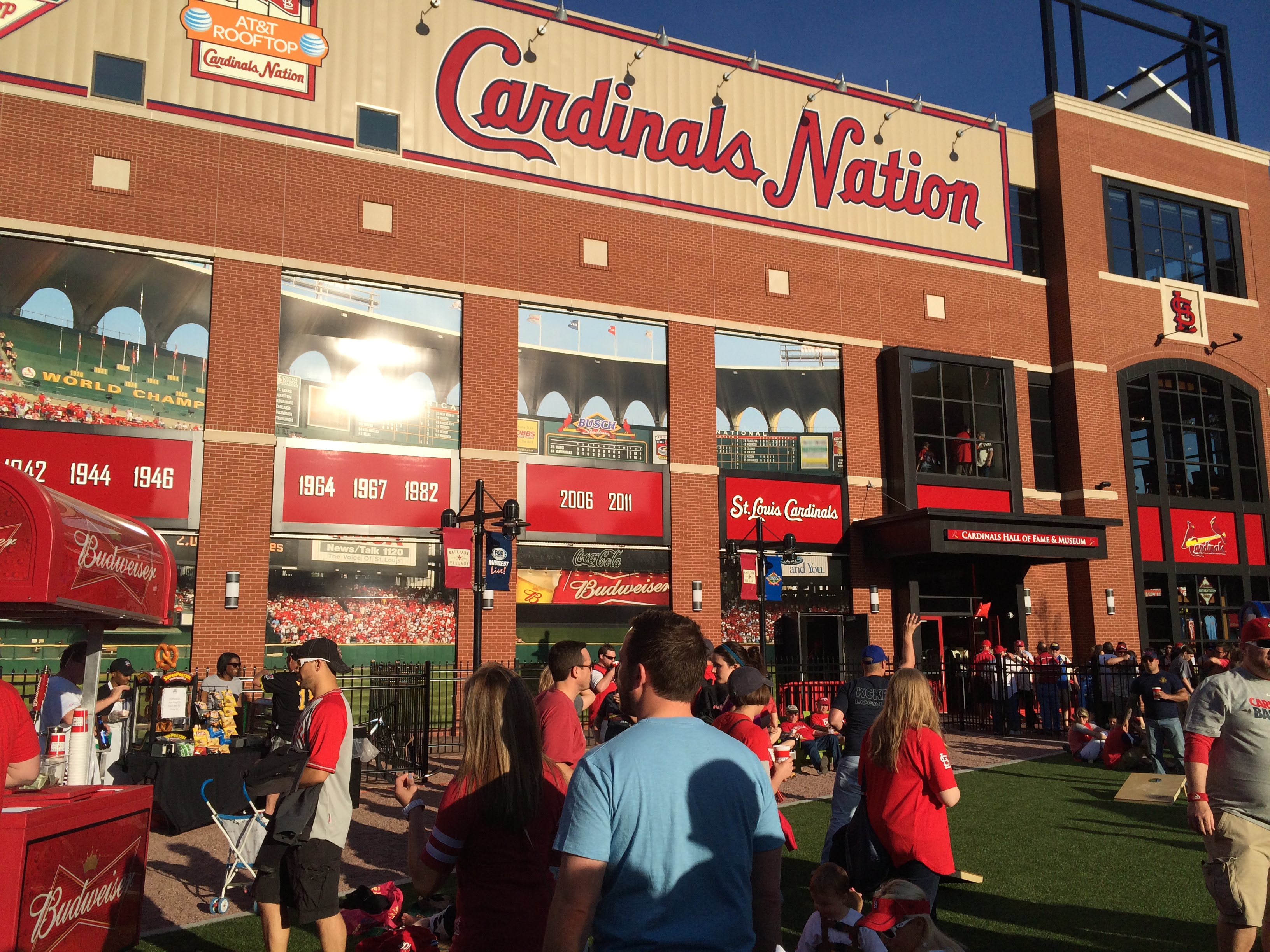
But, you don’t want to appear a total rookie, blowing in from out of town like a bad throw from left field. Instead, brush up on the local baseball lore so you can dazzle your companions in the bleachers when you casually mention “Stan the Man,” Willie McGee, or perhaps Ducky Medwick. (I just like to say “Ducky Medwick.”) To do that, head over to the newly opened Ballpark Village, a $100 million entertainment complex adjacent to Busch Stadium and make your first stop at the Busch II Infield adjacent to the village. The new stadium opened in 2006 but Busch II is laid out along the same lines as the old ballpark’s diamond giving fans a chance to walk the sacred ground once tread upon by legends, as well as partake of another local legend, Ted Drewes frozen custard.

Next stop in your education: Cardinals Nation, inside Ballpark Village, where you’ll

From the field at Busch II, outside Baseball Village, the windows reflect the Cardinals' Busch Stadium.
From the field at Busch II, outside Baseball Village, the windows reflect the Cardinals’ Busch Stadium.

find The St. Louis Cardinals Hall of Fame Museum. It boasts the largest team-held collection in Major League Baseball, second only to the National Baseball Hall of Fame, with over 16,000 memorabilia items and over 80,000 archival photographs. Along with the museum, Cardinals Nation contains a two-story restaurant and a roof top deck with a view of the game. Also inside Ballpark Village you’ll find FOX Sports Midwest Live! which features a stage for live concerts and performances, a state-of-the-art 40 foot diagonal high definition LED screen, and immersive LED ribbon boards that will encircle the two level space; PBR St, Louis: A Cowboy Bar which claims to have “the world’s meanest mechanical bull;” the Budweiser Brewhouse, and several other establishments that make this a year-round destination.

Finally, to sound like a real insider, you’ll want to hit the books. I know that beer, not books, may be the first word you associate with baseball, but you won’t be sorry if you complete your Cardinals curriculum with a few of the reading ideas I got from Ron Watermon, the team’s VP of communications, which appear below along with a couple of my own.  For more great baseball books, see my post Major League Vacation.  This effort may seem a little disloyal to your home team. My newfound enthusiasm for the Cards makes me feel a little like I’m cheating on my other boyfriends, the Minnesota Twins (if only they’d win more often) and the Detroit Tigers (who I grew up with). But what the heck, when in St. Louis…. So, read up, drink up, batter up— and be sure to wear red.

Unknown-2Stan Musial: An American Life by George Vecsey


Unknown-8One Last Strike:Fifty Years in Baseball, Ten and a Half Games Back, and One Final Championship Season by Tony La Russa


Unknown-73 Nights in August: Strategy, Heartbreak, and Joy Inside the Mind of a Manager by Buzz Bissinger


Unknown-3100 Things Cardinals Fans Should Know & Do Before They Die by Derrick Goold


And for Kids,

St. Louis Cardinals 101 by Brad M. Epstien51vLIE4OC5L._AA160_


41WMSemd17L._AA160_Meet the Cardinals by Mike Kennedy and Mark Stewart


Great Books for Children on Earth Day

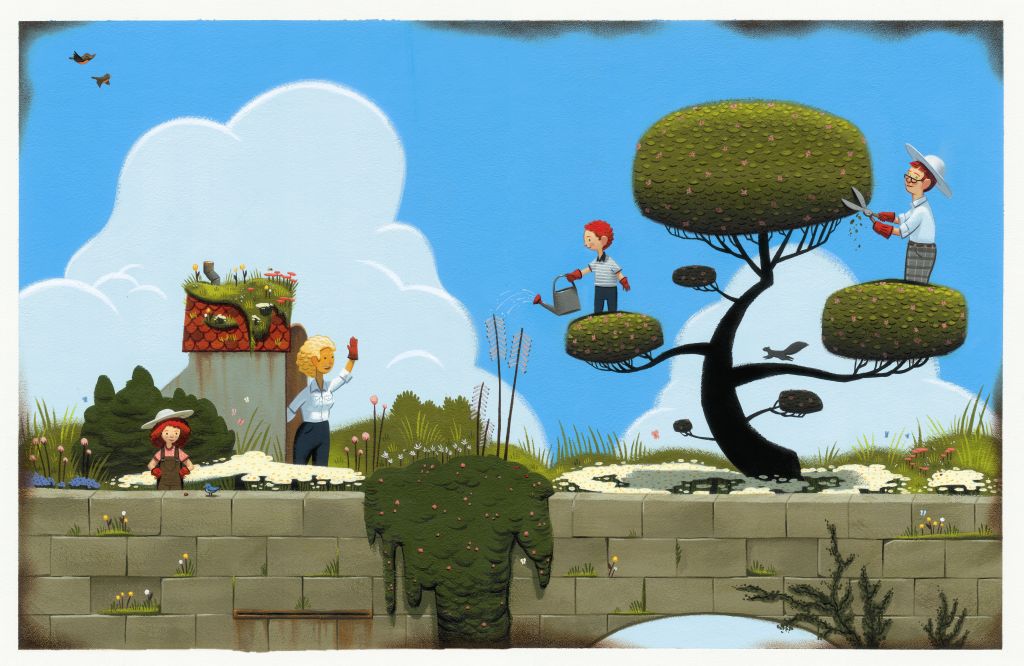
An illustration fron Peter Brown's beautiful children's book "The Curious Garden."
An illustration fron Peter Brown’s beautiful children’s book “The Curious Garden.”

If you’ve spent any time reading this blog, you know my goal is to encourage people to READ and GO. Literary travel means reading a great book and going where it takes place or to the type of place the book is set, which can be right in your own town. Literary travel allows you to experience both the book and the place in a more intimate way. And, it’s a great way to expose children to the pleasures of reading, giving them more ways to relate to books and their subjects.

Take, for example, the topic of Earth Day. What better way to help kids understand the

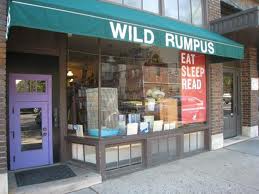
Wild Rumpus Book Store in Minneapolis

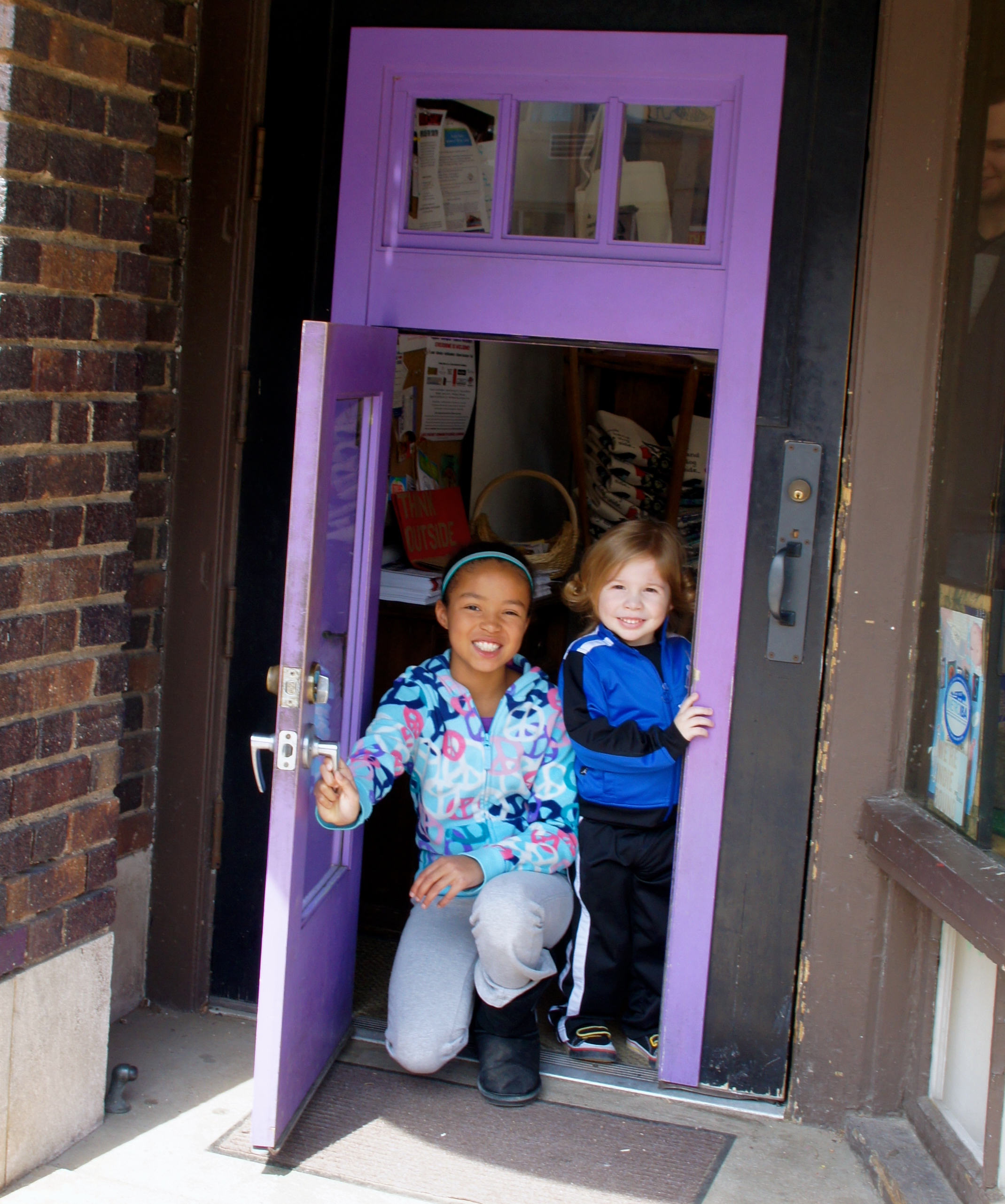
Exiting Wild Rumpus through the child-size purple door.

concept of caring for the environment than by reading a super-engaging book on the topic and then venturing out on a lit trip to a local park, garden, or community Earth Day event? Listen up grandparents, aunts and uncles and others who seek interesting ways to interact with the children in your life. You should put Last Child in the Woods: Saving Our Children From Nature-Deficit Disorder on your list.

For a few great book suggestions, I stopped by one of the country’s all-time best children’s bookstores, Wild Rumpus in Minneapolis. I have to admit that since my children are grown, I look for just about any excuse to wander into this store, which is full of fun booksellers, live animals, special events, and cozy reading spots, not to mention books, books, books. It’s pretty entertaining just watching children and their families interact with everything in the store. Don’t have kids? Wild Rumpus has a great selection of YA and adult books, and you can still enjoy the animals.

Here are a few of their Earth Day reading suggestions:

 The Curious Garden by Peter Brown

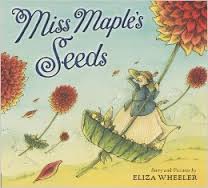
Unknown-10Miss Maples’ Seeds by Eliza Wheeler

Unknown-3Celebritrees— Historic and Famous Trees of the World by Margi Preus

Unknown-2


Miss Rumphius by Barbara Cooney


A Short Visit at O. Henry’s Tiny House in Austin, Texas

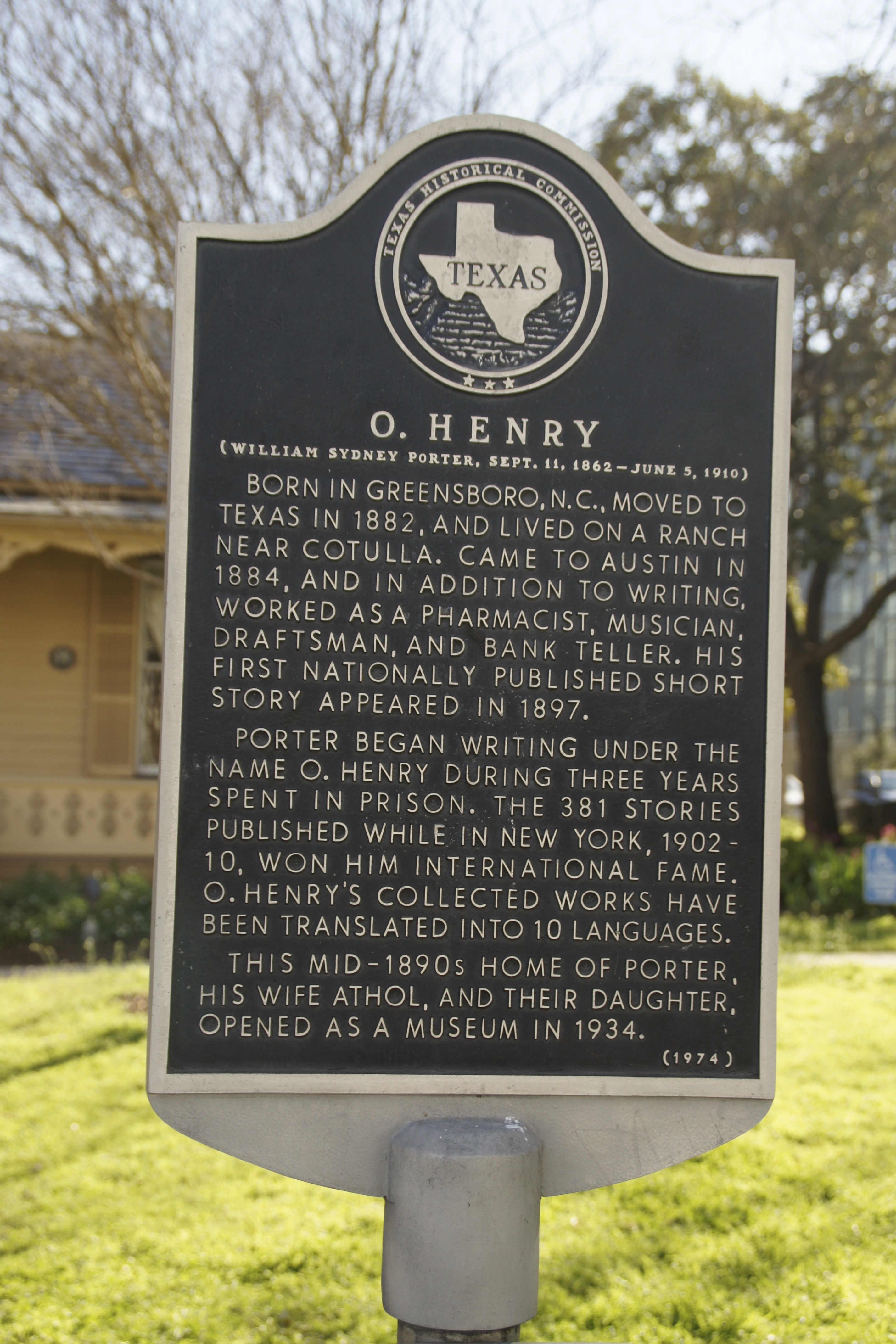
Before William Sydney Porter, aka O. Henry wrote his famous short story “The Gift of the Magi,” he lived for a few years in Austin, Texas. The tiny house he rented survives as a museum. It’s tucked in right next to the giant Hilton Austin in the center of town and this property looks like it would have great potential to become a parking lot or fast food joint, and in fact it barely missed the wrecking ball back in the 1930s.

As I’ve mentioned in a previous post on authors’ homes, the places where famous authors SONY DSClived are often a disappointment compared to the places they describe in their books.  And,  a huge modern building right next door doesn’t help you envision the author’s life as it was in the 1800s.  Nonetheless, if you’re in Austin, you should pay a call at Porter’s house, if only to get a taste of how people lived at the time. The price is right, too.  It’s free, but please make a donation when you leave.

While he resided here (1893 to 1895), Porter made his living drawing maps for the General Land Office and publishing a paper called the Rolling Stone (quite different from the current publication of that name).  Before you go, be sure to read a couple of his most famous stories–“The Gift of the Magi” or “The Ransom of Red Chief.”

Unknown-10
William Sydney Porter, aka O. Henry

Ah, the symbolism. If Porter could see his tiny home now, wedged in next to the giant hotel, I’m sure he would find inspiration for another story.


Plantation Vacation 2: “Gone With the Wind” Meets “12 Years a Slave”

Charleston is one this country’s oldest cities and also one of the most active cities for historic preservation. That has paid off handsomely in terms of attracting tourists who are drawn to the city’s broad, elegant boulevards and its dizzying array of pastel colors and architectural styles—Colonial, Federal, Georgian, Italianate, Victorian—like bees to honey.

The John Rutledge House Inn on Broad Street features the fabulous iron work that was frequently the art of African Americans.
The John Rutledge House Inn on Broad Street features the fabulous iron work that was frequently produced by enslaved African people.


Yet for years, Charleston’s tale was only half-told. The truth is behind all the beauty, antebellum charm, the Gone With The Wind-type nostalgia for plantation life, and the honor of the boys in gray, lies the story of the people who built it all—enslaved Africans. They manufactured the brick and the ornate metalwork of those beautiful buildings, grew the crops and raised generations of children, too. But, their story was either ignored all together or told as if slavery offered sort of a lucky opportunity to be cared for as part of the plantation family. Historians believe as many as 40 percent of all enslaved Africans who came to North America entered through Charleston, making it the Ellis Island of Africans in the U.S. Consequently, nearly 80 percent of African Americans can potentially trace an ancestor who arrived through Charleston. That’s a huge group of people to ignore.
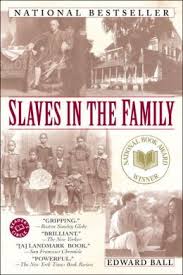
Yet, just as the winds of change blew through Tara, they’ve also blown through Charleston.Unknown-4 They came literally in the form of Hurricane Hugo in 1989 and the subsequent restoration of the city. They also blew in with fresh voices who are interpreting the history of the South in a richer and more accurate form. For example, in 1998, author Edward Ball, who descended from a dynasty of Charleston rice planters, broke the taboo against talking about the city’s slave heritage. His book, Slaves in the Family, which won the National Book Award, chronicles the Ball family history as slaveholders and his discovery of his black relatives, who descended from relationships between his plantation-owning forbears and their slaves. With breakthrough movies such as 12 Years a Slave, it’s impossible to maintain a rosy picture of slavery.
Now, in Charleston you can visit the Old Slave Mart museum, which seeks to interpret the history of enslaved Africans who arrived through this port. It’s a small museum but the big new International African American Museum will open in Charleston in 2018. In the meantime, they offer a great educational web site as does the Convention and Visitor’s Bureau.  For more of the African American perspective, you may also want to tour the city with Gullah Tours.

Drayton Hall plantation stands by the Ashley River, just south of Charleston. It's my favorite area plantation because it has been left "as is."
Drayton Hall plantation stands by the Ashley River, just south of Charleston. It’s my favorite area plantation because it has been left “as is.”

The plantations along the Ashley River Road (see my previous post) south of the city have also broadened way they interpret the plantations’ history to visitors by including the role of enslaved Africans in plantation life in their tours.

No matter where your ancestors came from, it’s a more satisfying trip when you receive an accurate picture of what is our collective history.